

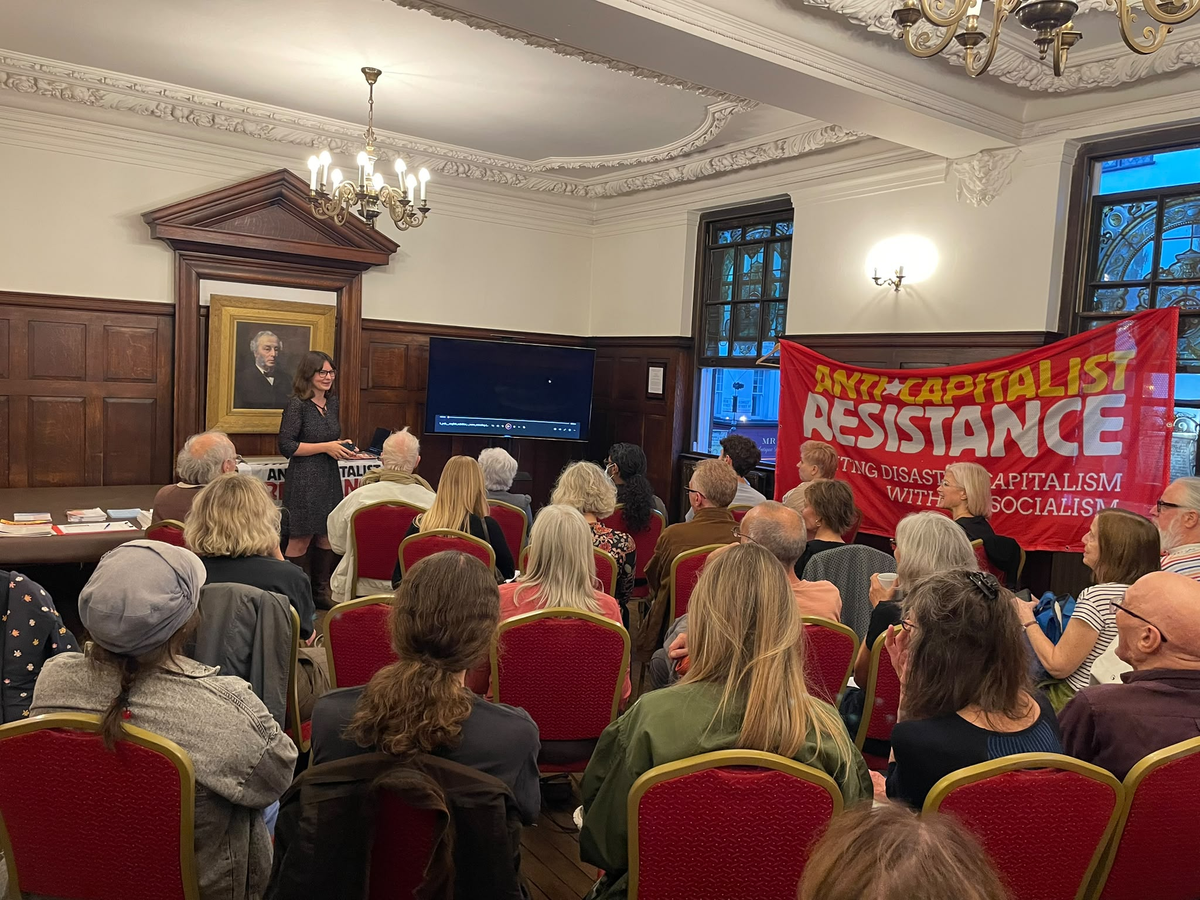
On Wednesday 16 September I attended a central London showing of the 50 minute film produced by National Emergency Briefing. It was organised by Anticapitalist Resistance but hundreds and hundreds of such screenings, often followed by discussions, have been held in England, Wales and Scotland.
The film originated in a briefing organised specifically for MPs in Westminster. Specialists in each of the areas – Climate, Weather, Energy, Biodiversity, Tipping points, Water, Economics and Transition – spoke briefly outlining the latest research and its conclusions. Chris Packham, pictured above, from Springwatch, then interviewed members of the public and other personalities like Jennifer Saunders or Deborah Meaden. Saunders in particular did not mince her words – “we have AI but we cannot get rid of our shit properly!” A young black woman put her finger on the problem when she raised the problem of politicians making promises but not carrying through with action.
Film talks human
In this way each scientific topic was given a human dimension as people expressed their surprise at certain graphs and facts. A common reaction was: we thought it would only concern our children but the reality is that we are now directly confronted with the problems. How many times have we heard people say that in the last few years? People were surprised too that acting now will actually cost less than leaving it until later. All the mainstream parties except for the Greens are conjuring up the false opposition between sticking to net zero or having to suffer economically, that the costs of dealing with climate change now are too great.
Labour also are wavering on previous manifesto commitments to stop drilling in the North Sea. Some MPs and maybe the leadership too are shamelessly using semantics, saying Rosebank and Jackdaw fields are not really being about new licenses so therefore we can go ahead. Theyare also attempting to use the populist,but false, argument that drilling there will bring down energy prices. It will not, the prices are determined by the international capitalist markets not by how much a nation produces itself.
Recently we reviewed Ana Mendieta’s earth body artworks which tried to exemplify symbolically a different relationship between humanity and nature. Chris Packham demonstrated how our survival also depends on the insects that work the soil that produces our food. As an audience member commented afterwards this interdependence does not mean we are the same as animals since our mental development has allowed us to develop the world for many to have a more comfortable existence. Today this mastery is now destroying it. Unlike animals we have the capacity to create an alternative future that will also benefit them.
Collective political action needed
The audience felt the film was a brilliant starting point to have a discussion about the emergency facing us all. It also felt there were limits to the action proposed at the end. It is absolutely correct for the film to encourage people to get involved in politics – so many are completely alienated from it. So let us get as many as we can to talk to our local MP, to lobby them. Getting more screenings of this film organised in schools, workplaces and communities is also a good way forward. Campaigning to get the main TV networks to screen the film would be a big victory. Ultimately it is a step forward if the political parties accept the harsh reality of the emergency.
The film correctly stated that it makes a difference if we all ate less meat and adopted a more plant based diet. We could save farmland equivalent to the size of Scotland if we could do this and this land could produce more healthy food. If you a fighting for an ecosocialist future it is coherent to try and make some positive personal changes now.
While you cannot expect such a politically broad based film to adopt an anticapitalist, ecosocialist position you would have thought it possible for use a few minutes at the end showing and discussing the collective action of communities around the country. They are campaigning on climate change and defending their environment. There is plenty of footage for example of demonstrations against Sizewell C or the third Heathrow runway that could have been used. National demonstrations have also taken place for Earth day and on other occasions. Without taking a particular political line the film could have shown the need for collective, political action.
Another audience member explained how the climate issue is never just a national issue. Wind, sea currents and heat do not respect or recognise national borders. Any campaigning has to be placed in an international framework. The intervention of the ex military commander in the film also drew some comments from the audience. On the one hand it lent credibility to the notion of crisis if someone not from a left political culture talked in this way. On the other we can turn the obsession of the press and most mainstream parties about increasing defence spending to boost national security into another debate about what sort of security are we talking about. National security in a military sense should not obscure people’s security in a social or ecological dimension. Another person pointed out that the US military consumes an enormous amount of fossil fuels even when it is not on the battlefield.
Green consciousness is growing
The very fact that this film has been made and that there have been so many screenings backs up some figures the film itself reveals about the huge majorities who recognise the climate change emergency and want politicians to do something about it. The growth of the Greens both in members and in the opinion polls confirms a change in consciousness about net zero compared to a decade or so ago.
Both Reform’s and the Tories’ shift to abandon action on net zero flies in the face of this reality. Today’s announcement by Andy Burnham that the government is sticking to net zero by 2050 opens up a space for Labour to recover support from both its right and left. Apparently a final decision on North Sea drilling has been held back. Cynics may be right that this has more to do with defeating Polanski in Camden than concern for our environment but it boosts those of us both inside and outside Labour who are working to stop drilling in the North Sea.
Popular culture echoes green resistance
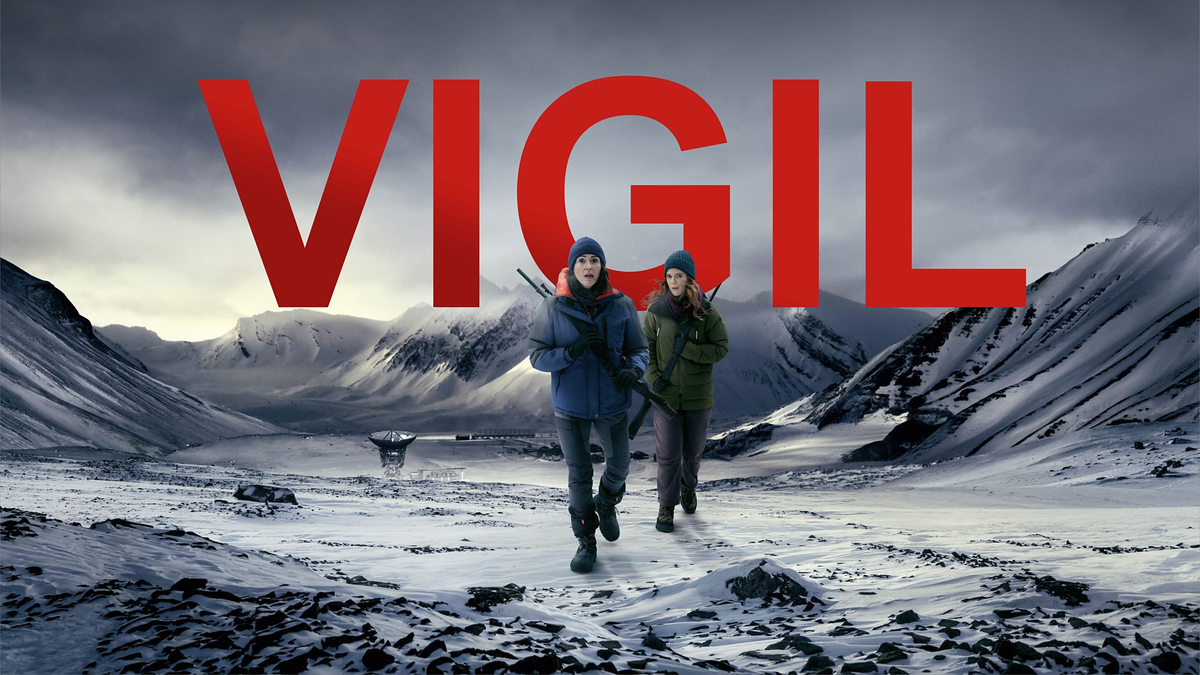
Another sign of the times is the final episode of the popular TV drama series Vigil. [spoiler alert] It is hard to follow the preposterous plot lines involving a research station in the Norwegian Artic Circle that is a site for the dirty tricks and manoeuvres of Britain, the USA, Russia and China. The final scene features the Chinese woman scientist who has discovered a bacteria in the Artic that could be used to replace fossil fuels.
Thanks to the sterling work of the Scottish women detectives (who are a gay couple) the scientist is not eliminated despite the best efforts of these imperialist powers, including Britian. She manages to get into a COP meeting being held in Glasgow where she proceeds to distribute her discovery free to any country who wants it. By this time you are out of your chair with your fists pumping the air.
It is all fiction of course and the idea that a MI6 commander could be arrested by one of our female detectives beggars belief. Nevertheless it shows how popular, commercial culture, to an extent, reflects changing opinions among ordinary people. It also explains why some direct action protesters are still being freed by juries. No wonder the government wants to limit them.
Nation Emergency Briefing website – you can organise a screening from here
Another excellent site for information, analysis and organising is Climate Justice Coalition