

Source Dina Ezzat , Tuesday 15 Sep 2026
On 13 September 1993, then Palestinian leader Yasser Arafat joined US president Bill Clinton and Israeli prime minister and foreign minister Yitzhak Rabin and Shimon Peres to sign the Oslo Accords.
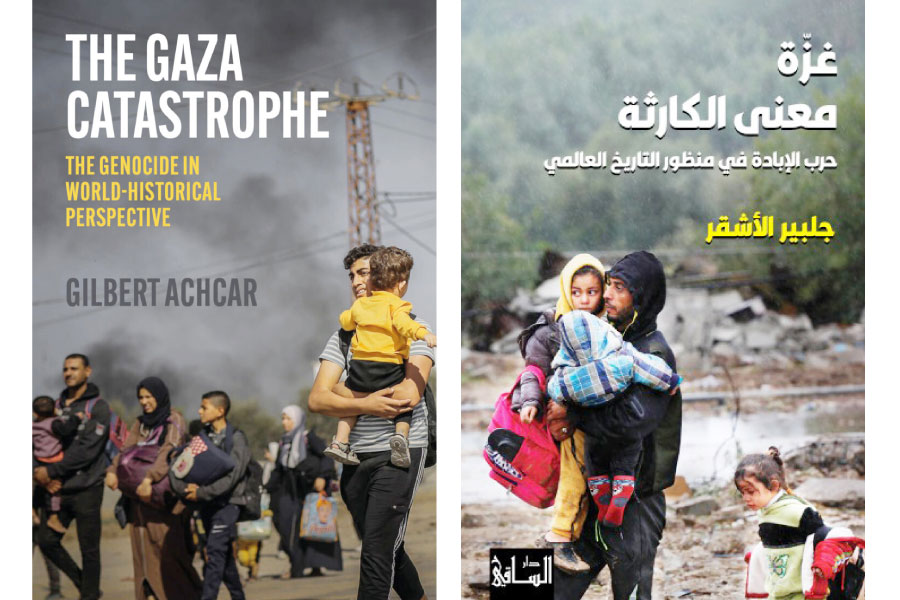
In his most recent book, Gaza Catastrophe: The Genocide in World-Historical Perspective, Gilbert Achcar, a professor of international relations at London University and the author of several volumes on Middle East politics, argues that this signing was not the alleged “peace of the brave” as pronounced at the time by Arafat and others.
Oslo Accords
It was, he says, the culmination of a combination of developments on the Arab and Israeli sides. These included the Israeli wish to end the First Intifada that started in 1987 and was stripped of energy with the Oslo Accords. It also included Arafat’s wish to find an exit from the state of political exclusion and financial deprivation that had been imposed on him by the Arab Gulf countries after his siding with Iraq during the latter’s invasion of Kuwait in 1990.
Ultimately, it came out of the October 1991 Madrid Peace Conference that was set up by Washington in the wake of the US-led war to force former Iraqi president Saddam Hussein out of Kuwait with the intention of creating a new regional order in which Israel would be spared quasi-regional isolation.
As Achcar’s book amply demonstrates, neither the Madrid Peace Conference, where the Palestinians were represented by politicians living in the Palestinian Territories under Israeli occupation, nor the Oslo Accords themselves, which were negotiated secretly between Israel and a group of Palestinian leaders living in Tunis, produced a path away from Israeli Zionist plans to control all of historic Palestine.
Achcar reminds the reader that then Israeli prime minister Yitzhak Shamir only accepted to take part in the conference to secure a grant from the US that helped in the massive transfer of Jews from the former Soviet Union.
Moreover, he says, the accords only activated a plan authored by Israeli politician Yigal Allon in 1967, after the complete Israeli occupation of historic Palestine after the June War, to allow Palestinians some type of civil rule that did not compromise Israeli claims to the land, the Jewish population, or defensible frontiers.
Taking over from the Madrid Conference, Achcar writes, the Oslo Accords created a short-lived “peace process” that halted in the late 20th century and has been unable to recover since, despite ongoing Palestinian concessions that went beyond what Arafat granted on the White House lawn during the signing ceremony on 13 September 1993.
Peace process moribund
During the first quarter of this century, the peace process has been moribund, and the Palestine Liberation Organisation (PLO), led by Arafat, and the Palestinian Authority (PA), which he chaired following the Oslo Accords, have been going through a process of incremental decline, Achcar writes. Israel has also been moving further to the right under the barely interrupted premiership of Israeli Prime Minister Benjamin Netanyahu that started in 1996 and was still unchallenged until Achcar’s book came out late last year.
Achcar explains that contrary to the Labour Party attitude in Israel, adopted by Rabin and Peres who subscribed to the Allon scheme, Netanyahu subscribes to the idea of a “Greater Israel”, supposedly “from the sea to the river,” as pursued by the forefathers of the Zionist movement who decided that historic Palestine would be a Jewish state.
Fewer than 80 years ago, Achcar argues, the creation of Israel, seen as an act of redemption for the Holocaust in Europe and also the wish on the part of some to expel the Jews from Europe, did not allow for the execution of Greater Israel. The 1948 Nakba, he added, which brought about the ethnic cleansing of Palestine, did not cover all the land of historic Palestine.
The Israeli occupation of all of historic Palestine in 1967 also failed to force a similar exodus. However, it allowed for the systematic violation of Palestinian rights, especially after Israel started to force breaks in the wall of Arab rejection.
Emergence of Hamas and Islamic Jihad
With the political demise of the PLO and the defeat of hopes of peace and quasi-statehood, Hamas and Islamic Jihad stepped in as the new political power that had to face up not just to the continued oppression of the Palestinian people but also to the increasing push for a Greater Israel by Israel, Achcar writes.
A map of this was brandished by Netanyahu before the UN General Assembly in New York in September 2023 just days before Hamas conducted its attack on Israeli targets on 7 October that year in “a desperate act of bravery” in the face of disproportionate military might.
Achcar does not set out to defend the 7 October attack, but he does want to put it in the context of decades of Israeli occupation and oppression coupled with Western hypocrisy, growing Arab alienation from the Palestinian cause, and the failure of the old Palestinian leadership to live up to the expectations of its people.
His book does not present the genocidal war that Israel has waged on the Palestinians in Gaza, with American support and international complacency, as a reaction to the 7 October Hamas attack. Instead, it is presented as phase two of the extermination of the Palestinian presence on Palestinian land, with the Nakba’s ethnic cleansing being part one.
The Israeli war on Gaza, the book says, is part of a wider Israeli scheme that is not just designed to secure Greater Israel but is also part of a plan to eliminate all the Political Islam resistance factions, especially Hamas and Hizbullah that have come under Israeli military attacks.
Speaking to Al-Ahram Weekly earlier this month after the release of the Arabic translation of his Gaza Catastrophe, Achcar argued that the genocidal Israeli war on Gaza, devastating as it has been, does not predict the demise of the Political Islam resistance, especially Hamas and Hizbullah that have been weakened as a result of repeated Israeli attacks.
“I would not make any prognosis about the future of the Islamist movements,” Achcar said. These movements, he added, have been part of the political landscape for a long time as a result of an engineered push to promote fundamentalist interpretations of Islam.
Weakness but not decline
In his book, Achcar recalls that Hizbullah was established in 1982 in response to the Israeli invasion of Lebanon. Hamas, he adds, was established in 1987 amid the First Palestinian Intifada and as a sign of the decline of established political setups.
For Achcar, the issue is not about endorsing or rejecting the political ideology of such movements but rather about the facts on the ground that allowed for the rise of these two movements, both of which are related to Israeli military occupation and invasion. Today, he says, it would be a mistake to assume that their weakness is a sign of decline. “Weakness and decline are two different stories,” he states.
“The reasons behind the rise of these movements are still with us,” Achcar said. “Colonialism, oppression, Zionism, and social inequalities are all actually worse,” he added.
Moreover, it would be hard to expect the demise of Hamas and Hizbullah when Israel is fast developing into “a radical Jewish fundamentalism, especially since the beginning of the genocide in Gaza” in October 2023, Achcar said.
This is not to deny the weakness that Hamas and Hizbullah are suffering from the overall decline of the strength of Political Islam movements across the Arab world in the wake of the Arab Spring when these movements peaked in strength and popularity.
Speaking in the wake of a significant announcement by Hamas to decommission its arms in order to allow for the entry of humanitarian aid into Gaza and the withdrawal of Israeli occupation forces from the enclave, Achcar argued that this announcement is “an acknowledgement of the obvious defeat” that came with the genocide committed by Israel in the wake of the 7 October attack that was not prompted but was certainly facilitated by it.
“Hamas might have to decommission its arms, but it will not disappear, and Hizbullah has also suffered a heavy blow, but it is also still there and will not disappear,” Achcar said. This is not just about the raison d’être of the movements but also about the level of direct and indirect support they have from Iran, he added, especially with the fact that “Iran’s resistance in the face of the American-Israeli war is increasing the appeal of such movements, which are markedly different from violent groups like Al-Qaeda and IS [the Islamic State group].”
Achcar noted that even these violent movements have not completely gone, despite the many attacks they have sustained, especially Daesh that is still present in Syria and Iraq.
Weakness not irreversible
Overall, he added, while some Political Islam movements have been weakened more than others, overall their momentum is not absolute, and their weakness is not necessarily irreversible. “They could decline, and they could come back,” he said.
This ability of the Islamist movements to survive moments of weakness, Achcar argued, is not just about the worsening situation in the region but also about the rise of fundamentalism worldwide. “Contrary to the orientalist assumption, it is not just Islam that has fundamentalist movements. Every religion has its fundamentalist movements that are inspired by fundamental interpretations of religion,” he said.
Most of the Sunni Islamist movements, he said, are inspired by the oldest Islamist political movement, the Muslim Brotherhood, “which was born as an anti-Western movement”, irrespective of the fact that it was never designed to be progressive.
“Whatever the core ideology of the organisation, the fact remains that the Muslim Brotherhood was party to the early struggle for Palestine prior to the creation of the PLO,” Achcar said. Later, he added, Hamas, which has a strong imprint of the Muslim Brotherhood, came at a moment when the PLO was starting to lose direction.
“Clearly, when the PLO went for the Oslo Accords, which were subject to considerable and profound criticism by many people of diverse political ideologies, Hamas stood by the armed struggle,” Achcar said. He added that the excessive concessions made by the PLO in the Oslo Accords caused a loss of direction, and the suicide attacks by Hamas facilitated Israel’s attacks on the group.
In his book, Achcar argues that for many Israeli leaders, the suicide attacks of Hamas were not bad news as they allowed for Israeli military offensives that fitted in with the unchanged Zionist oppression of the Palestinians.
The suicide attacks and the firing of rockets from Gaza towards Israel were “simply counterproductive” as they played into the hands of the far right in Israel. The 7 October attack also helped the far right to lobby Israeli public opinion, under the false claim that Israel had been subjected to the worst attack since the Holocaust and “inevitably leading to humanitarian catastrophe in Gaza”.
Achcar said that there is no exact figure for the number of Palestinians that Israel killed during its genocidal war on Gaza. He also said that this did not completely stop with the 10 October 2025 signing of a US sponsored ceasefire. Today, he said, the catastrophe is not over as “Israel is still trying to push the vast majority of the Palestinians who survived its slaughter out of Gaza under the hypocritical claim of voluntary departure.”
Future should be mass political struggle
In his book, Achcar says that the push to empty Gaza of its Palestinian population has been something that Netanyahu and US President Donald Trump’s political adviser and son-in-law Jared Kushner have been working on since 7 October.”
The difference between Trump and former US president Joe Biden, who offered almost unconditional support to Israel during its genocidal war on Gaza, is not about whether either US president wanted to help Israel overcome the Palestinian resistance. The difference, Achcar said, is that Biden subscribed to the supremacy of Israel without the full expulsion of the Palestinians while Trump is not necessarily opposed to the close-to-full expulsion of the Palestinians, especially from Gaza.
Achcar said that it was only when the world woke up to the reality of the horrific genocide Israel was committing against the Palestinians in Gaza that Washington had to be more mindful of its support for Netanyahu’s plans. Israel’s killing of tens of thousands of Palestinians managed to reverse the initial sympathy with Israel and change it into sympathy with the plight of the Palestinians, irrespective of the position on the 7 October Hamas attack.
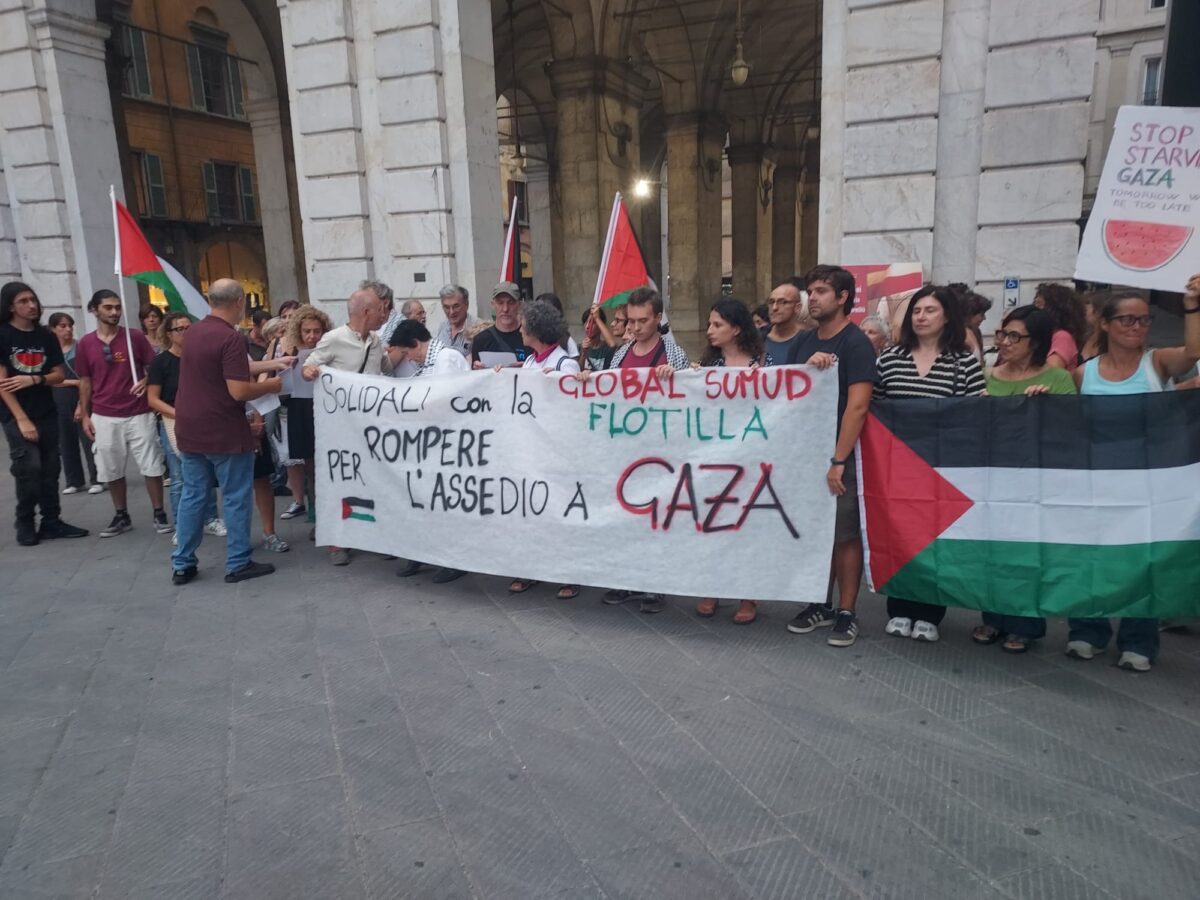
“Then we got to see the mass protests against the genocide,” Achcar said.
The impact of these should be well-considered by Hamas, he added. “In view of the huge disadvantage that the Palestinian resistance has in the face of Israeli military power, it should reconsider attempts to challenge Israel on the terrain where Israel is stronger,” he said. What this resistance, especially given the special case of the Palestinian suffering, should consider is to work to garner more international support against Israeli oppression.
“The future is for mass political struggle similar to the First Palestinian Intifada, which in fact came in the wake of the defeat of the [militantism] of the PLO,” he said. He added that this Intifada “achieved more for the Palestinian cause than all of the militantism” of the Palestinian factions.
Today, he said, Hamas could choose to shift towards a more political path without losing sight of its objectives. Clearly, he added, Hamas might not find it easy to explain such a possible shift, but it is not impossible for the movement to pursue it. “Hamas is still there and could still play a role,” he stated.
Achcar argues that in the wake of the Israeli genocide in Gaza and the Israeli military attacks in the West Bank, “it is hard to see how the Palestinians either in Gaza or the West Bank can perceive armed struggle as the way forward towards liberation.”
Hope rather than optimism
“What is needed today for the Palestinian cause is a new vision that can be embraced by a new generation of Palestinians who can appreciate and master the tools of mass political struggle,” Achcar said. He added that such a struggle could rally all the Palestinians in the Occupied Territories, both in Gaza and the West Bank, as well as the Palestinians who did not leave their land in the 1948 Nakba.
The objective of such a struggle, Achcar argued, should go beyond lobbying international support to securing a shift in Jewish opinion inside and outside Israel.
He said that the case of Hamas and other militant Palestinian Islamist movements is different from that of other Islamist movements, militant or not, including Hizbullah, the Shia group associated with Iran that shares the anti-Israeli occupation emphasis of Hamas and Islamic Jihad in Gaza.
Hamas is also different from radical Shia militant groups in Iraq, which were encouraged and to an extent endorsed by the US in the wake of the 2003 US-led invasion of Iraq, Achcar said.
The issue is not about Sunni-versus-Shia militantism because while Hamas and Hizbullah share a similar goal vis-à-vis the Israeli occupation, this is not the raison d’être of the Iraqi militant groups. What Hizbullah and the militant groups in Iraq have in common is the support of Iran and for Iran’s regional policies, and it was this that prompted Hizbullah’s intervention in Syria to support the regime of former Syrian president Bashar Al-Assad, otherwise an odd choice for a liberation movement.
“Today, Hamas is no real threat to Israel, but this does not apply to Hizbullah, which still has Iran on its side,” Achcar said. He added that unlike the case for Hamas, the future choices of Hizbullah cannot be isolated from the choices of Iran, especially in view of the consequences of the US-Israeli war on Iran that started on 28 February this year and has now turned into a form of low-intensity military confrontation between the US and Iran.
Overall, Achcar said that the “region is in a disastrous situation” due to the continued Israeli occupation of Arab territories and the absence of a clear and unifying movement of mass struggle.
“Today, I see no reason for optimism, but there is a difference between optimism and hope,” Achcar said. “I remain hopeful that a new generation, Gen Z, will come up with alternative ideas for the future,” he concluded.
subheadings added by ACR