


You wonder how the conversations went when this exhibition was discussed a year or so ago.
“Remember the success of the 60s show at the Victoria and Albert museum we could do one here on the 90s
But let’s lead on the fashion, Kate Moss, Naomi Campbell, we could ask the first black editor of Vogue, Edward Enniful to curate.
Then there is the rave culture the kids were all into that was outside the mainstream.
Don’t forget Black culture was recognised more in fashion and art we’ve got Steve McQueen, Chris Ofil and Sonia Boyce
What about the Young British Artists – Hirst, Lucas and the Chapman brothers?
We will get all those who were 18 to 30s at the time and who were most into the new music, the Face magazine and so on,
Can’t fail”
Certainly when I visited there were a lot of people and it wasn’t the weekend. A lot of them had lived through it. Maybe they had worked with the bands, the magazines or in fashion at the time. There was a lot of interest in the room which was just full of photos of young people going to raves.
But overall it lacked coherence and there were not many highlights.
Decades do not come neatly packaged
Not every decade lends itself to an easy classification. Movements of culture and politics do not fit neatly into one decade from 1990 to 1999. Historians have endless debates about ‘periodisation’. Some decades do stand out – the 60s did mark a big cultural and political change.
The 90s saw the consolidation of the Thatcherite revolution ending with its victorious legacy in Blair’s New Labour, now shorn of its radical founding rhetoric. All the fuss about the exciting new 90s fashion and ‘cool Britannia’ that the Blair government promoted seemed rather empty and rootless. Hope and a sense of social purpose seemed absent. Hirst’s sharks suspended in preserving liquid and his later work of a bejewelled skull expressed this lifelessness. No alternative to capitalist consumerism appeared possible. The cool Britannia vibe fizzled out.
In any case like a lot of art exhibitions the notion of politics here is reduced to one of identity and big politics outside the often closed communities of fashion and art was absent.
Art and Fashion are not the same
At the heart of the problem with the show was the reality that art and fashion are different. By definition fashion is temporary, it is about selling clothes. The subject of art includes everything, not just clothes. As one reviewer, Simon at Books & Boots, has succinctly put it:
“Art is created primarily for conceptual meaning, emotional resonance, and intellectual or visual reflection. It does not need to serve physical utility.
Fashion is rooted in the human body and designed to be worn: it is intrinsically limited by its functional nature and has to be adapted to the physical shape and movement of a person.
Fashion is a key part of the consumer capitalist system. It is a central driver of turnover in clothing products, driven by consumer trends, seasonal change, mass production, and rapid obsolescence.
Art aims at permanence of meaning and impact, reflected in its preservation in museum collections or archives”
In fact fashion tends to overwhelm the art in the exhibition. There are more pictures of Kate Moss than works by each featured artist. I find it hard to see how a new sort of face or look is that important, interesting or meaningful compared to actual works of art. Unless the point is that Kate Moss is a work of art rather than a new face to sell more clothes.
I suppose once you hand the curating of the show over to a fashion specialist this is the inevitable result. It would be more coherent to have placed the show in the V&A or some fashion museum. I thought the links between 90s fashion and the art of the time were not clearly demonstrated in the exhibition.
Black people and women did make breakthroughs
Some links were made showing how women and black artists and fashion designers did break through against the mainstream of the time. New feminist identity can be seen in the work of Sarah Lucas whose art shocks you into seeing how women’s bodies are oppressed by sexism and the male gaze. But even here there is unevenness in the show – a pair of her boots is placed on a rectangle of bricks. You have to read a caption to understand that there are razor blades in the toes. The message is that she needed to defend herself against male violence coming home from gigs late at night. I suppose the boots also represent a women rejecting stereotypical female footwear. Not particularly memorable art in my opinion.
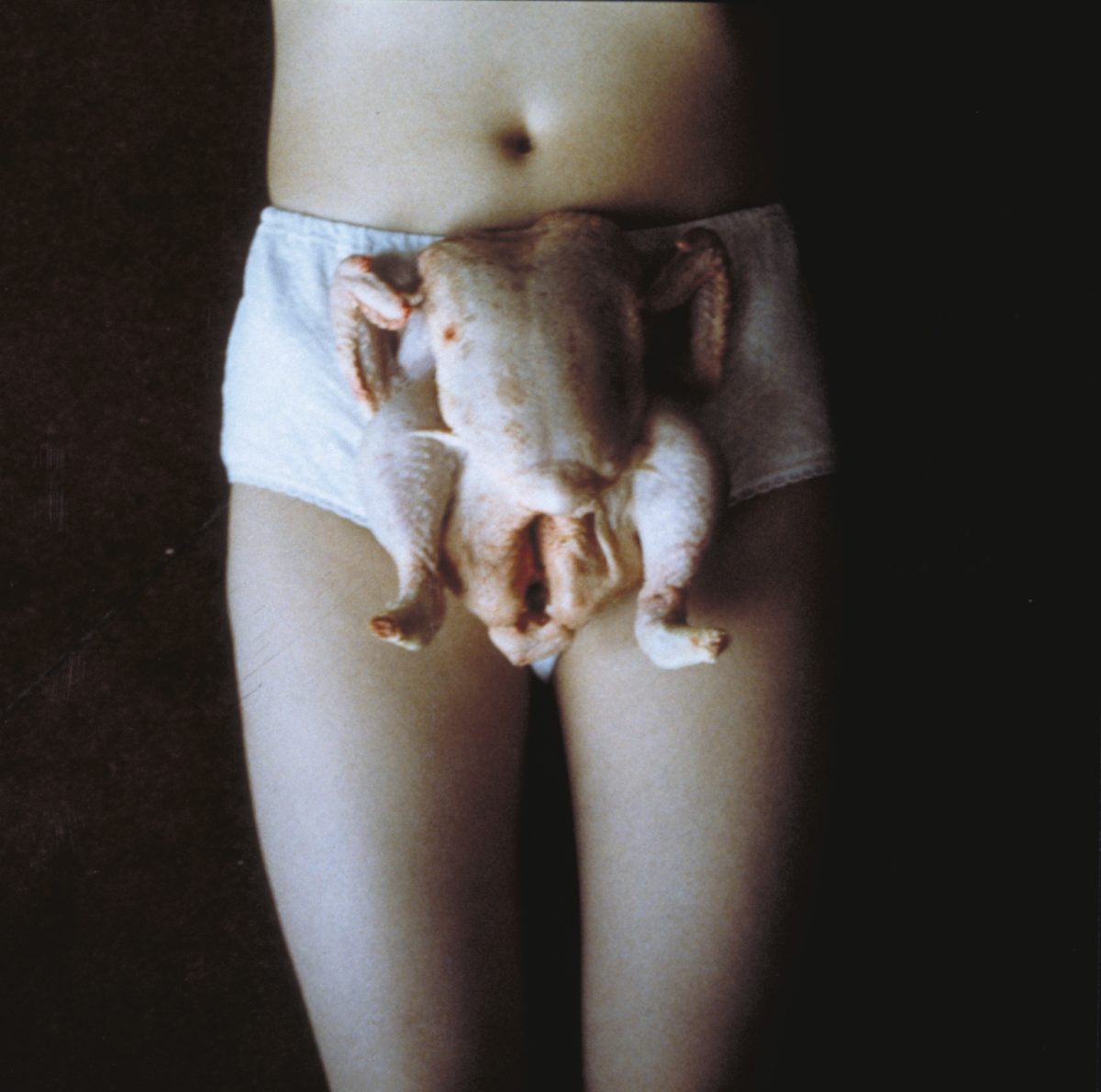
Sarah Lucas., Chicken Knickers
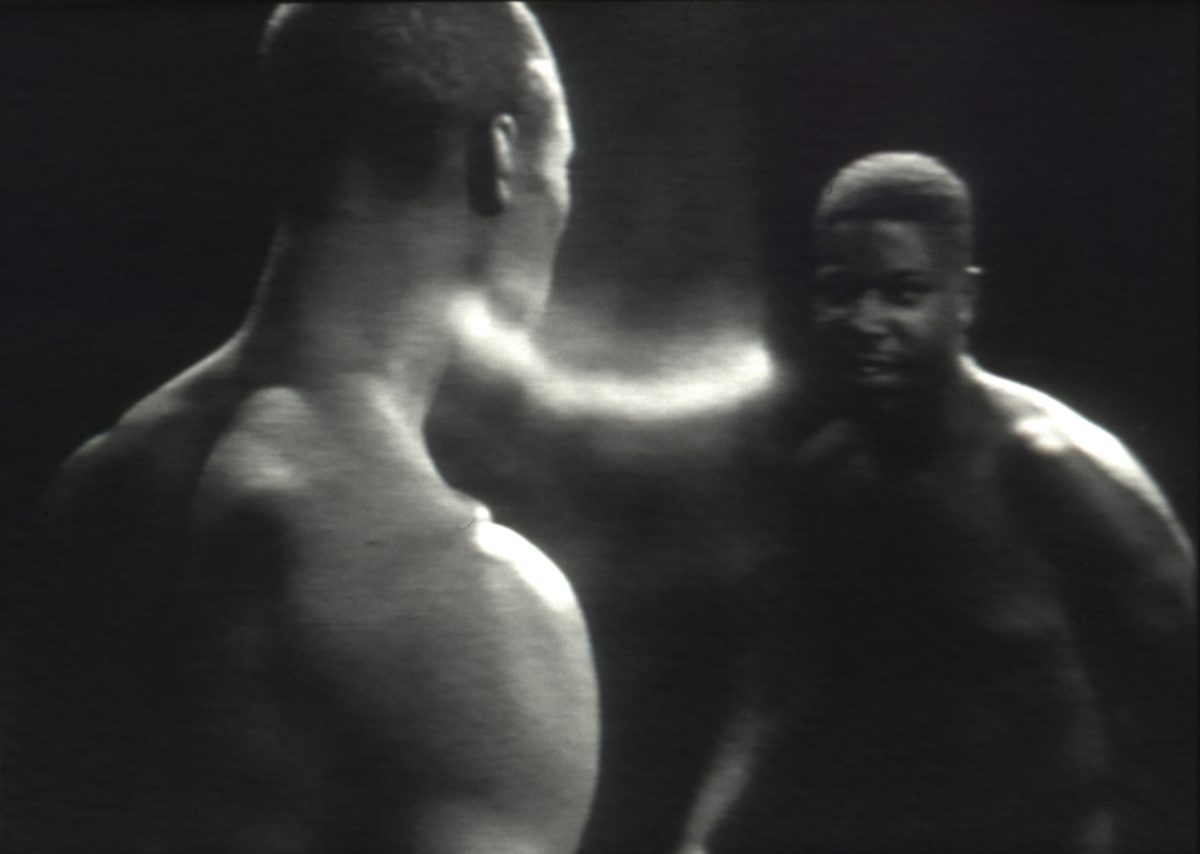
Changes in attitudes to black male identity are well represented. You can watch a video of Steve McQueen wrestling with another black man. Here there is a certain homoerotic buzz as well as violent tension. Elsewhere we see black men modelling clothes made by black fashion designers. A series of large portraits take scenes immortalised by William Hogarth such as The Rake’s Progress and insert black figures into the artworks. This is more subversive than the fashion.
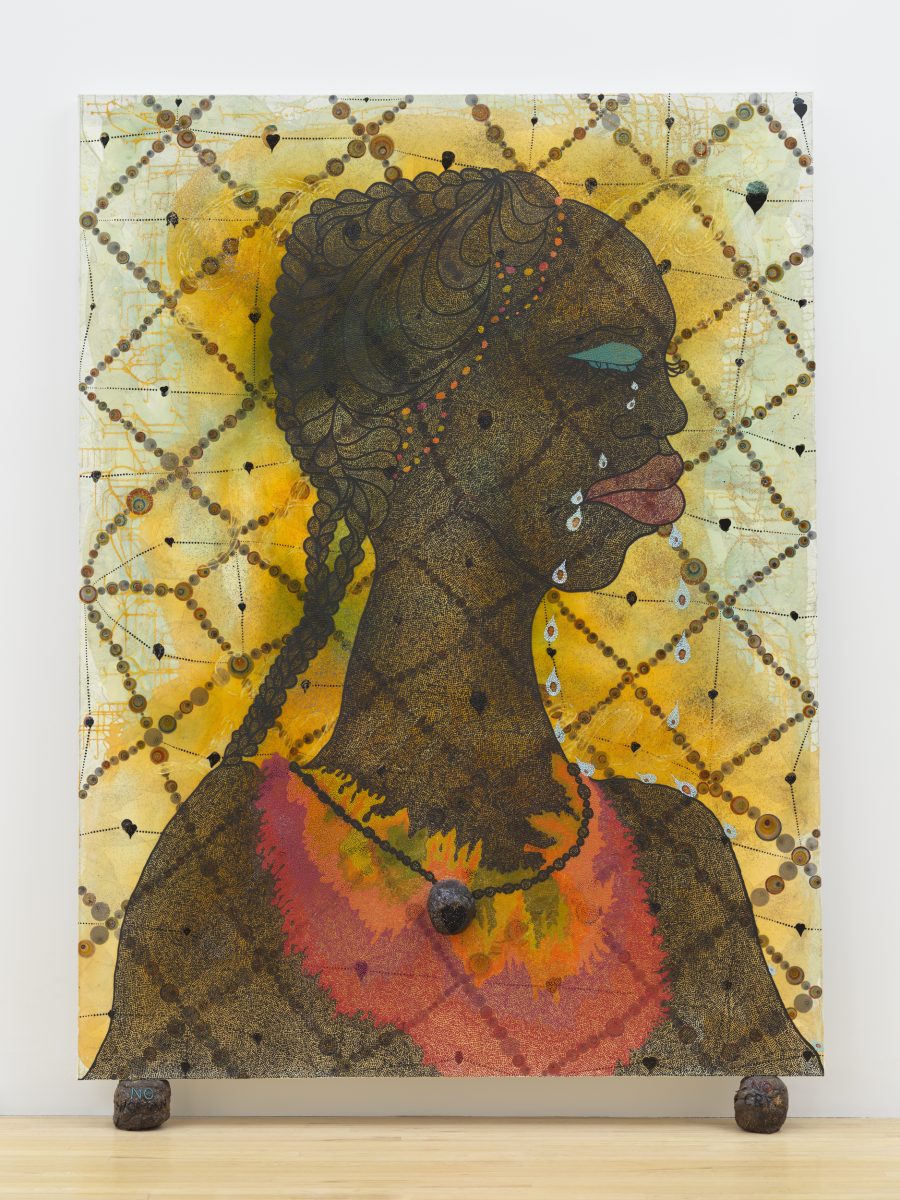
So the 90s did mark gains for diversity. Whether it really politicised fashion and the image as the curator claims in this Editor’s letter is not at all clear to me. Radical or even more mainstream politics is not particularly present in the show. No Woman, No cry (see further below) by Chris Ofili is the brilliant portrait of Doreen Lawrence, the mother of Stephen Lawrence who was murdered by racists. Her black heritage is honoured in the hairstyle, clothes and accessories and her tears include the image of her son. The netting of traditional shells both encloses her and expresses her strength and fortitude.
New openings from outside the mainstream
The exhibition does successfully document the youth culture of the time. It recognises the importance of fashion/music/art magazines that came from outside the mainstream like Face and i-D. They played a role in opening up new attitudes to sexuality and gender which was also reflected in the changes in fashion. It is also true that there were opportunities for new people to participate in cultural production.
Hierarchies were shaken. Edward Enninful, a black man, became director of the i-D fashion magazine at the age of eighteen Not much attempt is made to judge whether this was embedded in the fashion industry or in making art. Has there really been much of a democratisation? Are working class or black young people finding it easier today than in the past to make a career?
On reflection you probably will get more out of this show if you are interested in fashion and its evolution over time or were young enough at the time to enjoy the music and the culture. Whether there is a more long lasting legacy is debatable. Even the merchandise such as the baseball cap or the exhibition posters are just not particularly beautiful or imaginative.
Worth a visit but underwhelming overall
The show is rather London-centric with some contributions from Manchester. It would be interesting to see how far it reflects 90s reality in the rest of the country.
The catalogue gives voice to nearly all the artists and fashion designers who are in the show but apart from the short introduction by the editor and the director there is no analysis or overview by anybody who is not a contributor.
It is as though the book expresses the difficulty of a coherent definition of the 90s across two separate areas of cultural production, art and fashion. It assumes the fact that because artists like Steve McQueen met up with fashion model Kate Moss in Soho clubs that this was a great advance in ‘cultural permeability’ (page 5 catalogue). It is hard to see practical examples of how this led specifically to any great art or fashion. The 90s are said to demonstrate the ‘capacity of culture to challenge, disrupt and reimagine’. Doesn’t that happens in every decade in varying degrees?
Mixing up the fashion and art in this way meant neither was properly represented. Important, challenging art works like the Chapman brothers sculpture of dead naked bodies referencing Goya was lost in a room of much more superficial fashion. If the exhibition had been divided up into two separate shows it would have been much better and more of the new art cold have been included.
Compared to other recent exhibitions at the Tate such as the Tracey Emin or the new Duncan Grant/Vanessa Bell, this show I am afraid is disappointing.
Do go and see for yourself, it is on until the 14 February.
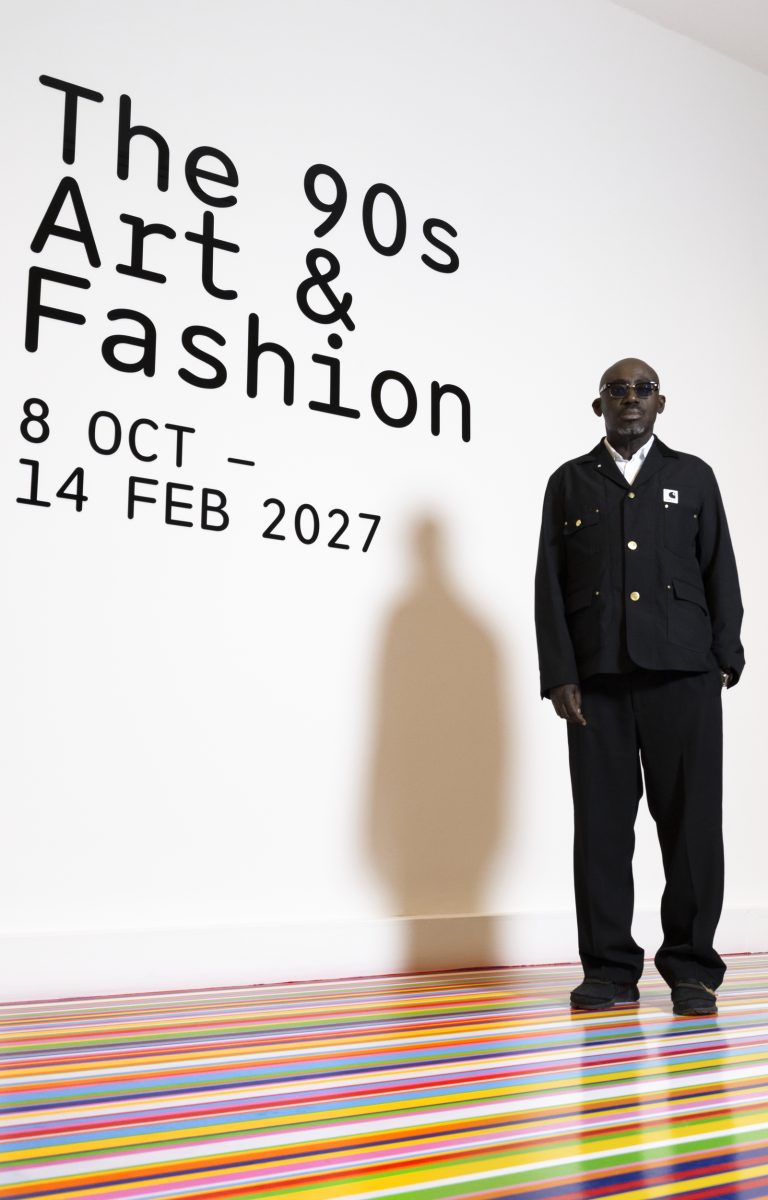
Edward Enninful, curator of show