

Source: Anticapitalist Musings
Governments now recognise dangers with great precision and still refuse to act before those dangers become permanent features of our lives.
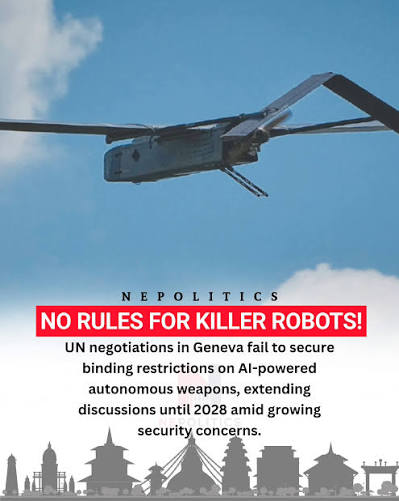
On Saturday morning, in Geneva, governments concluded a week of negotiations about whether machines should be permitted to select and attack targets without human intervention. After years of discussion, they agreed to spend another two years developing an international instrument, without deciding whether the eventual rules should be legally binding. The International Committee of the Red Cross, which had urged governments to begin treaty negotiations before it was too late, expressed its disappointment. Twenty-four hours later, in Antalya, almost 200 governments failed to agree on a declaration addressing climate change because the proposed text could not even bring itself to mention fossil fuels. It should have been an extraordinary weekend for international diplomacy. It passed as an ordinary on
Meanwhile, the things they were meant to control keep moving: the weapons off the production lines, the gas out of the ground.
The phrase that caught my attention, too late, came from Mirjana Spoljaric, president of the International Committee of the Red Cross. Ahead of the Geneva conference, she warned governments that they must begin negotiating restrictions on autonomous weapons before it was too late. She meant something specific. Military systems that can select targets without further human intervention are already entering service, and every year of use makes meaningful limits harder to establish. The outcome of the Geneva negotiations was hardly reassuring. Most countries supported work towards binding international rules. The United States and Russia opposed an immediate commitment to such negotiations, while Britain, France and Germany had supported a process that left the eventual legal status undecided.
Autonomous weapons not blocked at Geneva
The final compromise extended discussions through 2027 and 2028. Governments will work towards an instrument whose legal character remains unresolved, and any one of them can block it, because the process runs by consensus. Arms manufacturers will not pause development while delegates decide what sort of agreement they might eventually produce.
Armed drones that once required continuous human guidance can now navigate and track targets by themselves. Some have what engineers call last-mile autonomy: once a human operator has selected the target, the drone can finish the attack after its communications have been lost. Armies also use artificial intelligence to sift surveillance data and assist targeting. Those systems advise a human who decides, which puts them in a different category from weapons that select and attack people on their own.
The distinction matters most in Ukraine. A country defending itself against Russian invasion has every reason to build interceptors that work through electronic jamming and keep its soldiers out of the line of fire. A drone that autonomously navigates towards a previously identified military target raises different questions from a system authorised to search for people and kill those its software identifies as enemies. An argument that treats every form of military autonomy as equally objectionable is useless, and worse than useless where the technology can help protect civilians from attack.
Control drains away
Accepting that some of these systems are defensive necessities leaves open who controls them and which decisions they may take. It also leaves open who answers when one of them kills someone unlawfully. Those questions get harder as armies fold automated systems into routine operations. Nobody has to announce that human control has been abandoned. Control can drain away through a run of decisions, each reasonable at the time it was taken.
Once a military comes to depend on a capability, restricting it gets harder. Governments will argue that prohibitions disadvantage their armed forces or expose soldiers to unnecessary danger. Manufacturers will have invested in production lines, and planners will have built the equipment into their assumptions about future wars. The argument for regulation will then face a different problem from the one it faced while the technology was experimental. It will be asking states to dismantle practices they now regard as necessary.
The ICRC understands this danger. Its June 2026 paper pointed to blinding laser weapons, which states banned in 1995 before any army had fielded them widely. International law can stop a weapon from becoming a normal instrument of war. Removing a weapon that has already spread is a far harder political job.
That governments cannot agree on this principle now tells us a good deal. The Red Cross is asking for something narrow. It wants a ban on unpredictable autonomous weapons and on systems designed to target people directly, and limits on how states develop and use the rest. The request concerns how far permissible violence extends, and whether a human being stays answerable when someone is killed.
The major military powers are already in an arms race, and autonomy promises them an edge. The United States does not want to restrict capabilities that might decide a future war with China. Russia, whose invasion of Ukraine has shown how much unmanned systems matter, has little incentive to accept limits on them. Smaller states, looking at their own exposure, run the same calculation. Competition makes collective restraint harder even for governments that can see where an unrestricted race leads.
Then came Antalya and COP31
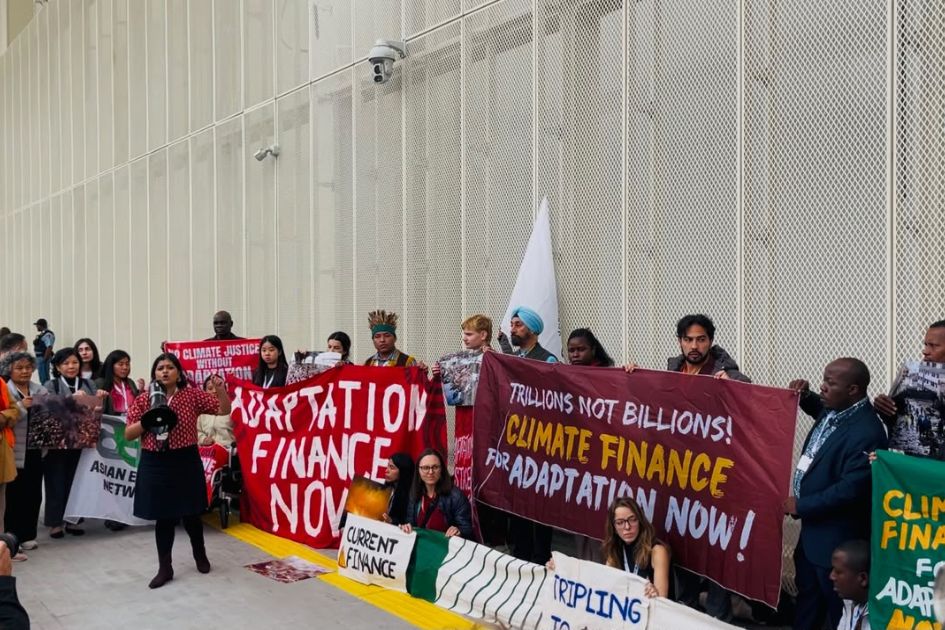
COP31 was supposed to build upon three decades of international climate negotiations. It ended without agreement on its central political declaration. More than 130 countries backed a renewed commitment to move away from fossil fuels. The draft Antalya Pact left the words out entirely. The European Union, Britain and several developing countries refused to endorse it. On 22 November, the Turkish presidency acknowledged that consensus was impossible and abandoned the main declaration. Governments now accept that human activity is warming the planet, and they accept the evidence about what is doing it. They still cannot name fossil fuels in the document meant to deal with it. Ignorance does not explain the dispute. The governments that opposed stronger language understand fossil fuel combustion perfectly well. They object to what it would cost them to accept responsibility for cutting it.
The 2025 Production Gap Report calculated that governments collectively planned to produce more than twice the quantity of fossil fuels in 2030 consistent with limiting warming to 1.5°C. In October this year, Britain’s Labour government approved production at the Jackdaw gas field in the North Sea, and ministers celebrated what it would add to domestic energy supplies and to the economy. The following month Britain rejected an international declaration for failing to recognise the need to move away from fossil fuels. Put side by side, the two decisions show how easily a general commitment to decarbonisation makes room for new extraction.
On weapons as on gas, governments present their immediate decisions as unavoidable responses to circumstances they did not create. Britain needs gas because its economy still runs on it, and Ukraine needs advanced defensive weapons because Russia invaded it. Other governments argue that their adversaries are developing military autonomy, so they must as well. Each decision can be defended by pointing to a dependency or a threat that already exists.
We can’t recover the ice sheets once melted
The two crises differ in an important way. Climate change is a cumulative physical process, governed by the concentration of greenhouse gases in the atmosphere and the response of the Earth system. Autonomous weapons are technologies that political decisions can, in principle, ban or roll back. Melted ice sheets do not come back on any human timescale. A minister can cancel a weapons programme. Both still punish delay. In each case it is easier to act early than to win back control later.
Climate scientists have long warned about thresholds beyond which some changes become very hard or impossible to reverse on human timescales. Ice sheets can lock into long-term retreat and ecosystems can lose the capacity to recover, with effects that persist after emissions start falling. Such processes rarely arrive as a single spectacular event. They unfold through interactions that scientists are still investigating, and often become unmistakable only after the damage is done. The latest UN Environment Programme assessment expects warming to pass the Paris Agreement’s 1.5°C threshold. Its authors argue that rapid enough cuts in emissions could shorten and shrink the overshoot, perhaps bringing temperatures back to that level later in the century. Overshoot does not make further action pointless, and every fraction of a degree still matters. Some of the damage done while temperatures sit above the threshold will remain when they fall.
Political institutions keep a different clock from the processes they try to govern. Governments run on elections and spending reviews. Companies invest according to expected returns, and defence ministries plan procurement programmes that run for decades. The atmosphere keeps accumulating carbon dioxide whatever the electoral cycle. Several armies can field a weapons system before diplomats have finished arguing over the provisions of a treaty. The institutions we have can see long-term dangers, and they answer to short-term interests.
Dangers of adaptation
That mismatch helps explain the complacency that has met repeated warnings about irreversible change. People have heard so many predictions of disaster that the language has lost most of its force. Many younger adults cannot remember a time when the climate crisis was not approaching a decisive moment. Each deadline passes. The damage spreads, and for a large part of the population ordinary life carries on. People still go to work and governments still announce growth figures.
Everyday life is already absorbing ecological damage. Insurers raise premiums or withdraw cover from flood-prone streets, and governments build the defences higher. Farmers change what they plant as growing conditions worsen. Treasuries divert public money to repairs, and politicians then describe the spending as another pressure on the budget. Each adjustment looks sensible on its own. What was once an unacceptable future becomes a present problem to be managed.
Adaptation carries a political danger: it can hide the scale of what has been lost. A community that rebuilds after every flood earns praise for its resilience, and few people ask why it keeps having to rebuild. Employers expect workers to tolerate ever more severe heat. Households absorb rising insurance costs, and poorer countries borrow money to protect themselves against damage they did relatively little to cause.
A condition that should have forced people to question how the economy works gradually becomes part of how it works. The language of adaptation suits the wealthy. They can protect their property or move their businesses out of the way. Everyone else endures conditions they cannot afford to escape. .
War absorbs new weapons in the same way. Weapons that once looked extraordinary become familiar with use.
Technology and climate change moving faster than regulation
Commanders, governments and operators remain bound by international humanitarian law. Pinning responsibility on any of them gets harder when a death depends on software design, operating parameters and decisions spread across military and commercial organisations. The danger here is human. People build arrangements in which responsibility becomes hard to locate, and the institutions that benefit have little reason to expose the limits of those arrangements.
The technology also moves faster than the institutions meant to regulate it. Armies develop autonomous weapons in the middle of real wars, and can test and modify them in the field as operations demand. Regulation depends on agreement among governments whose strategic interests often clash.
Thirty-one climate conferences show the same lag. Negotiators move from promise to deadline to promise, and the industry keeps building and running fossil fuel infrastructure. Each investment sinks money into assets that only pay off if they keep running. Companies, workers, regional economies and government revenues come to depend on that expectation. The longer extraction continues, the more ending it seems to cost, politically and financially.
The comforting explanation is that political leaders lack courage. Some do. The problem persists across governments of different political colours, which points to something more substantial. Capitalist investment follows the expectation of profit. Fossil fuel companies own reserves and infrastructure whose value depends on future extraction, and governments depend on the jobs and tax revenue those investments generate. International climate commitments run into these material relationships whenever they threaten existing business. Military technology has its own political economy, with the same structural problem. States compete for strategic advantage and hand large sums of public money to private contractors to build ever more sophisticated systems. Neither side gains much from restrictions that a rival might ignore. So both keep developing the weapons and declare support for regulation in principle, especially while that regulation binds nobody.
International governance weaker that capitalist interests
What troubles me most about Geneva and Antalya is that we may recognise the political failure only in retrospect. No one may ever announce that autonomous weapons have become too embedded in military practice to regulate. Nor need there be a single environmental event that proves humanity has crossed a threshold. Scientists may confirm such a change only after years of observation, by which time societies will have adjusted their expectations to fit it.
This argument can slide into fatalism, and fatalism would be politically disastrous. Some damage is irreversible; further damage can still be prevented. The spread of autonomous weapons does not make international restrictions impossible either. Arms control has a record of successful prohibitions, and climate policy has already helped change the global energy system. Renewable electricity is expanding fast, and decarbonisation is far more technically feasible than it was at the first climate conferences. What is missing is political will. Governments would have to change the economic arrangements that reward fossil fuel production, and military powers would have to accept enforceable limits on technologies they value. Countries with little power over the decisions that produce the greatest risks need international cooperation most. Cooperation cannot go on meaning negotiations that leave the interests they were meant to restrain untouched.
I began by thinking of the two conferences as failures of international governance. The more I considered them, the less satisfactory that explanation seemed.
No institution stands apart from the interests represented inside it. The countries resisting fossil fuel commitments, and those opposing binding limits on autonomous weapons, have material reasons for their positions. Negotiations can expose those conflicts. Resolving them would mean changing the relations of ownership and military power underneath.
We have got used to discussing these crises in the future tense. Climate breakdown is what happens if emissions do not fall. Autonomous weapons become dangerous if governments fail to regulate them. People across the world are already living with climate damage, and armies are already folding autonomy into their operations. The future we are warned about is taking shape in the present, unevenly, without waiting for an international agreement.
The most frightening possibility is that the loss will not feel like a catastrophe when it happens. We will have got used to the damage and to the cost of managing it, and we will lower our expectations a little after each new deterioration. Governments will go on announcing progress and companies reporting profits. Diplomats will keep drafting documents about the urgency of action. Only historical comparison will show that conditions have become worse than anyone once thought acceptable.
A future generation may look back at November 2026 and wonder how governments could spend a week arguing over whether machines should be allowed to kill human beings on their own, while a second gathering of governments could not agree that fossil fuels were heating the planet. They may find the proceedings almost incomprehensible.
Or perhaps they will understand them perfectly. They will have grown up with these arrangements as ordinary. The opportunities we still have will be gone, and the conditions we were warned against will be the only ones they have ever known.
We may have learnt to live with the consequences long before we recognise what has happened.
Greenpeace protests at COP31 on youtube: https://www.youtube.com/shorts/1P78xwPNE6o