


Tony is a veteran socialist and anti-racist activist. For more than fifty years he has been a prominent and high-profile anti-Zionist Jew, facing constant attacks and abuse from the self-appointed “representatives” of British Jews, and from the Israeli state and its propagandists and apologists. His acerbic style and take-no-prisoners attitude have earned him many enemies, but even they are forced to recognise that his research is impeccable and his arguments factual and forceful. Indeed, that is why they focus on his presentation rather than his content. Tony’s book Zionism During the Holocaust is essential reading for anyone who mistakenly believes that Zionism could ever have presented a viable option for European Jews faced with the Nazi extermination machine.
The allegation was that Tony had “invited support” for Hamas, a reactionary organisation which he has always opposed. This accusation was based on an extremely tendentious reading of one of two sentences in a long blog post – only half of which was provided to the jury, despite requests from Tony’s counsel that they be shown the full post. Nor were the jury shown the many blog posts by Tony critical of Hamas, which he explicitly described as “Islamic fascists”.
As has become the practice in similar cases, the judge repeatedly refused to allow the defence to explain the reasons for Tony’s comments, or to raise any political context. After one of her objections to any mention of the history of Palestine and Israel, Tony accused her of “turning a blind eye to genocide”.
The high point of the trial was Tony’s closing speech to the jury. Tony dispensed with the services of his barrister – who, had he raised any of these issues in his speech, could, like Rajiv Menon after a recent Palestine Action trial, have faced the possibility of professional disciplinary measures and trial for contempt of court.
Tony’s extremely well-crafted speech described his background as the son of an Orthodox Rabbi, his early Zionism, his growing awareness nearly sixty years ago of the injustice done to the Palestinian people, and his many decades of anti-fascist and anti-Zionist activity. He outlined the background to the case, what he actually wrote and how this was misrepresented by the prosecution. He mocked their claims about what his words meant, asserting that he was the best judge of what he meant.
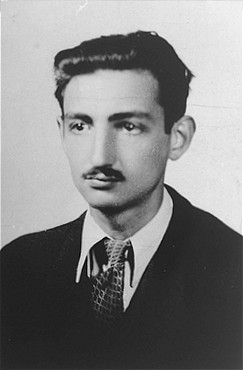
Tony referred to the changing definition of “terrorism”, noting that the typical arrestee now was more likely to be a 59-year-old woman than a 31-year-old man. Quoting the anti-Zionist Bundist, Marek Edelman, the last surviving leader of the 1943 Warsaw Ghetto uprising, Tony explained why he referred to “the Gaza Ghetto uprising”. And the key sentence of his conclusion – a sentence that the judge apparently considered to be in contempt of court – was to tell the jury “The prosecution does not get to dictate that “please share my article” means “support Hamas.” That question belongs to you, and to nobody else in this building.”
After a remarkably short two-hour deliberation (one hour of which was the lunch break), the jury returned a unanimous Not Guilty verdict. But before they did so, the judge made the remarkable statement that she had considered charging Tony with contempt of court, but had concluded that his speech was merely “the ramblings of an old man”, which could not conceivably have influenced the jury. The truth is that, had she charged a disabled septuagenarian socialist Jew for contempt, after he had been unanimously acquitted by a jury, it would have been she rather than Tony who the public regarded with contempt.
More positive judgements

In a separate case the same week, a jury was dismissed after it failed to convict seven activists charged with criminal damage following a raid on an Israeli arms factory run by Elbit systems in Filton, Bristol. The seven – who had already spent 18 months in prison on remand, long over the standard limit – could face a retrial. In the course of their deliberations, the jury asked the judge whether, if convicted, the accused would be sentenced as terrorists; the judge replied that this was a matter for him, and not their concern. The defence had once again been barred from mentioning this possibility, as in the earlier Filton 5 trial mentioned above, but it seems clear that growing public awareness of this practice, despite efforts to keep it secret, influenced the jury’s response.
And in a further case in Preston, the judge in a case against Palestine Action activists accused of throwing red paint at a branch of Barclays Bank explicitly told the jury that if convicted, they would not be sentenced as terrorists. Although convicted, they will only receive the same sentence as others convicted of criminal damage.
These three events coming in the same week are a blow to the government’s complicity with genocide, their attempts to curtail free speech and to repress protest through intimidation as well as direct force, They are also an indication that the movement in support of Palestine has a wide degree of public support way beyond those who actively participate in its actions.
These cases show how important an independent jury is in defence of basic rights, and how it can cut through all the legal obfuscation to reach the obvious conclusion that people taking drastic action against complicity in genocide are not, and should not be treated as, terrorists. They also show why the state is determined to restrict both the right of the defence to present their case to a jury, and even the right to a trial by jury.
ACR welcomes the acquittal of Tony Greenstein, both as a vindication of the right to speak freely against genocide and in support of Palestinian rights, and as an example of the independence of the jury to decide guilt or acquittal and of courage in the face of an attack on basic civil and human rights.
As a Palestinian remarked to me, some 50 years ago, ‘you British don’t appreciate your freedoms, so one day you will lose them’. Now we have reached the time where we really must push hard if we are to retain the rights for which our ancestors fought and died. Politicians on both sides of the house wish to restrict the right to protest. They use the charge of terrorism to enforce their views and prevent (hmm) rational discussion and dialogue. They ignore the pleas of their constituents and instead obey their pay masters. And they wish to slowly abolish juries, rather than put enough funds into the system. Dangerous times indeed!