


A lot of Labour MPs are saying Starmer might have made a lot of mistakes and is unpopular on the doorstep but he is a bit of a master at foreign affairs. So in a time of war and international crisis it would be wrong and ‘weaken national security’ if we launch a leadership challenge now.
However the whole Mandelson ambassador saga is based on a totally mistaken view of how to relate to Trump. Starmer thought that a prince of darkness, someone who swam in the same murky waters as Trump would be the best way of dealing with the president. Those stolid professional diplomats were just out of their depth in the Trump era.
Events have shown how naïve the ass licking approach is. Starmer never directly criticises him, he hands over the sacramental state visit invitation from King Charles, and he smiles at every quip from the big narcissist. Only when Starmer mildly broke with this approach and semi-detached the British military from getting directly involved in the Iran war did received a up blip in his polls.
Mandelson ‘made’ Starmer
Picking Mandelson to deal with Trump is only part of the story. John McDonnell was absolutely on the button in his statement in the Commons debate. on 20 April Mandelson, McSweeny and their war engine, Labour Together, crushed what was left of the Corbyn project and groomed Starmer into power. He owed Mandelson big time.
Labour Together did not just crush Corbynism but also carried out a social liberalization of Labour, removing even the faint vestiges of classic social democracy remaining after Blairism. Central to this was a complete subordination of Labour to neo-liberalism and corporate capital. Not even moderare left policies were to be considered. Labour cadre and corporate executives dissolved into each other. Lobbying and embracing big capital replaced any sense that an active membership was needed to defend the interests of working people. The left had to be blocked from all candidatures.
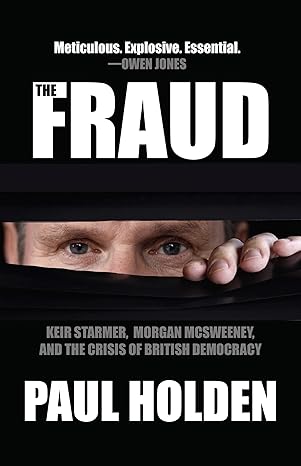
They shamelessly changed the rules or in places cheated (see the current criminal cases in Croydon). Mandelson and McSweeney commanded a big spreadsheet that systematically weeded out any candidates who were not ‘one of us’. Once selected these candidates were kept fully onside by the money they received from Labour together for campaigning. These were not small sums as huge sums had been amassed from hedge funds and big business. Indeed it got into trouble with regulators for not correctly declaring all this as exposed by Paul Holden in his book, The Fraud.
A revolving door at the top
The Labour Together machine intensified the ‘revolving door’ between politics and corporate management, consultancy and lobbying. Increasingly you became a Labour MP after working in that world or in local government as an elected cabinet member or an administrator. Vaguely liberal thinktanks, nongovernment organizations or charities were another reservoir for complacent candidates.
Corporate staff were already embedded with shadow ministers before Lbour won power and were later placed in the ministries. Trade union organizers, local activists or campaigners were rarely selected. No wonder the Greens made a lot of ‘Hannah Spencer the plumber’ in the Gorton by election. Go back and look at Labour Party candidates from the 1970s and you can see the difference. Mandelson and McSweeney saw Labour winning and holding on to power by replacing the Tories as the natural managers in a neo liberal world where everything rested on a fruitful partnership with capital.
Jobs for the Boys
So when Robbins revealed that number 10 contacted him to find a cushy head of mission post for Matthew Doyle who was leaving the Cabinet office this was seen as quite normal. Starmer today just dismissed this as ‘conversations’ you have when someone leaves a job. If only we all had the prime minister touting for us. Doyle was another politician who was best mates with a convicted paedophile. Starmer gave him a peerage anyway.
Whether it can be proved that Starmer lied about not knowing that the vetting at the foreign office was leaning to not pass Mandelson is beside the point. If anything the fact that this deep vetting, in Robbins’ words, was borderline about Mandelson being a liability reinforces the terrible judgment Starmer made right from the start. Like Starmer, the Foreign Office vetters did not consider the Epstein relationship a decisive negative factor – so much for their concern for abused women.
Robbins did not reveal whether there were crucial new elements in the deep vetting that the initial Cabinet office one missed or were not in the public domain already. Starmer is using Robbins’ so called error of judgment to cover up his own responsibility and subservience to Mandelson.
Starmer’s problem is that most of the mainstream media, public opinion and a lot of his MPs see through the blather and do not buy his account. Given Robbins will be seeking compensation, possibly in an employment tribunal, and that numerous documents are still to be released, the focus on his judgment and competency will continue at least through the May elections.
Starmer is already unpopular on the doorstep. Unlike in the last election local Labour parties are keeping Starmer well away from their propaganda. Instead the focus is on local ‘competence’, highlighting the threat of Reform and smearing the Greens.
Challenge or not to challenge?
A heavy defeat in May will open a leadership challenge either immediately or in subsequent months. The rest of the leadership will be happy to package the defeat as down to Starmer. Any immediate resignation or challenge might even make the defeat worse and antagonize those remaining members who are canvassing.
The moderate soft left MPs are on manoeuvres already. Yesterday they used the platform of the Good Growth Foundation conference to lay out some policies that would allow a government reset – reducing the influence of the Office for Budget Responsibility (OBR), challenging notions of fiscal rules and headroom, changing energy pricing and some taxation reforms.
The centrist Labour Growth group of MPs who are not even particularly soft left were present along with people from the Tribune Group (Haigh) and Mainstream (Burnham). Louise Haigh, Angela Rayner and Miliband all spoke. Wes Streeting did not show up. Darren Jones a key member of Labour Together did pipe up to say that ‘if there were easier ways we would have taken them’.
Miliband felt strong and secure enough this week to say he and David Lammy had both felt that the ‘Mandelson appointment’ would blow up. He has the advantage of not collaborating with Mandelson while leader and since. Is there a Miliband/Rayner/Burnham axis developing? It would certainly get the numbers for a candidate and have a good chance of winning trade union support.
The exposure of Labour Together and its links to Mandelson does not help leadership challengers from the right. Streeting, Reeves, Philippson, Mahmood and Reed are all key members of Labour Together. If the soft left put someone up following May they are faced with a tactical problem. If Starmer does not resign but stays and fights do they have a better chance of holding off a soft left takeover by blocking with him. They could argue his electoral mandate holds and the dangerous international situation and the need to keep unity means he should stay. Or will Starmer be such a liability that he would lose so they also have to move?
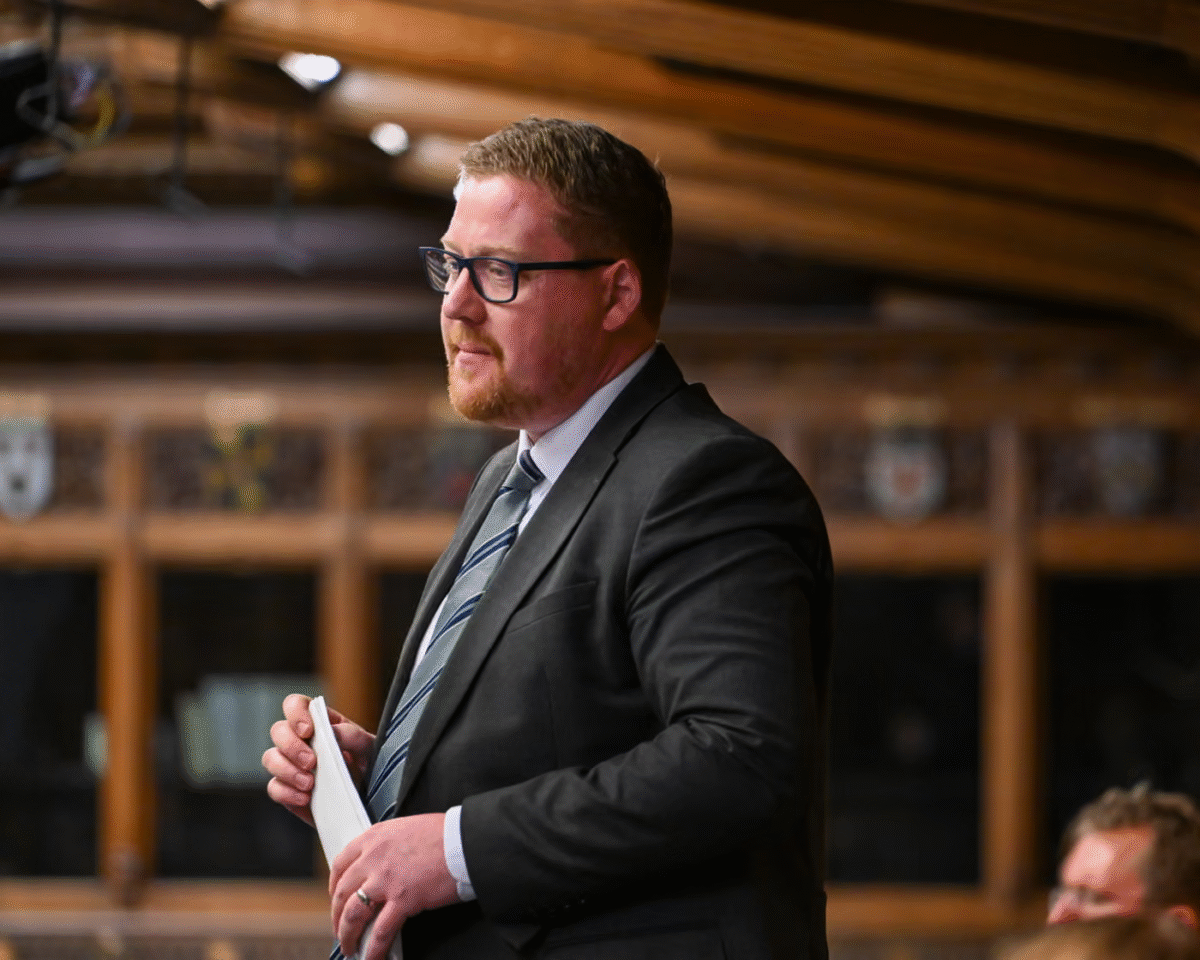
Reflecting the growing ferment among Labour MPs Hartlepool South (Mandy’s old seat) MP, Jonathan Brash, has just called on Starmer to go now – he says it might help in the local elections. Brash is one of the 2024 intake and is not on even the soft left but a member of the socially conservative Blue Labour faction. If people from that wing of the party are dumping Starmer now he is in trouble.
Putting forward a left alternative
Any new leadership challenge will open up a political debate about the direction of the Labour government that the Greens and the whole left should get involved in. Not because we have any great illusions in Rayner or Burnham but because it gives us an opportunity to put forward policies that would radically solve the cost of living crisis by attacking the wealth and power of capital. We could challenge the soft left’s timidity and woeful record in defending the democratic right to protest, to jury trials and in supporting migrants and refugees. We can outline a programme that can achieve net zero and save mother earth. The audience for such discussion will be broadened if there is a leadership challenge.
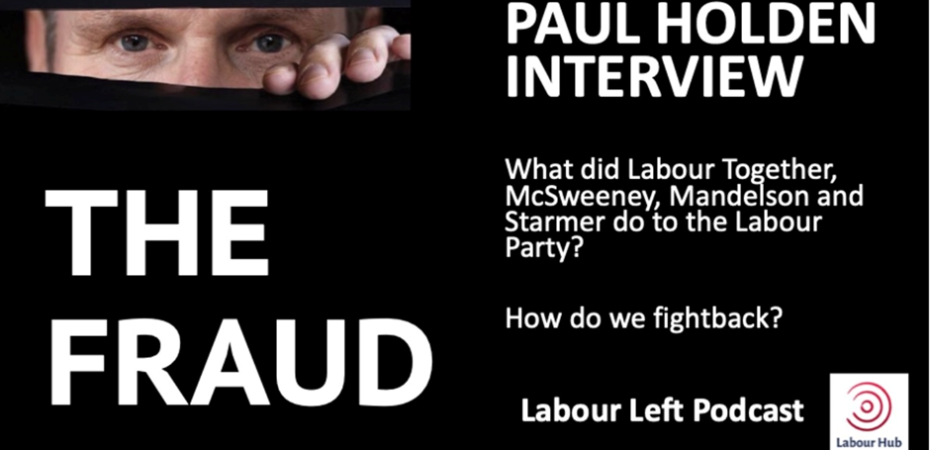
In the meantime it is important to support the campaign led by John McDonnell and others for a full inquiry into Labour Together. John raised it the debate in the House on 19 April. Paul Holden has done a magnificent job in his 535 page exposure of Labour Together in his book The Fraud. Josh Simons recently lost his junior minister job after it had been revealed he paid a consultancy company £36,000 to dig the dirt on Holden. They tried to pin a Kremlin link on him to no avail. There is also an excellent podcast interview with Bryn Griffiths that goes into great detail about the whole affair.
The Fraud: The Paul Holden Interview – Labour Hub
Labour Together might have been confident that they could deliver Mandelson’s dream of putting the left in a tomb forever. Their efforts are disintegrating as the Labour party is drained of active members who are leaving to a radicalizing Green party, Your Party and to independent socialist groups. At the same time the remaining left forces are beginning to move the lid off the tomb.