

On 31 July this year the Burnham-led Government published “Rewiring the State – Cabinet Statement”. It outlined “The New Model of Government”, based on “a radical shift in where powers and resources lie, so that decisions can be made locally, and people can shape their own areas and hold government – at all levels – to account.”It says “We agreed to replace the current model of consultation by default with new and modern forms of public participation. This includes considering where performative statutory duties to consult can be revoked and how we can more actively bring the public into the policy-making process instead.”
Introducing the report, Prime Minister Andy Burnham said “This autumn … we will publish a white paper detailing our plans for the full set of reforms and a clear timetable for their implementation.” He ended by saying “those powers will be handed to the communities they’re meant to serve.”
Handing power to regional Mayors, not communities
You might have the impression from “Rewiring the State” that what Burnham is proposing is a radical democratisation of local government at the regional level in England, giving significant powers to citizens. But he isn’t. “Rewiring the State” gives an apparently democratic coating to a policy which actually hands over powers not to communities but to the Mayors of Combined Authorities, or as they are now known, Mayoral Strategic Authorities (MSAs), which are in the process of spreading to cover the whole of England.
On August 3 Labour List reported that Prime Minister Andy Burnham said “Last Friday, I announced the biggest devolution of power to mayors in modern English history. For the first time ever, those mayors will get to keep a share of the income tax generated in their regions.”
“This will include empowering mayors to offer a high-quality locally tailored technical or vocational route from age 16, underpinned by control of the budget for 16- to 19-year-olds….
We will give mayors the powers, flexibility and accountability to bring together education, employment, health and local support into a clear route for young people,…
We will also devolve employment support to mayors …
In respect of transport, we will support mayors to take public control of buses more rapidly …
Mayors will be equipped to support the building of council homes,…
We will support mayors to foster local innovation ecosystems…
… a share of local income tax for every mayor beginning in 2028”
Burnham also announced “the establishment of deputy mayor roles with responsibility for key public services.” But these deputy mayors will not be elected, they will be appointed by the Mayor of the MSA.
What is the relationship between these two apparently contradictory policies?
In the last 25 years or so many forms of participatory democracy have been put into practice in many countries around the world. A recent useful overview and analysis is provided by “Reclaiming Participatory Governance: Social Movements and the Reinvention of Democratic Innovation”, a book edited by Adrian Bua and Sonia Bussu and published in 2023.
Bua and Bussu’s book is framed by a counterposition between “governance-driven democracy” (GDD) and “democracy-driven governance” (DDG), which is very relevant to an analysis of the politics of participation that Andy Burnham is advocating as Prime Minister. In the Introduction (Link 1 below) they say that
“…radical participatory politics has seen a strong resurgence, particularly as a reaction to the 2008 financial crisis and the punishing austerity measures that followed across many advanced economies. “Bottom-linked” forms of collaboration and social innovation (…), led by social movements and grassroots politics and often grounded in the everyday democracy of the commons, attempt to institutionalise more prefigurative politics with a renewed emphasis on social justice and bringing issues of political economy centre stage. They aspire to deeper changes to current political, social and economic structures with a strong focus on strengthening people’s (material) capacities to participate, which have been conveniently overlooked by much of the thinking and practice of DIs.”[Democratic Innovations] (p1)
We initially developed the concept of democracy-driven governance (DDG) in the particular context of the political crisis and wave of contestation witnessed in Spain in the 2010s. Especially important in this context was the “radical municipalist” experience (…), whereby many of Spain’s large- and medium-sized cities experimented with, and attempted to radicalise, participatory policies, introducing novel forms of participatory budgeting, sortition chambers, associative democracy, public-commons partnerships and techno-democracy. (p7)
Bua and Bussu explain how Democracy-Driven Governance forms of engagement by social movements have been countered by Governance-Driven Democracy (GDD):
“As new and innovative forms of citizen participation in policymaking and public service delivery are used globally and at different tiers of government, the space for meaningful citizen input is increasingly constrained by technocratic decision-making and global economic pressures (…). Rather than providing channels to challenge existing socio-economic inequalities, these processes have often been embedded within the neoliberal rhetoric of transparency, good governance and open government (…). Within this context issues of social justice and redistribution of wealth and power, (…), let alone the socio-economic and cultural factors that might affect people’s capacity to participate meaningfully, have often been side-lined (…)”. (p10)
The self-selection bias of mini-publics is still huge and marginalised groups continue to struggle to be part of the conversation (Bussu et al., 2022a). There is also a risk that these sanitised processes of participation end up depoliticising citizen engagement.
The theme is continued in Chapter 11 “Democracy-Driven Governance and Governance-Driven Democratisation in Barcelona and Nantes”, by Adrian Bua, Sonia Bussu and Jonathan Davies. (Link 2 below) They explain that Governance-Driven Democratisation is
“…the dominant form of participatory governance: an elite-led form where the aim is to address the legitimacy crisis of institutions and experts and to improve policymaking on complex issues, by involving new voices and interests. The rationale is therefore functionalist in nature and the agenda is often shaped by agencies “inviting” citizen participation (…). DDG is more critically oriented and bottom-up. It emerges through popular mobilisation, attempts to bring social movements into the state and has transformative aspirations (…). The key difference is that whereas GDD accepts the basic parameters of neoliberal political economy and is therefore easily incorporated into good governance discourses, DDG has more radical ambitions; it challenges the separation of politics and economics that characterises liberal democracy, and it is driven by a social justice orientation.” (p170)
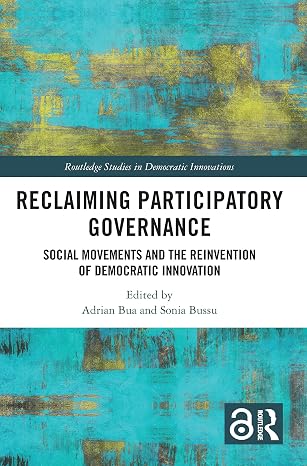
Burnham was Mayor of Greater Manchester for 9 years, from 2017. Democracy-Driven Governance or Governance-Driven Democratisation?
The GMCA Constitution lists the following “Core Powers and Responsibilities” of the Mayor:
- Transport & the Bee Network: The Mayor holds governance over the Greater Manchester Local Transport Plan. In consultation with the GMCA, the Mayor directs funding and controls the Bee Network, setting bus routes, timetables, and capped fares.
- Policing and Crime: The Mayor absorbs the duties of the Police and Crime Commissioner (PCC). This includes appointing the Chief Constable, setting the police budget, and writing the region’s annual Police and Crime Plan.
- Fire and Rescue: The Mayor is responsible for the Greater Manchester Fire and Rescue Service, which includes setting its budget and strategic priorities.
- Housing and Planning: The Mayor has a constitutional duty to produce a Spatial Development Strategy (SDS) to coordinate housing and infrastructure across the boroughs.
- Appointments: Under legislation, the Mayor appoints a Deputy Mayor and can appoint dedicated mayoral commissioners to lead delivery across specific devolved policy areas.
The GMCA Constitution does say “While the Mayor can make certain decisions independently, most major strategic choices require consultation or approval from the 11-member GMCA board.” Note: not all require “approval”, just “consultation”. In addition to the Mayor, the Board comprises the Leaders of the 10 local councils in Greater Manchester. But they weren’t elected to their role of leading Greater Manchester, with its population of 3.6million – they inherited it in addition to their very demanding priority jobs of running their local Councils in this period of rising demands and shrinking budgets.
Greater Manchester consists of 10 separate metropolitan borough councils (Bolton, Bury, Manchester, Oldham, Rochdale, Salford, Stockport, Tameside, Trafford, and Wigan). In contrast to the GMCA they collectively comprise hundreds of local councillors to represent their residents. For example, Bury, with the smallest population in the GMCA of around 199,000, has 51 Councillors.
So in practice the GMCA was run for 9 years by Andy Burnham as Mayor and by its powerful senior officers, led by the Chief Executive on £240,000 a year. It was Governance Driven Democracy with very weak active citizen participation in making policy.
What did Burnham do as Mayor of Greater Manchester to promote public participation?
It is now increasingly normal practice for local government, at Local Authority and Combined Authority levels, to promote policies for community participation – Governance-Driven Democracy. In November 2025, in the 8th year of Burnham’s office as Mayor, the GMCA launched a community participation programme: the Live Well Participation Playbook, titled Shaping How We Live Well Together. This free toolkit aims to “embed community power, build trust, and reduce inequalities across the region”. It establishes formal frameworks for seven democratic methods. These include regional participatory budgeting, community reporting, design-thinking workshops, and localised citizens’ assemblies. Speaking at the launch of the Participation Playbook, Andy Burnham said that “the antidote to alienation is participation”.(You can see the complete toolkit and materials on the official GMCA Live Well Resources page.)
Public participation in local government can of course take many forms. Could Burnham be thinking of Citizens’ Assemblies? They have become relatively common at the local Council level to address specific issues such as climate change, and some Combined Authorities, such as North of Tyne and South Yorkshire, have also used citizens’ assemblies to involve the public in regional decision-making. Public assemblies can be open to all, or comprise elected members, or, as is common, with membership chosen by sortition, where participants are selected by a random lottery. Assemblies can be one-off events or, rarely, a regular series. But none of these are permanent democratically-elected legislative bodies.
But now there is a public movement for a permanent elected Citizens’ Assembly for Greater Manchester
Nearly 60% of Mancunians want a citizens’ assembly to bring decision-making closer to people, according to a survey published on 6 May 2026. Grassroots groups, supported by the Sortition Foundation, have mobilised the Greater Manchester Citizens’ Assembly campaign, demanding the establishment of the UK’s first permanent regional citizens’ assembly. (Link 3 below) Operating under jury-style selection, the initiative seeks to bridge the democratic gap between voters and the GMCA’s centralised mayoral legislature. This would not be a one-off event, as they have usually been in many areas, but a permanent elected body:
To: Andy Burnham and the Greater Manchester Combined Authority (GMCA)
Our Home, Our Say: A Citizens’ Assembly for Greater Manchester
We, the undersigned, believe Greater Manchester should once again be the flagship of change. Our city has always led the way. Now, it’s time to keep that momentum going by modernising our political system.
The current set-up, with an indirectly elected authority and one mayoral vote every four years, leaves too many voices unheard. We call on you, Mayor Burnham and the GMCA, to establish a permanent Citizens’ Assembly to put the people at the helm in the region. This assembly will bring people from all walks of life in our communities together—engineers, nurses, shopkeepers, teachers, and neighbours—to help tackle the problems we face and ensure decisions serve people like us. Selected like a jury and guided by specialists, it will ensure policies serve the people of Greater Manchester.
By establishing the UK’s first permanent Citizens’ Assembly, we can inspire change across the country and give the mayor more authority and attention when advocating for us on the national stage.
We urge you to act now. Let’s not accept London’s second-class structure of local democracy—Greater Manchester deserves greater democracy!
Sign the petition for a Citizens’ Assembly for Greater Manchester
The Sortition Society in Partnership with the Electoral Reform Society & Make Votes Matter
Assemblies and other forms of mass participatory democracy can change the relationship between the governed and their government, shifting power back to citizens. But the forms this relationship can take vary greatly. The best-known permanent regional assembly in England is the London Assembly. It was designed by Tony Blair when he was prime minister to avoid recreating the relatively powerful left-wing Greater London Council (92 seats) or its predecessor, the London County Council (150 seats).
The Manchester campaign would be right to reject the London Assembly model, for two reasons. First, because the London Assembly is ridiculously small, with only 25 Members to represent 9 million Londoners – an impossible workload. In comparison, Kensington and Chelsea, London’s least populated borough, has 50 councillors for 150,000 residents.
Secondly, because the London Assembly actually has very little actual power over the Mayor. To oppose or amend mayoral strategies and the Budget, the Assembly has to have a two-thirds majority, making the odds of winning a vote very low. Till now the Assembly has never managed to formally amend the Mayor’s annual budget. One consequence is that most Londoners are hardly even aware of who the Assembly members are, let alone their responsibilities and what they do. What is needed is a mass public campaign to demand that Andy Burnham gets rid of the London Assembly and replaces it with something much more democratic and participatory.
What can we learn from Citizen Assemblies for Participatory Budgeting in Porto Alegre?
In the UK, most cases of participatory budgeting have been small scale community grant allocations, a minor part of Council budgets. For example, “Tower Hamlets, ‘You Decide!’” was a participatory budgeting project run by the Tower Hamlets Council between 2009 and 2010. It gave local residents direct control over how to spend over £5 million to improve local services and community projects across the borough.
Participatory budgeting was famously pioneered by the city of Porto Alegre in Brazil, with a population of 1.5 million, in 1989. The newly elected Workers’ Party allowed all citizens to directly decide every year how to allocate municipal funds through open neighbourhood and thematic city-wide deliberative assemblies. Decisions made by citizens during the PB cycle directly informed the allocation of that year’s budget.
Citizen participation grew over time, reaching 50,000 citizens by 2004. Participation from underrepresented groups (low-income, women and people without formal education) has been particularly high. But in 2004, after 20 years of successful operation, challenges began to arise when the Workers’ Party lost the elections. Although budget allocations continue, subsequent governments have not had the same level of engagement, and there are accusations of more clientelist relationships. It is an example of the shift from “democracy-driven governance”(DDG) to “governance-driven democracy” (GDD)
An article by Iain Bruce on the ACR website on 14 January 2026 promotes the importance of governing based on citizen assemblies. Its conclusion is worth repeating here. (4)
“In the short term, it enables the social base to keep mobilising, which is vital to sustain a progressive administration that will inevitably be hemmed in by hostile elites and procedural roadblocks, hindering its attempts to implement even its core, immediate, ‘affordability’ policies. In the process of these fights over housing and transport, childcare and the cost of groceries, it also begins to create new structures of power, increasing “the capacity of workers to collectively shape the decisions that shape their lives”, and “to lay the basis for a society beyond capitalism”.
Some principles for an elected governing Assembly for Greater Manchester – and for every Mayoral Strategic Authority
The total population of the Greater Manchester Combined Authority is just over 3 million. It would need regular meetings of a permanent GM Assembly of at least 100 members, though it could be much larger. The members should be elected on a proportional geographical basis in each of the 10 LAs. The City of Manchester’s population in 2026 is estimated at just over 600,000. That would make Manchester the largest Council group in a Greater Manchester Assembly of 100 with 20 members. There needs to be an element of proportional representation in each Local Authority-based election to ensure that small parties are represented, and also to ensure gender representation.
Each Local Authority group of Assembly members should not be chosen by sortition. They should be elected by their local electorate to be both actively representative of their views and informing their views in a dialogic relationship. This should be achieved by regular open meetings (ideally hybrid in-person and online) with all the Assembly members in each Local Authority for issues to be raised and discussed.
There should also be Mayoral Strategic Authority-wide open meetings with Assembly members (again hybrid in-person and online) based on specific sectors and issues and related to the Combined Authority’s Committees – the Economy, Employment, Housing, the Environment, etc. In addition there should be a permanent digital platform (or subject-specific platforms) for citizen participation and discussion with Assembly members.
How the Members should be elected, and crucially, how the citizens of the Local Authorities in the Mayoral Strategic Authority area can ensure that its Members listen to them and act on their behalf, are questions that should be discussed and decided by the citizens of the MSA area themselves. Later versions of participatory budgeting adopted in some countries have been consultations without real power. But core principles of the original Porto Alegre version were that the Participatory Budgeting process should have sovereign decision-making power, and that it should discuss the whole budget, not just parts of it.
17 August 2026
Links
- file:///C:/Users/Owner/Downloads/9781003218517_previewpdf%20(2).pdf and scroll down to Introduction
- Chapter 11 Adrian Bua, Sonia Bussu and Jonathan Davie https://www.taylorfrancis.com/reader/download/b7e0284d-2c18-44f1-8613-c66f1d92c292/chapter/pdf?context=ubx
- https://www.sortitionfoundation.org/gm_polling_may_2026
- The quote is from an article in the US journal Jacobin in December 2025 by Gabriel Hetland, who has done a lot of work with social movements in Venezuela and Bolivia, and Bhaskar Sunkara, the editor of Jacobin.
photos from creative commons, John Lucas, Peter Dixon and Helena Rocha