
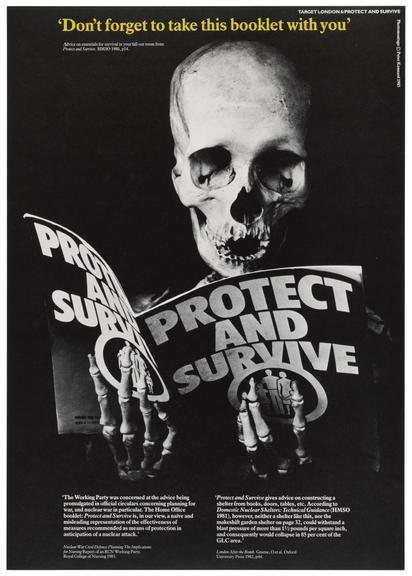
Sheltered, published 2026 by Austin-Macauley Publishers
Given the fact that nuclear Armageddon has been hanging over humanity since the 1950s it is surprising that there are not more classic or contemporary novels dealing with how society would deal with the after effects of a nuclear war. Perhaps like our own mortality there is a psychological tendency not to dwell too much on it. On the Beach (Neville Shute) and The Road (Cormac Mc’Carthy) are two stand out classics that were both turned into movies. Like some of the dystopian stories on TV or Film like the 28 Days Later franchise they tend to focus on societal breakdown out in the open.
Kim Gordon Bates’ book is many ways is much more claustrophobic and prosaic yet maybe closer to what might actually happen. Sheltered focuses on how a British government would respond, how the state would try to maintain a functioning core of specialists, experts and administrators.
Well researched
Clearly this book is well researched and it takes us on a journey with a group that is selected to go down one of the bunkers designed to survive for several years underground. Although these government plans are not in the public domain they do exist and are updated from time to time. If you google the question you get an answer about the government running down many of these shelters following the end the Cold War but it hardly credible that there are no plans similar to the ones shown in the book.
From the start we experience the impact on families of the government selection of who gets into the bunkers since it is just very close family. In a typically British touch there is a bit of a fuss when people take their pets in – despite a ban. The story is as much a sociological or psychological study of how a group manages itself underground for months, even years.
The author structures the book in chapters each from the viewpoint of one of the dozen or so characters. This multi-narrator matrix works well as you absorb each person’s outlook with their reaction and attitudes to everyone else. These characters reflect the realities of a multicultural/multi ethnic Britain. We have different faiths represented and even people who want to critically discuss the politics that led to the disaster.
Tensions below
I liked the way the story avoided melodrama. The dramatic conflicts and confrontation between the people locked down below seemed credible. There is an interesting reflection on the effectiveness of different forms of leadership and how you can generate cooperation but at the same time be aware of its limits. The leadership and committee structures are established before the people go down but the writer shows how people raise issues of ‘democratic’ representatives and challenge some of the decisions made by the shelter chief. As time goes on and tensions emerge you also have the emergence of what you may define as more authoritarian leaders.
All the organisational details are intriguing. The shelter has a small nuclear reactor to provide all power, there is a garden with special lighting and water to grow a limited amount of vegetables and an internal internet system. To survive people have to change their previous way of living to a more communal and very structured system. At times with the public address system, the communal refectory and the organised group activities it has the feel of a very particular form of British holiday camp in the early 60s. The writer catches the peculiarly British tone of getting on with it, making do and the mythical blitz spirit. Of course that cannot last…
What the book shows is that the risks to community stability is not necessarily the austerity of the material conditions – the boring diet based on stored rations, the limited space and lack of natural light – but the sheer tedium and boredom of it all. Inevitably tensions emerge between couples and different groupings. The shelter leadership has to deal with issues of unlawful behaviour without having the usual resources. Drug dependency is another issue that develops. There is a slow burn to a climatic conclusion.
Not just a work of fiction
It is a real page turner which both communicates the sheer monotony and boredom as well as the drama resulting from personal and communal pressures. Inevitably you picture yourself in such a situation. What would you do? You keep reading also because you want to know how it will end. Will they survive? If they do get out what will they find? The writer delivers quite a smart and realistic ending. As Gordon-Bates says in the prologue
‘It is a work of fiction, or just about’.
Certainly it is work of fiction that demands we pay attention to the continued risks of most of us being annihilated and the ‘sheltered few’ not having it much better. A strong anti-war movement that argues against the use of nuclear weapons and for disarmament could eventually be a matter of life and death for us all. We should also demand the absolute transparency of government plans.
Today the consequences of climate change are added to the mix of factors that could lead to dystopia. In fact in Ian McEwan’s latest novel, What we can Know, it is the combination of a ballistic missile falling off target in the middle of ocean that aggravates the already rising sea levels. Given how Trump talks today of bombing Iran back to the stone age and the British government keeps telling us to be ready for war, the threat of the Sheltered scenario is not as fictional as all that.
Kim worked as a journalist on Le Monde and for the Journal de Geneve and then joined he International Committee of the Red Cross where he was involved in zones of tension and conflict. This is his first novel.
Interview with Kim Gordon-Bates, 8 October 2026
What sort of research did you do for the book?
That was the easy part in a way: there’s a lot that can be found on the net but more importantly perhaps is the fact that while working to the ICRC, I was involved (from a non-legal perspective) in working on the nuclear weapon issue; eg: is the nuclear weapon licit as per the Geneva Conventions & Additional Protocols, or not, a question that has not been satisfactorily resolved since the “bomb” was designed as a deterrent and not as a battlefield weaponry, so, some States argued, laws defining the use of weapons cannot apply to weapons that are not meant to be used. Obviously, that argumentation was perverse and a tad mendacious. Furthermore, the question of so-called “tactical nuclear weapons”, ones meant to be used, came to complicate matters. To cut a long story short though, involved in Humanitarian work gives you a strong sense of eschatological risk and an equally strong sense of would-be horror.
Is it easy to find out the actual plans of the government?
Well, I sort of made those up… as per logical possibilities.
You have quite a lot of direct experience of international politics, what do you think are the possibilities of a nuclear conflict today?
I’m not in the proto-Gods’ secrets. But ever since both the 1953 Korean War when MacArthur wanted to throw North Korea and parts of China back into the stone-age (something that Clement Atlee helped to prevent!), the 1962 Cuban crisis and perhaps even more to the point the 1983 NATO Able Archer exercise which was very nearly perceived by Moscow as “the real thing”, we have skirted nuclear disaster. The danger of miscommunications between nuclear powers is at least as big as intentionally sought nuclear doom. The present status of geopolitical threats is doing nothing to reassure one. It is frightening to think of the extent that the survival of all of us depends on the whims or psychological sanity of individuals who might be tempted by French Louis XIV’s “après moi le deluge” . Rather more controversially, I am inclined to think that deterrence has worked so far and that the only safe way forward is multilateral disarmament. And pushing the point, and being slightly provocative, perhaps Iran (despite the regime being one of the most horrendous on the face of the earth) having the nuclear weapon, might actually stabilise the region.
How long would a bunker have to sustain itself before they could come out?
I’d say that’s anybody’s guess. Having discussed the issue with friends, we all came to the conclusion that we’d prefer to go with the blast rather than seek to survive.
What has been the reaction to your book?
Still waiting! (the book has not been out that long)
Are you working on another one?
I’ve just finished (and seeking to have published) “The Story of a Simple Mind” which is a transposition of sorts of Hans Jakob Christoffel von Grimmelshausen’s XVII Century “Simplicius Simplicissimus” which tells the story of an innocent minded orphan-lad caught up in the horrors of the 30 Year War. Thrown against his will among each of the belligerents Simplicius seeks to understand human nature. My version has an Ukrainian-Jewish orphan equally tossed around but within Ukraine, Russia, Israel and Palestine. I see it as an illustration of our times (or part of them).
Any other thoughts?
Here is something I prepared as an introduction.
Whilst waiting for “Sheltered…” to be printed, I wrote (tongue in cheek) to the publishers asking them to perhaps hurry up the publication or else the book would have to be moved from the fiction section to the non-fiction one – should bookshops and everything else still exist. It’s not that I was feeling unduly pessimistic, no more than usual, but what was going on around us seemed to have us spinning ever faster towards the ultimate catastrophe.
I wasn’t always grafted in that mood. Quite the contrary in fact. I had been a foreign correspondent (for Le Monde and then the Journal de Genève until its ultimate commercial demise) and then had been active within the Humanitarian world. Whilst journalism does allow its practitioners to cultivate a healthy dose of cynicism as one witnesses the vagaries of humanity at close quarters, being a Humanitarian actor, well… one shouldn’t be so inclined. The betterment, and of course, the survival of personkind, has to be at the forefront of one’s beliefs and motivations when dealing with victims of such and such a conflict.
Why? From experience, it seemed that no matter how many painful accounts one relayed through the media, things never appeared to be getting any better. Often the opposite. And with the world seemingly drifting towards a new Yalta – or a 1984-style division of the world – well… optimism wasn’t – or isn’t rather – on the menu of the day. A grimness made even more acute by the dismantling of all those laws, conventions, practices that until quite recently had served as bulwarks against total depravity and barbarity. Weak and breached were those bulwarks, but there they were nonetheless and, today, it feels that only the ghosts of these bulwarks remain.
I’m not idealistic or naïve. Power plays, dictatorships, national greed, inflated egos, injustice… have always existed, but I never thought that the country that gave the world such a fundamental reference as the United Nations Charter would betray it. And I’m not using the word lightly. And with legal and customary safeguards collapsing all round us, I feel it is urgent to take stock of what remains as the would-be bedrock of our ethical existence – that is our essential human values of tolerance and respect for each other – and reflect upon where we are heading. It was once believed, that after generally man-made cataclysms such as World Wars, the international community reacts in a post-facto preventive manner. Would that be true after the greatest foreseeable cataclysm of them all? A generalised nuclear conflict?
And so: “Sheltered…” The story is a “huis clos”. A few hours before the ultimate cataclysm (an all-out nuclear conflict brought about by “States equating perceived national interests and the well-being and lives of people”), a hundred or so chosen people are rushed to an underground bunker. Everything therein has been set-up to
allow for subsistence-level existence. The people gathered do not know how long they will be required to stay in their subterranean home. It all depends on the levels of radioactivity in the world above.
They are people of different origins and different cultures, they are gathered in close proximity and, apart from the fear inspired by the conflict itself and the anguish and trauma some harbour with regards to those who are not so sheltered… they seek to organise themselves, or be organised, for the duration. At first, of course, boredom sets in; a boredom regulated by routine and discipline.
Then things happen. Things that sometimes challenge all the ethical bearings these people had brought down with them and that they had thought immutable. They tackle the extraordinary and the mundane as best they can, sometimes with dark humour. As the internal climate deteriorates, as challenges pile up, former moral certainties and assumed references they once had are questioned. Small issues logically become big issues. Identities are thrown in doubt. People find ways, or attempt to find ways, to cope and at the same time stay true to who they were “before”. And when everything “above” has been destroyed, when all the known frameworks of social behaviour – the law courts notably, but everything against which individual behaviour could be assessed – have been obliterated, what sense is there to clinging to old references?
Power struggles set in as well as conflicting views as to how human survival should be best be conducted. Old “negativities”, such as racism, reemerge. In such circumstances, is it time for democracy? Or is a more forceful and directive manner required? A resistance of sorts is organised against a past and the present, against boredom and fatalism.
When the proverbial light at the end of the tunnel starts to glimmer… they (and all the others housed in similar circumstances, on all sides) are led to believe that “soon” they will be allowed out, into the devastated world “above”. And with that hope, the question of what sort of world would the chosen survivors want to build, for the future. Naturally, there’s no consensus on the matter. And, terrible the question may sound, but ask one must: is that particular wiping clean of the board, despite the phenomenal human cost, not also an opportunity?
“Sheltered…” is not a “survivalist” story, in the vein of say, Cormac McCarthy’s “The Road”. There isn’t any adventure. There are no “heroes” and there are no “evil ones”, only people we know as neighbours and colleagues. People who existed “above” and who exist today alongside us and, what I think is the fundamental question of our times, is thrown at them: “who are you?” In that sense, “Sheltered…” is a warning. Yet another one, one might say