
ACR’s first summer camp was a success! I enjoyed three good days of workshops, talks, movies, drinks, dinnertime discussions, new friends and new perspectives. Afterwards I was happy to gather up memories in order to help inaugurate another first – the first of many issues of the new ACR magazine.
Events like the camp are chances for people to build themselves up. Around caring and like-minded people in discussions both formal and not, I noticed myself building the confidence to share my thoughts. I’ve found this helped me think them through in the first place and make them my own. Each day was a day for people to understand the subjects where their comrades locate meaning and importance, for example:
- what it is we have to learn from our international tradition, its successes, failures and legacies
- how slight differences in the political understanding of disability and the body can bear immense personal and political weight
- what Pride and Prejudice has to tell us about class
- or how we might understand the folk-punk of Wingnut Dishwashers Union (of Urine Speaks Louder Than Words fame)
In hindsight I’m aware of a raised sense of where I, the art I engage with and the scenes I share with the people I know, fit into a broader social and historical context. Among my ideas for next year are: the trans politics of breakcore and hyperpop, hip-hop’s cultural roots, and women’s desires in gothic lit.
Self-organised
Everyone who was there at the residential helped make it possible, sharing and planning work, making the food, drawing up the schedules or washing up before the evening social -even helping out on someone else’s shift. The male comrades must have paid attention to the feminist workshop, because they put in as much work as everyone else. The meals themselves were delicious – we owe head chef Inbar lots of gratitude for the stews, pastas, the best hummus I’ll ever eaten, and back-to-back after dinner apple crumble. After dessert and following a day of workshops and discussions we’d sit round for a projector-lit film (the first night was Dolly Parton’s working-class comedy Nine to Five), watch people make fools of themselves on karaoke, or spend the night bonding over drinks which, very much in socialist spirit, were cheap.
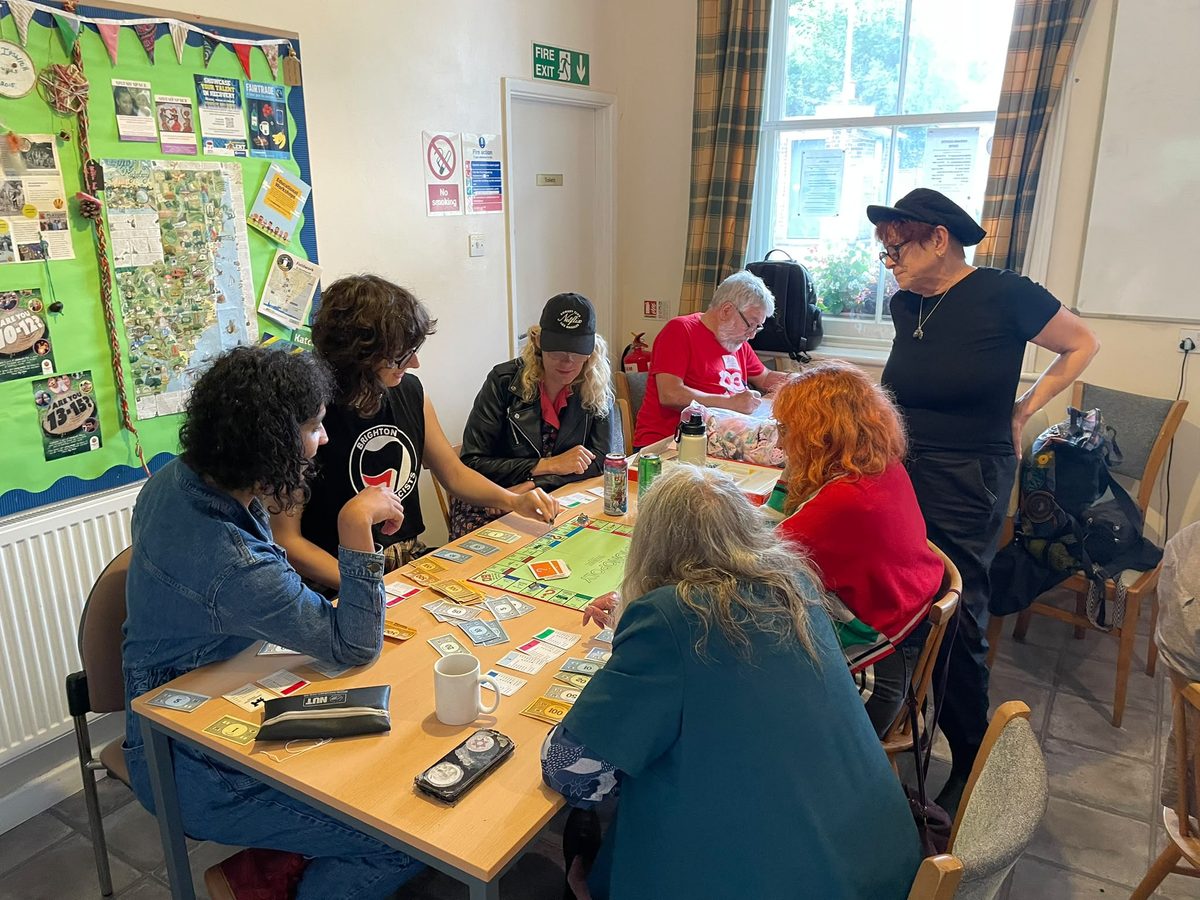
The venue came with comfortable rooms, a spacious back garden for lunchbreak and smoke break chats, and a game of Monopoly that an ill-advised few of us played for what felt like weeks. I would be more than okay going back to the same place next year, and ideally staying longer there given how many of us wished for more time come the final evening. More than the venue, though, the people are what made it a treasurable few days; it was great getting to know people from branches all across England and Cymru, especially outside the subject and time constraints of meetings. While the why of communism is easy to take for granted in groups of seasoned organisers, it is still fundamental. Occasions like this one – along with, for instance, the Fourth InternationaI’s Youth Camp and LGBTQI Seminar – are where we put our values into practice, by reminding each other of the collaborative work and kindness of which we are all capable as people.