

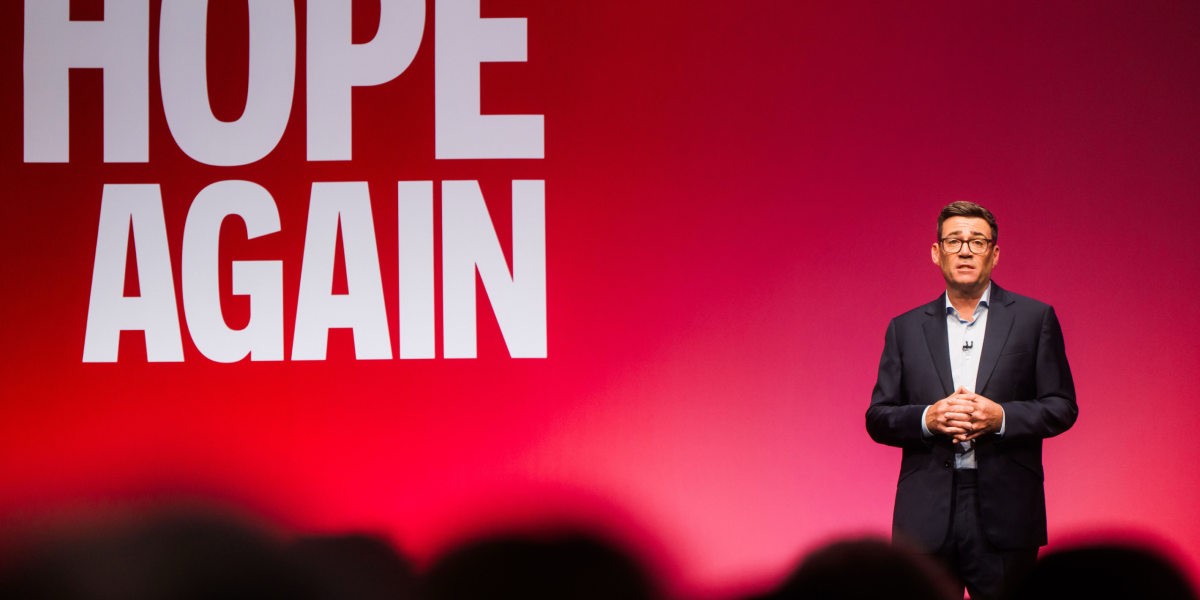
Some organisations and individual commentators in the movement define Andy Burnham as ‘Starmer continuity’, ‘Starmer 2.0’ or use the phrase ‘new boss same as the old boss’. His conference speech and actions since taking office shows that this sort of analysis is lazy and fails to track significant changes in the political conjuncture. These changes affect how the left has to intervene today in a tactically different way.
Writing these lines a few days after a conference speech that both the mainstream media and most of the Labour movement recognised as consequential, we have heard another reversal of a Starmer policy – juries will not be abolished. Preventing people from opting for a jury trial was an attack on one of the fundamental democratic rights that previous generations fought so strongly for. David Lammy and other Starmer stooges had defended this reactionary change as though it was a mere technical move to relieve the huge court backlog.
Restoring juries
True this decision is not a decisive challenge to Capital or its state but it has a practical, material effect on our ability to organise and take action. Environmental and Palestine activists have been acquitted or had their sentences moderated on a number of occasions in recent years when they exercised their right for a jury trial. An ordinary group of our peers often has a better sense of justice than a judge who has been nurtured by the establishment throughout their lives to defend the status quo.
We welcome this U turn from Labour that is, to a degree, a result of the organised uproar among lawyers and progressive forces generally inside and outside the Labour movement, It should inspire us to keep campaigning to force Burnham to end the pernicious and increasingly embarassing proscription of Palestine Action. According to Novara Media at conference they found few Labour people, even in the leadership prepared openly to defend the proscription. Even Yvette Cooper, one of its authors, did not speak up for it.
Does this mean we are entering into a semi-Corbynist period? Do we think that Burnham’s government will present a similar challenge to the interests of Capital that the 2017 Labour manifesto provided? Should we all rejoin Labour? Certainly not.
Even the progressive policies proposed in his speech are still just promises and the proper financing of a national care service, the housing programme, the 16-24 youth training and jobs guarantee and public ‘control’ of utilities is far from established. A lot of it is a lot further down the road.
Real relief now from the soaring energy prices and the cost of living crisis has not happened despite some minor measures like removing VAT on energy bills. Reform and the Tories will attack hard on such issues. Already dropping the Triple Lock on pensions plays into their hands.
Political situation changing
However both the broad policies and the general hopeful vibe of their presentation is changing politics. Some people on the left were downplaying the Burnham bounce in the polls but today nobody can deny the evidence. For over a year Reform was averaging up to ten point’s advantage over Labour. This month Labour are slightly ahead and winning by-elections. Reform has stalled and its competitors on the right and far right are clawing back its votes.The bounce is also hitting the Greens who are down to around 10% or less in the polls.
A few months ago it was odds on that we could see a Reform or a Reform/Tory coalition. Latest projections suggest a Labour hung majority. You have to ask yourself whether this would have been the case if Starmer had survived. Polanksi would have had a much better chance in Holborn/St Pancras if Starmer had still been at the helm. Projections suggest he will get a respectable score but lose.
We cannot exclude a Reform comeback – their coffers are full and they are spending seven thousand pounds a day on social media. The Burnham project could come unstuck under the pressure of economic crisis and/or international events like the US war of aggression in the Middle East. Recent reports on the way the Mayor of Manchester local economic success story was financed by the Abu Dhabi investment connected to Manchester City football club shows Burnham is no angel when it comes to partnerships with big Capital. The full story has still to come out and he has already slipped up in seemingly downplaying City’s financial cheating.
We should not underestimate the very serious consequences for the workers movement of a far right/right government. Not to speak of the retribution that would be handed to refugees, migrants and the Black, Asian and Islamic communities. Of course some people on the left always minimise the differences in governments whether Labour, Conservative or far right so for them the new Burnham government is not that significant.
How activists are responding
We also have to be honest about the impact of Burnham on what we might call the broader vanguard of the movement – the people who keep the trade unions going on the ground, the anti-austerity campaigners in the community, those defending democratic rights and of course the Palestine solidarity movement.
If you talk to these activists – who are mostly not members of left organisations – they do not necessarily have huge illusions in Burnham since they know his history. Many are new members of the Greens. But they do support some of these new policies and agree with the general framework of challenging 40 years of neo-liberalism and taking back even limited public control over the market. They feel a bit of hope. Given the decades of defeats and the weaknesses of the radical left it is understandable that this is the mood.
Working alongside these activists as they campaign to force Burnham to carry through his new promises is important. This is what united front tactics are about as a way of building anticapitalist and ecosocialist influence. If the first thing you say to these activists is that Burnham is just another sell out, that all his policies are a trick and a waste of time you will not only be distorting reality but failing to connect with them.
Limits of Labourism
That does not mean we hide our disagreements with the strategy of Labourism. It relies only on electoral power and negotiating concessions with capital. You can air such differences within the united struggle to win significant changes on care, housing, jobs and public control over the market. We explain that the change will always be limited unless you challenge the system itself, until you build the relationship of forces in the institutions, workplaces and communities that can impose a decisive break with capital.
One left wing paper, Counterfire, had a front page that just listed the ‘backing down’ by Burnham. Nothing wrong with denoucing his retreats from earlier positions. However It did not distinguish between backing down and radical differences with the former Starmer line. So for example on council and other homes there have been changes, including in legal moves councils can make and in what housing associations have to do. Then it says he has backed down on net zero and electoral reform, neither of which is accurate, even if you think he might U turn later. Do they expect you can change electoral systems almost immediately? This sort of approach makes engagement with a broader layer of activists much more difficult.
Obviously a smaller number of activists we work with are already very critical of Burnham and Labourism and can be directly attracted to more radical left politics. Socialists have a separate, different conversation with them.
Response to the speech inside Labour and the trade union leadership was generally positive. Labour Hub has a comprehensive round up here. People were positive but not uncritical. Daniel Kebede, the NEU teacher’s leader, said resources were needed and that the fragmentation of schools through academisation must end. Most others did not agree with dropping down the triple lock to a double lock. There is also no evidence yet of a surge of people joining or returning to Labour. However these activists are saying the left is finally leading or at least is back inside the debate in a way they were frozen out of under Starmer. Burnham’s rhetoric can obviously create illusions that he can bring real change but it can also galvanise activists afresh and open up debates that the left of the movement can be part of. He might find it hard to control a base that wants change.
Engaging with new debates
For people on the left this change in the debate is something we should grasp with both hands. We want to be discussing a national care service which would be free at the point of use, paid for from general taxation. Of course our contribution would be to raise the importance of the people ‘receiving’ care having the greatest possible autonomy and control. We would want local democratic participation of old, young or disabled people using the service alongside the staff to manage the system in order to achieve the highest quality. These sorts of discussions are much easier to have if the agenda is already about an NHS style financing rather than the current privatised chaos.
We want hedge funds and private companies totally removed from the system. At the moment it is not clear whether the free care would be ‘franchised’ through some of these profiteers. Burnham’s notion of public control can allow private capital back in through the front door.
Another key policy proposal was for a change to a fairer electoral system based on proportional representation. This would be in the next manifesto after a commission report. Most serious people on the left recognise that the present system of first past the post gives a huge advantage to the established parties and makes it harder for newer currents to grow. It has been one of the main reasons why it has been so difficult for the Greens to be fairly represented and for any socialist parties to the left of Labour to break through.
Supporting PR
Both as socialists who want an alternative to Labourism and as consistent democrats we should campaign for this change. Our position should for the fairest of the PR systems and not the very limited version we last voted on in a referendum. We should fully participate in any consultation or united campaigns for a fair voting system. Dismissing it because the ‘real struggle is not elections’ is wrong.
Of course just having a PR system does not produce a left alternative to Labour. The PR systems in Italy and the Spanish state have today not resulted in any breakthrough for the left. Nevertheless you have a chance of intervening in state institutions if you can politically build a credible alternative on the ground.
Housing is another area where you need to examine the facts beneath the rhetoric of Burnham’s speech. As Martin Wicks explains in his article on the Labour Campaign for Council Housing site only 6% of the 300,000 yearly homes target are for council housing. Shelter estimates 90,000 are needed as a minimum. Even making the new Help to Buy scheme for first term buyers more targeted to people on modest incomes tends to see the solution in terms of boosting private market supply.
Ecological issues absent
Ecology and the environment were barely mentioned in the conference speech except indirectly when Burnham said the government had to be ‘pragmatic’ over North Sea drilling. In fact the government has a great opportunity to link up the need to generate proper skilled jobs for young people and tackle the green transition at the same time. Instead of unpaid work experience at Sainsburys and in hospitality young people could be trained to do the retrofitting we need for our energy inefficient housing or fitting solar panels or heat pumps.
Rather bizarrely during his speech Burnham invoked the sad loss of his father not just to correctly raise the priority of a national care system but to defend the British union at all costs – against the SNP’s John Swinney’s call for an eventual referendum on independence. Labourism is always at its worst when it comes to defending the Union, the monarchy and increasing arms spending. Burnham is not an exception to the rule. On these issues there is no possibility of any engagement with partially progressive policies.
The bold shift on Brexit surprised many pundits. Brexit has been negative for working people. Apart from losing the right to study and work anywhere in Europe a weaker capitalist economy affects us too – there are even less jobs and there is more downward pressure on wages and social spending. It can be easier for working people to forge trade union and other links if Britain is inside the EU. Important labour and ecological protections have been achieved through the EU.
Burnham’s new electoral coalition
The line on how to compose a winning electoral coalition has now changed from the McSweeney/Starmer one. They tended to chase the Reform voter at all costs. Burnham sees – correctly perhaps – an electoral majority that wants something serious done on social care, wants more public regulation of the utilities, needs protection on the cost of living, likes the idea of electoral reform and desires closer ties with Europe. It is not an unrealistic project. How many Green or Lib Dem voters might be tempted to vote Labour in marginal seats where they have no chance in order to get these policies carried through?
A conference speech is just words and promises but to a degree it sets the political weather. What is much more crucial is the upcoming budget which will indicate if the reforms are credible because the money is there. The fiscal rules so much bowed down to by the Labour leadership can also be interpreted in a more flexible way than under Starmer. Changes to capital gains tax or one off windfall taxes on the banks or energy companies cannot be completely ruled out. On the the other hand the budget could put a complete block on significant changes and take the momentum out of the Burnham bounce.
All the hopes and bright new policies could also be derailed if the international economic situation seriously worsens. The Russian invasion of Ukraine and the US attack on Iran could drag on for some months or even longer. In that eventuality the ‘old labour’ policies being proposed would require a much more radical framework if they are not going to just be remembered as conference speech soundbites.