

Source: Anticapitalist Musings
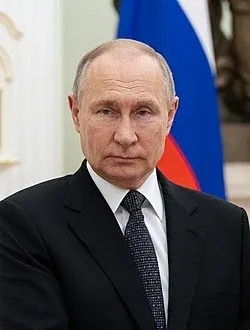
When Steve Witkoff called Vladimir Putin a humanitarian, he was thanking him for releasing Stephen Hubbard, whom Russia had imprisoned for more than four years. At their meeting in St Petersburg on 21 October, Trump’s envoy told the Russian president: “You are a humanitarian also, sir, and I salute that.” Hubbard’s return to his family is welcome. What requires an answer is the conversion of that release into a tribute to the man presiding over the state which held him.
Hubbard, a retired American teacher, was captured by Russian forces in Ukraine in April 2022, moved through detention centres and convicted of mercenary activity in a closed trial. Former Ukrainian prisoners held alongside him told the New York Times that he had been beaten and subjected to electric shocks. Their accounts included abuse directed at him because he was American. The system being congratulated for returning him to his family had first taken him away from it. Witkoff’s formulation offers every authoritarian jailer an attractive arrangement: imprison somebody, release them when it becomes useful, and collect the applause for your compassion.
Children kidnapped
Putin’s decision to launch the full-scale invasion of Ukraine is sufficient to disqualify him from the honour. He chose a war which subjected another country’s population to mass displacement and devastation, then claimed the right to annex its territory. In March 2022, 141 states voted at the UN General Assembly to demand Russia’s withdrawal; that October, 143 rejected its attempted annexation of four Ukrainian regions. This was never simply a quarrel between Moscow and Washington. Ukrainians live on the land Putin wants and possess a right to decide their future which his war denies. Treating their country as something for powerful men to divide is already an abandonment of the people whose lives are supposedly the purpose of diplomacy. Occupation carries that claim into daily life. The European Court’s 2025 judgment documented the expropriation of private property without compensation and the suppression of Ukrainian in schools. Control of territory becomes control over homes and education, with the occupier deciding whose history children will learn.
The children taken from Ukraine make that denial particularly concrete. In March 2023, the International Criminal Court issued an arrest warrant for Putin over their alleged unlawful deportation and transfer. This March, the UN Commission of Inquiry went further in its own investigation, concluding that deportation, forcible transfer and enforced disappearance of Ukrainian children amounted to crimes against humanity. It described a policy conceived and implemented at the highest level of the Russian leadership, with Putin’s involvement visible from the outset. Of more than 1,200 children whose cases it had verified, 80 per cent had not been returned when the report appeared. Children had been assigned Russian citizenship and placed with families or institutions; their profiles also appeared on adoption databases, while relatives struggled to discover where they were. An occupying state which takes children and changes their citizenship is asserting ownership over their future.
At Bucha, and elsewhere in northern Ukraine, the evidence was left in streets and makeshift detention sites. UN investigators documented summary executions, including victims found with bound hands and gunshot wounds to the head. Civilians were also attacked while trying to flee. After the atrocities became public, Putin awarded the Guards title to the 64th Motor Rifle Brigade, which Ukraine had accused of involvement. The president chose to honour a unit facing public accusations over civilian killings. The families were left demanding accountability while the Kremlin supplied recognition.
Mariupol supplies another answer. The joint investigation by Human Rights Watch, Truth Hounds and SITU reconstructed a city devastated by Russian attack, with hundreds of thousands trapped for weeks without basic services and repeated attempts to organise evacuation and aid obstructed by Russian forces. Bombardment damaged the hospitals and water infrastructure on which survival depended. The maternity hospital was bombed; the drama theatre, sheltering hundreds of civilians, was struck on 16 March 2022. The Russian word for children had been painted outside in letters visible from the air. Amnesty’s investigation concluded that the theatre strike was a war crime and that deliberate targeting of the civilian building was the most plausible explanation. People had gathered in a place whose civilian purpose was advertised to the aircraft above them, and Russian bombs destroyed it.
Occupation
Occupation brought a system for making people disappear. In March 2025, the UN commission found that enforced disappearances of civilians formed a coordinated state policy and constituted crimes against humanity. Journalists and local officials were among those taken; families were denied information about whether their relatives remained alive. Investigators also documented torture, including rape and other sexual violence against detained women and men. Where officers of Russia’s Federal Security Service were present in detention facilities, the commission found that they exercised the highest authority and committed or ordered torture. Responsibility runs through institutions empowered to secure Russian control over occupied territory. The same investigation examined Russian forces killing Ukrainian soldiers who had been captured or were trying to surrender. Deserters told investigators they had received orders to kill instead of taking prisoners; the commission said this pointed towards a coordinated policy. A soldier who has surrendered has ceased to be a legitimate target. Killing him is a decision made over somebody already in your power, and that distinction matters when the head of the state responsible is being praised for mercy.
Even remaining in one’s own home has been made intolerable. In October 2025, the UN commission reported that Russian units operating under centralised command had deliberately targeted civilians with short-range drones across more than 300 kilometres along the right bank of the Dnipro. Ambulances and firefighters were among the targets. Repeated attacks made ordinary movement dangerous and drove thousands from their homes; the investigators concluded that the campaign amounted to the crimes against humanity of murder and forcible transfer. Here the civilian population’s fear served a territorial purpose. Making a place unliveable could accomplish what an occupying army wanted without having to enter every house.
Medical care has offered no reliable refuge. After Kyiv’s Okhmatdyt children’s hospital was hit in July 2024, UN investigators said the available evidence indicated a high likelihood of a direct hit by a Russian missile, rather than damage from an intercepted weapon. The toxicology department was destroyed, with intensive-care, surgical and oncology wards damaged. Children already dependent on specialist treatment had to endure an attack on the place keeping them alive. On 16 October, less than a week before Witkoff’s tribute, the UN human rights mission described renewed systematic Russian attacks on Ukraine’s electricity and heating infrastructure. Strikes on 13–14 October hit Kyiv’s three main power stations; Ukrainian authorities reported that 600,000 people temporarily lost electricity. The UN also verified that a Russian missile and drone attack killed 22 civilians in Pryluky on the night of 6–7 October.
Winter
Winter makes the consequences of these attacks more severe. A power failure can leave a person with limited mobility stranded upstairs, interrupt medical treatment or deprive a household of heat. Those effects are foreseeable, and they fall heavily on people with the fewest means of protecting themselves. Witkoff was praising Putin while UN monitors were warning about precisely this danger.
Food has been exposed to the same coercion. In August 2023, UN monitors documented 14 Russian attacks on Ukraine’s grain infrastructure since 11 July, damaging storage and port facilities and disrupting global supply lines. The consequences extended beyond the immediate victims to farmers and communities dependent on the trade. Destroying food stocks and the means of exporting them reaches people far beyond the blast.
The record in Ukraine predates the full-scale invasion. In July 2025, the European Court of Human Rights held Russia responsible for widespread abuses dating back to 2014 and for shooting down flight MH17, killing all 298 people aboard. The court also found that Russia obstructed the investigation and supplied inaccurate or fabricated information. Its denial aggravated the suffering of the bereaved. The refusal to acknowledge what happened belongs alongside the killing: relatives seeking the truth faced the resources of a state committed to preventing them from obtaining it.
Beyond Ukraine
Nor did the method begin in Ukraine. During the second Chechen war, as Putin rose to power, Russian forces carried out atrocities which established how little civilian life counted when it obstructed Moscow’s authority. At Novye Aldy in February 2000, civilians were killed during a Russian operation. The European Court later held Russia responsible for the deaths of 11 relatives whose families brought a case. Its judgment found the subsequent investigation so ineffective that it amounted to acquiescence. A state which permits its forces to escape accountability teaches them what they can expect when the next operation begins. In its 2021 judgment on the aftermath of the 2008 war in Georgia, the same court found Russia responsible for civilian killings, the burning and looting of homes, torture of prisoners of war and preventing displaced people from returning. Those findings describe occupation as experienced by the people subjected to it: the loss of a home could become permanent because the power controlling the territory refused to let its inhabitants back.
In Syria, Putin’s forces helped Bashar al-Assad impose that control through attacks on civilian life. Human Rights Watch’s investigation of the 2019–20 Idlib offensive documented 46 unlawful attacks by the Syrian–Russian alliance, killing at least 224 civilians and damaging hospitals and schools. It specifically attributed to Russia the July 2019 strike on a market in Maarat al-Nu’man which killed 43 civilians. Across the attacks investigated, researchers found no evidence of military objectives nearby at the time. Their conclusion was that destroying the infrastructure which sustained the population appeared to form part of a strategy to force people out. A hospital’s closure and a family’s flight could therefore serve the same military objective. Calling the intervention a struggle against terrorism did nothing to protect those living beneath the aircraft.
Russia’s military patronage has carried abuse further afield. UN investigators found strong indications that Malian troops and foreign military personnel killed more than 500 people at Moura in March 2022, overwhelmingly through summary execution. Human Rights Watch’s investigation reported that several sources identified the foreign soldiers as Russians. The wider attempt to present Russian mercenary violence as wholly detached from the state became harder to sustain when Putin acknowledged in June 2023 that the state financed Wagner. Military assistance to another government does not acquire a humanitarian character because Moscow supplies it. The people living under those operations have claims which cannot be settled by an agreement between presidents.
At home
Russians who object to the war have been punished for exercising the concern for human life Witkoff attributes to their president. Putin signed the March 2022 laws criminalising independent war reporting and anti-war protest. The offence of supposedly false information about the armed forces can carry a sentence of up to 15 years where prosecutors allege grave consequences. In November 2023, the artist Aleksandra Skochilenko was sentenced to seven years for replacing supermarket price labels with anti-war messages. She was freed in the August 2024 prisoner exchange. Russia contains people prepared to risk their freedom to oppose the killing of Ukrainians. Putin’s state put one of them in prison for messages left beside groceries. It has also attacked the organisations through which victims can preserve evidence and find support. In December 2021, Russian courts ordered the liquidation of International Memorial and the Memorial Human Rights Centre, using the foreign-agent legislation. Memorial’s work joined the recovery of historical repression to the documentation of contemporary abuses. Closing it protected the state from scrutiny across both periods. Censorship and the destruction of independent civic organisations make further violence easier to conceal, while isolating people who might otherwise recognise their experiences in somebody else’s.
Opponents have also been killed beyond Russia’s borders. The European Court held Russia responsible for the assassination of Alexander Litvinenko, poisoned with polonium in London in 2006. The British public inquiry separately concluded that the FSB operation was probably approved by Putin. The capacity to pursue an opponent abroad extends the reach of repression well beyond the territory the state governs. Alexei Navalny died in Russian custody in 2024. In February this year, Britain, Sweden, France, Germany and the Netherlands announced that laboratory analysis had confirmed the lethal toxin epibatidine in samples from his body. They concluded that poisoning was highly likely to have caused his death and held Russia responsible. Witkoff’s praise passes over a death in the custody of the state whose leader he was saluting.
The persecution reaches people who present no challenge to the presidency beyond refusing the lives prescribed for them. Russia’s Supreme Court designated the purported international LGBT movement an extremist organisation in 2023. Human Rights Watch subsequently documented prosecutions for displaying rainbow symbols and expressing solidarity, including a sentence of six months’ compulsory labour for posting a rainbow flag online. The state’s promotion of traditional values supplies an ideological justification for treating part of the population as an internal enemy. Police and courts give that designation material force, narrowing where people can meet, what they can say and whether they can live openly.
Even the men recruited to fight Putin’s war can become victims of coercion. Amnesty’s September 2026 investigation documented foreign nationals drawn into the Russian armed forces through practices amounting in many cases to human trafficking. Recruiters exploited poverty and insecure immigration status, offered civilian jobs and restricted people’s ability to leave once they had signed. Two Sri Lankan men said they had been promised work as cooks before being sent to the front. People looking for wages found themselves fighting an invasion they had never knowingly agreed to join. This is a particularly ugly answer to the claim that Putin represents the interests of poorer countries against Western power.
The record describes a state which secures authority by making resistance dangerous and imposing costs on people it can coerce. Its invasion denies Ukrainians control over their future, while Russians who object encounter the institutions which keep the war going. That connection matters for the left. A serious anti-imperialism begins with the people subjected to domination, including when the dominant power is Russia. Hostility to the United States grants no exemption from scrutiny, and a government’s conflict with Washington does not turn the people it represses into acceptable losses. The Russian who resists mobilisation and the Ukrainian resisting occupation have claims on our solidarity which cannot be subordinated to admiration for the Kremlin.
Witkoff could have thanked Putin for releasing Hubbard without asking everyone else to forget why Russia’s prisons hold so many people, or what its armed forces have done to those beyond their walls. His praise invites a judgement based on the favour Putin has just granted to an American president, leaving the people without such an intermediary outside the calculation. Parents still searching for their children have no reason to revise their understanding of the man responsible because an American envoy has received something he wanted. Nor do Russians punished for opposing the invasion. Hubbard should have been free long ago, and his release is a relief. The power to end one person’s suffering at a convenient moment cannot absolve a leader who continues to inflict it on so many others.
Donate – and raise in your trade union and other groups to the emergency winter appeal for Ukraine here.