

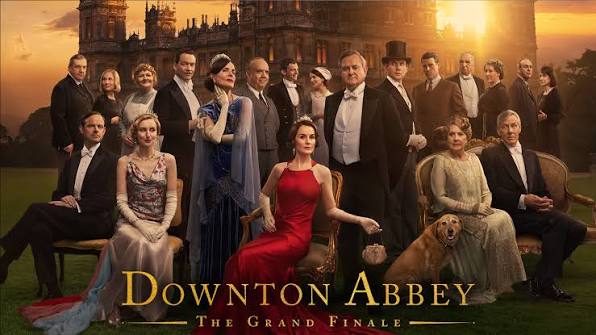
ITV3 and PBS have just completed a re-run of Downton Abbey, set in the period from 1912 to 1925, telling the story of the trials and tribulations of the aristocratic Crawley family which is threatened by declining fortunes and encroaching modernity. I want to examine the series in terms of class rather than its usual portrayal as a high-end soap opera and examine the reasons why it has reached a huge global audience.
Soap operas such as Coronation Street, Emmerdale, East Enders and Holyoaks deal superficially with the lives, loves and troubling issues that beset the middle and working class but the truly epic dramas are reserved for the power struggles, subterfuges and fraught love lives of the great and the good.
I have to admit to being a devotee of costume/historical dramas on British television and have watched a string of impressive productions from the 1970s to the present day. With high production values and superb acting who can forget Glenda Jackson’s stunning performance as Queen Elizabeth l in Elizabeth R (1970) or Derek Jacobi as Claudius and John Hurt’s terrifying portrayal of the mad emperor Caligula in I, Claudius (1976). Several adaptations of Jane Austen’s novels give a more genteel view of the aspirations of would-be aristocrats especially as they strive to park their marriageable daughters in the laps of young, handsome (and rich) suitors. There are many more series in this vein including Brideshead Revisited (1981), The Far Pavilions (1984), The Forsyte Saga (2002), and more recently Wolf Hall (2015-2025).
Subordinate role of working class
In these dramas the working class, plebeans, lower orders, slaves, the multitude very rarely make an appearance. The impression given is that the entitlement to riches, sumptuous lifestyles and political power is the natural order of things with god’s (or the gods’) blessing. The charmed lives of aristocrats that glide magically along or a ruling class wielding unchallenged power establishes their place as the makers of history and the social order without the need for human agents to assist them. There are exceptions to this kind of scenario.
Gordon Jackson played the upright butler, with a rectitude as tight as constipation, who believed everyone has their place in society and must respect their betters. He ruled with absolute devotion to his masters by enforcing his views on the cooks, housemaids and manservants under his command in Upstairs, Downstairs (1971-1975). Here the working class is visible as servants to their masters and unpardonable lapses of servile etiquette to the lords and ladies they serve are frowned upon or punished. Downton Abbey is the latest in this genre.
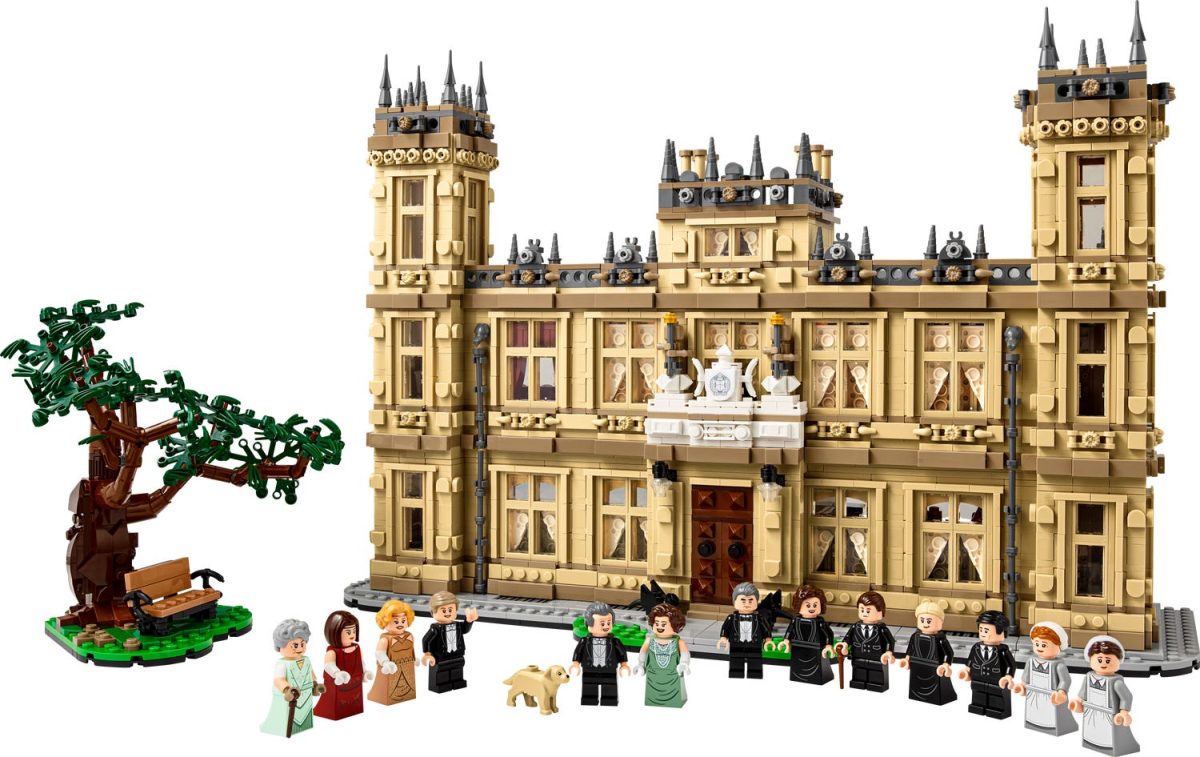
Apart from winning a bucket full of awards Downton Abbey has been made into a full-length feature film and is available on Netflix and Amazon where it was reported that series one was the highest selling DVD box set of all time. Television ratings for the series have outstripped in popularity other acclaimed dramas. The adult cartoon ‘Family Guys’ spoofed it as ‘Chap Stewie’ and ‘Woodworthy Manor.’ Several books have been written about it and If you are geekishly inclined you can even try a lego set. It is worth raising the question about why it has become so popular and what relevance does this have to class politics if any.
Why it is so popular?
Julian Fellowes, whose full title as a lifelong conservative peer is Baron Fellowes of West Stafford, created the series and wrote the script as he did with Gosford Park(2001). He has constructed the story of the Crawley’s an aristocratic family desperately attempting to preserve the dynasty from bankruptcy while resisting modernisation as the antidote. The unearned inherited and investment wealth had been squandered by his predecessor forcing the Earl of Grantham to marry a rich American heiress to rescue Downton Abbey. The idle rich status of the family is best exemplified by the Dowager Countess, played marvelously by Maggie Smith, who is unable to comprehend what a ‘weekend’ is. Living off riches and speculative investments means the Crawley household, unlike the working class, are hermetically sealed from the daily toil, merciless timetable and alienating drudgery of capitalist production methods that necessitate a ‘weekend.’
Their leisured existence of dinner table conversations, social gatherings and discrete private assignations is centred on match making Lord Grantham’s three daughters with suitable partners. None are allowed to marry beneath them. The prospective spouses must possess the correct pedigree and wealth. Squabbles and strict policing ensue about who these suitors should be. Grantham has no sons and because women are prohibited from the succession and not allowed to control the family fortune and estate a male heir has to be found. If you have the patience to watch the whole series there are a considerable number of plots, sub plots and mini plots within sub plots to keep the pot boiling for 52 episodes despite some ludicrous story lines.
In contrast to the charmed if sometimes fraught lives of the upper class the servants inhabit a subterranean world of hustle, bustle, gossip and intrigue as they go about the business of serving their masters but also compete for favours and promotion. Unlike relations of supposed equality of the Crawley aristocratic household, a strict hierarchy of roles and positions is maintained below stairs enforced by the chief butler Carson whose adherence to ‘traditional standards’ keeps the cooks, footmen, valets and maids on tenterhooks.
Improbable plotlines and tamed revolutionaries
Some plotlines would fit into any soap opera though at times they lapse into unbelievable melodrama and sentimentality. More like the improbable in search of the impossible in terms of credibility. For example:
Tom Branson is a socialist and an Irish Republican who takes up the post of chauffeur to the Crawley family. They are fully aware of his affiliations. Even though he is the sworn enemy of the British state and a supporter of Irish Independence he enthusiastically ingratiates himself and the Earl of Grantham even allows him to marry Sybil one of his daughters. He has become ‘our tame revolutionary.’ Even after being implicated in the burning down of an Anglo-Irish aristocrat’s house as the war of independence flares up he is accepted as one of the family. His simpering timidity allows him to slip almost seamlessly into the gracious folds of the Crawley dynasty despite his intention to baptise his child a catholic! He becomes land agent for Yew Tree Farm having persuaded Grantham to drop his aristocratic prejudices and become more involved in a capitalist enterprise to avoid Downton Abbey from being sold off. Branson drops his socialist convictions completely and works in an enterprise repairing cars having reached ‘the top.’ Thus completing the journey from Irish revolutionary to petit-bourgeois business man.
There are other improbabilities including black jazz musicians playing at the Earl of Grantham’s birthday celebrations and one of his daughters flirting with the band leader who graciously rejects her attentions to spare the racist abuse they would both be subjected to.
Homosexuality rears it abominable head as Thomas Barrow, an ambitious young footman and closet gay, steals a kiss from Jimmy, another footman, who he has been persuaded is also gay. Despite being reported to Grantham and the possibility of police involvement his lordship airily dismisses Barrow’s indiscretion as the kind of thing that happened at his public school. Besides he did not want to lose a damned good batsman at a forthcoming cricket match with the locals. Jimmy eventually forgives Barrow for his peck on the lips and they agree to be just friends. Barrow after a convoluted career of conniving for position, theft and sexual indiscretion is finally made head butler on Carson’s retirement due to illness.
Some bounders and the odd socialist
Another improbability is Prince Kuragin, having escaped the horrors of Communist Russia, who lives in poverty but is ever hopeful of his reunion with his ex lover Dowager Countess Violet. But it is not to be as she rejects his offer (handkerchiefs at the ready) and Grantham berates Tom Branson for supporting the unpardonable communist regime that drives the nobility into exile.
There are a few yah-boo-hiss upper class rotters that make a brief appearance to keep the balance right. Major Bryant seduces housemaid Ethel and refused to acknowledge paternity of her unborn child. Sir Richard Carlyle, a powerful newspaper mogul, threatens to expose Lady Mary’s affair. Lord Sampson, besides being a cheating card sharp, steals a letter and threatens to reveal The Prince of Wales indiscretions. Simon Bricker, an art expert, attempts to seduce Cora, Lord Grantham’s wife.
The only true lefty to make a tokenistic appearance is Sarah Bunting a local school teacher. Befriended by Tom Branson she tries to persuade him to leave the Crawleys and return to his former socialist beliefs. When invited by Branson to dine at Downton Abbey Grantham explodes in furious anger as she condemns the war and quizzes the servants about accepting their ‘serfdom.’ She is ordered to leave and never more to darken the doors of Downton Abbey. The other working class women and men outside of the servants are filled with cringing gratitude especially the workers of Yew Tree Farm who are granted the right to manage it by the Crawleys.
Reasons for its success
So…the question remains. What is it about Downton Abbey that has proved attractive to a global audience in over 200 countries and how credible is it as a true reflection of class relations in the period under consideration. I make the following points about its attractiveness:
- The pull of superficial plot lines that rattle along in soap opera fashion are an easy attraction and a well trodden pathway to capturing mass audiences.
- The sumptuous settings and insouciant aristocratic lifestyles are an attractive source of fascination in a world of unease and worry.
- The acting is top class and the characters are sufficiently well drawn to engage our attention and despite some laughable plot lines they are sufficiently engaging to keep us intrigued and even amused.
Hidden social purpose – class reconciliation
Despite all of the above’s allure I believe Downton Abbey has an undeclared, hidden social purpose. Almost sublimnal. Fellowes paints a picture of reconciliation between the classes or at least peaceful co-existence in a world of rampant inequality and exploitation. Though the Crawleys lapse occasionally into class snobbery, xenophobia and ridiculing Catholics, overall their attitude towards the servants on whom they depend for their life of workless ease is at times one of care, concern and warmth. The charms of the well-born family seduced and tamed a revolutionary, forgave misdemeanours and indiscretions and rewarded servile fidelity.
Meanwhile the servant class is champing at the bit to prove themselves worthy of their masters approval governed by rigid hierarchical rules that keep them in their place under the stern gaze of Carson the chief butler. How different this is from the world of Gosford Park, Fellowes other main creation, that portrays the upper class as snobbish, greedy, selfish and exploitative where the housekeeper says “I am the perfect servant. I have no life.” It’s worth making a comparison with the real life experiences of Margaret Powell’s time in service. Her book ‘Below stairs’ gives a more honest account of her experiences of exploitation and far from entering service out of scintillating job prospects with a sympathetic employer she is forced into service through poverty and hunger.
Powell’s is a more compelling account given the growing rise in unemployment and working class militancy at the time culminating later in the 1926 General Strike and continuing well into the 1930s as the depression kicked in.
The lure of order and stability in insecure times
Overall I believe Fellowes, given his aristocratic background, hints at a microcosm of what a society could look like. Maybe not in terms of class in a changing paternalistic social order but at least one that is locked in to stability, security, structure and belonging. Downton Abbey is set in a time of growing unemployment, poverty and inequality. Is this comfort food for those affected by the chaos and disorder of today’s multiple crises of capitalism?
The incessant drive for economic growth, especially through fossil fuel extraction and agribusiness, is causing devastating floods, heatwaves and wild fires. The cost of living crisis means ordinary working people are steeped in unpayable debts and have to choose between heating or eating. Wars and civil wars are being fought globally as rival Imperialist powers fight over possession of scarce resources. In an anxious age of storm and stress married to an increasingly virtual world of pretend friendships, isolating social media, alienation and atomisation at a time of austerity and instability what better way of providing solace than a comfort blanket and promise of a social system where everyone knows their place. Instead we are left with a world that is rampant with economic instability, poverty and pestilence. With xenophobia, racism, misogyny and transphobia on the rise fascism is waiting in the wings and we are living in a Gramscian world where “The old world is dying, and the new world struggles to be born: now is the time of monsters”
On a final note: It might be a stretch to expect this in a drama rather than a documentary but what this series conceals is any understanding of where the inherited wealth of the aristocracy came from originally as in the brutal ancestral theft of peasant land and commons enclosed by landowners, the slave trade and the investment of ill gotten gains in firms that exploited the working class in the age of Capital. The absence of this helps to legitimise and approve ruling class histories and lifestyles as the natural order of things.