

My son and I do not agree about much politically. He is in his mid-twenties. But we were talking last night, after the Henry Nowak bodycam footage dropped, watching the responses come in from Farage, from Lowe, from the liberal commentators pushing back against them, and we found ourselves arriving at the same place from opposite directions.
The whole argument had an American accent. Farage reaching for “white lives matter.” The counter-responses reaching for structural racism and privilege. Critical race theory arrived with an American history attached, and so did the culture war backlash to it. Neither maps cleanly onto what happened on Belmont Road in Southampton, or explains what is being done with the footage now.
What the body cam shows, on the face of it, is an 18-year-old student dying from stab wounds while a police officer tells him he does not think he has been stabbed. Henry Nowak was handcuffed. His killer, Vickrum Digwa, was not. Digwa had invoked racism at the scene. His brother called 999 to repeat the claim. His mother, according to reports, ran home with the knife to wash off the blood. The officer who told a dying boy he probably had not been stabbed has since resigned. Three others remain under investigation. Hampshire Police deleted a post claiming their officers had been misled, once the footage made that claim untenable.
The policing failure was real.
There is no point pretending otherwise.
What Farage is doing is something different. He is not interested in what went wrong on that street or why. He is interested in the uses of outrage. “Pure, cold rage,” he told his audience. “White lives matter too.” Rupert Lowe went further, calling for the death penalty to be reinstated, describing Digwa as a “savage” who should not be kept alive.
They are not grieving Henry Nowak. They are using him.
The “two-tier Britain” framing that both men are now running hard is structurally identical to the American culture war arguments they have been importing for years. It takes a real injustice, strips it of material context, and converts it into a racial grievance narrative. The police did not fail Henry Nowak because of DEI training or institutional anti-white prejudice. That explanation is useful to Farage and Lowe, but it explains almost nothing. Police failures in Britain have a long and well-documented history that runs in multiple directions and falls most heavily, over time, on Black and working-class communities. The point is that “anti-white police culture” explains nothing about what actually happened, and Farage knows it.
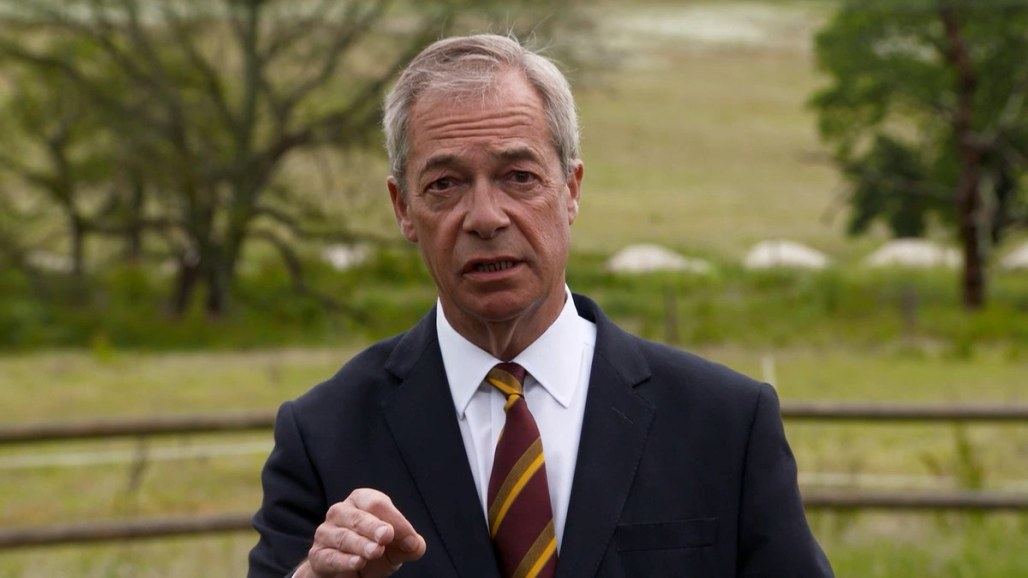
The reason this works, is partly the failure of the liberal alternative. The instinct of liberal commentators when a case like this breaks is to reach for a framework, and the framework most readily available has been imported wholesale from the United States. Structural racism, privilege, centring marginalised voices: the language arrived in Britain with an American accent and an American history attached. The problem is that Britain’s racial order was not built around the plantation at home. It was built through empire abroad, then reproduced through migration, policing, housing, nationality law and the labour market. When the liberal vocabulary does not map onto what people can see in front of them, they conclude the vocabulary is a lie. Farage is waiting at that conclusion with a simpler story.
My son’s instinct, coming from a very different political position to mine, was the same: this is not what they say it is, and the framework being used to explain it does not fit Britain.
He is right.
Where we differ is on what would fit instead.
A failure to come to terms with Empire
Britain never built a serious public account of what empire actually was, what it extracted, and who it brought back with it. The Windrush generation did not arrive as strangers. They arrived as subjects of a crown that had governed their countries for generations, taken their labour and their resources, and told them they were part of something called Britain. Then Britain changed its mind. Ugandan Asians, Sylhetis, Punjabis, Somalis: each arrived through a different route, but all carried histories Britain preferred not to examine. Multiculturalism as official policy was the management strategy for that unexamined debt. It offered recognition in place of reckoning. Diversity in place of equality. The official language said: you are welcome here, your culture is valued, your presence enriches us. The material reality said: you will live in the worst housing, work the hardest jobs, be stopped and searched at multiples of the rate of your white neighbours, and when things go wrong the state will regard you as the problem.
That is not the same history as Jim Crow. It is not the same as mass incarceration or the legacy of the plantation on domestic soil. The American framework is not wrong about America. In Britain, it often obscures more than it reveals. It locates the problem in whiteness as a category rather than in the specific institutions, class relations and imperial history that produced British racism. That is why it has never taken hold here, and why a significant part of the population experiences it as an accusation.
Identity politics filled the space left by the defeat of class politics.
It did not give them much with which to change the conditions producing it. At its worst, it handed the professional middle class a moral vocabulary with which to discipline the working class, while the material basis of solidarity was being systematically destroyed. Council housing was sold. Unions were weakened. Youth centres closed and were not replaced. Wages were held down across a generation. The worker became problematic; the HR department became radical. That was the bargain: less power, better language.
Failure of multiculturalism
The failure of multiculturalism was not that people from different backgrounds could not live together. The real failure was that recognition was offered as a substitute for equality, and equality was never seriously attempted. We got celebration without redistribution. Representation without power. Inclusion without the material conditions that make inclusion mean something. Behind all of it, the unresolved question of empire: Britain managed the debt without paying it, and built a civic language thin enough that it collapsed the first time it was seriously tested.
The Oldham and Burnley riots of 2001 were the test. New Labour had been comfortable enough with multicultural Britain when it could be folded into Blair’s story of modernity: open, diverse, confident, post-imperial without ever having to say much about empire. After Oldham, Burnley and Bradford, that language changed. The Cantle Report talked about “parallel lives” and recommended community cohesion programmes. It diagnosed separation and prescribed contact. After 7/7, the shift hardened further: multiculturalism gave way to integration, shared values and the duty to belong correctly.
What this did not do was ask why the housing was segregated in the first place, why the mills had closed and nothing had replaced them, why two communities competing for the same shrinking pool of low-wage work and decaying public services had ended up regarding each other as the problem. The answer was more dialogue. More recognition. More civic language. Difference could be celebrated, but only under supervision. Diversity was welcome so long as it proved its loyalty. The question of who owned what, who owed what, and whose labour had built what, went unasked. Empire sat in the background of those towns as surely as it sat in the background of Brixton in 1981, but the framework for discussing it publicly had never been built. Community cohesion was asked to do the work of equality. It was never going to hold.
Neighbours not guests
Something else happened in that space. One of the ugliest phrases now returning on the right is the description of British nationals of foreign descent as people from the “third world”, as migrants, as guests who have outstayed their welcome. This is not how most people experienced the mixed towns and cities they actually lived in. I have lived in parts of cities that politicians and journalists would call multicultural. I never thought of my neighbours as visitors from somewhere else, still less as representatives of the “third world”. They were neighbours. That was the point. The shop, the school gate, the bus stop, the shared irritation at the council, the same streets walked in bad weather: these are not abstractions. They are how people become ordinary to one another.
What changed was the story placed over that ordinary life. The right has taught people to see coexistence as dispossession. A neighbour becomes a migrant. A citizen becomes a guest. A family that has been here for generations is returned, rhetorically, to the point of arrival. The language of “guests” is especially revealing, because a guest belongs only for as long as the host permits it.
What Farage and Lowe are offering instead is not an alternative. It is the same class contempt. The working class does not need “pure, cold rage” directed at a Sikh man and his ceremonial knife. It needs power over the conditions of its own life. Housing. Work that pays. Public services that function. Policing that does not treat the victim as the suspect, regardless of who the victim is.
The Henry Nowak case will be used. As it is already being used. The same accounts that see Jewish control in our institutions, the Southport narratives that resulted in mass disorder and the two-tier justice frame are moving this one too. And quickly. Elon Musk has weighed in. The American far-right sites have the footage. The framing has crossed the Atlantic in both directions at once, which tells you something about how coordinated this infrastructure has become.
The policing failure was real and must be accounted for. A dying boy deserved better from the officers on that street. But accounting for it means refusing to let Farage decide what that failure means. “Anti-white institutional culture” is not what put Henry Nowak on that pavement, and saying so plainly is not a defence of what happened to him.
That was where my son and I ended up last night, from very different starting points. The footage is real. The failure is real. Farage’s story is not.
I think we should consider the similarity to the events in Southport in 2024. A tragedy happens and then the far-right moves rapidly to exploit it, scapegoating a community and exploiting the genuine grief of the victims and the sympathy of the public to spread the politics of hate. It seems like a standard script.
Policing is devolved.
The UK is not a unitary state. Police Scotland are the responsibility of the Scottish Parliament and Government. The Police Service of Northern Ireland in the occupied 6 counties has its own long, shameful history as the ‘state-within-a-state’ RUC and the current ‘consociationalist’ devolution arrangements of the Good Friday Agreement.
Westminster government is responsible for policing in England and Cymru only.
There is no “British” or UK state policing, only overlapping crises.
But solutions and alternatives do not exist at the level of “Britain”.
It only needs rumour and misinformation for the far right mob to arrive on the scene.
https://www.google.com/url?sa=t&source=web&rct=j&opi=89978449&url=https://www.reddit.com/r/ukpolitics/comments/1sw8mrh/the_epsom_rape_crime_that_never_happened_but/&ved=2ahUKEwjd4rzqs_KUAxX_U0EAHSphC34QFnoECDMQAQ&usg=AOvVaw168KEsQUlaayL8YRxYyP73