


Apple is in the top three biggest capitalist businesses for profits and vies with the superchip maker NVidia for the top company in terms of market valuation.
According to market data from Counterpoint Research, Apple consistently captures roughly 20% to 23% of global smartphone shipments while taking home between 75% and 85% (and sometimes more) of the entire industry’s operating profits.
Apple does not own any factories, a bit like Uber which owns no taxis. This is how capitalism works today in the advanced centres of the west. A central company owns a platform, sophicated software, advanced machine tools, a design team, a training apparatus, patents, a brand and a marketing strategy but subcontracts all the manufacturing to external companies in countries like China, Vietnam, India and elsewhere in the Global South.
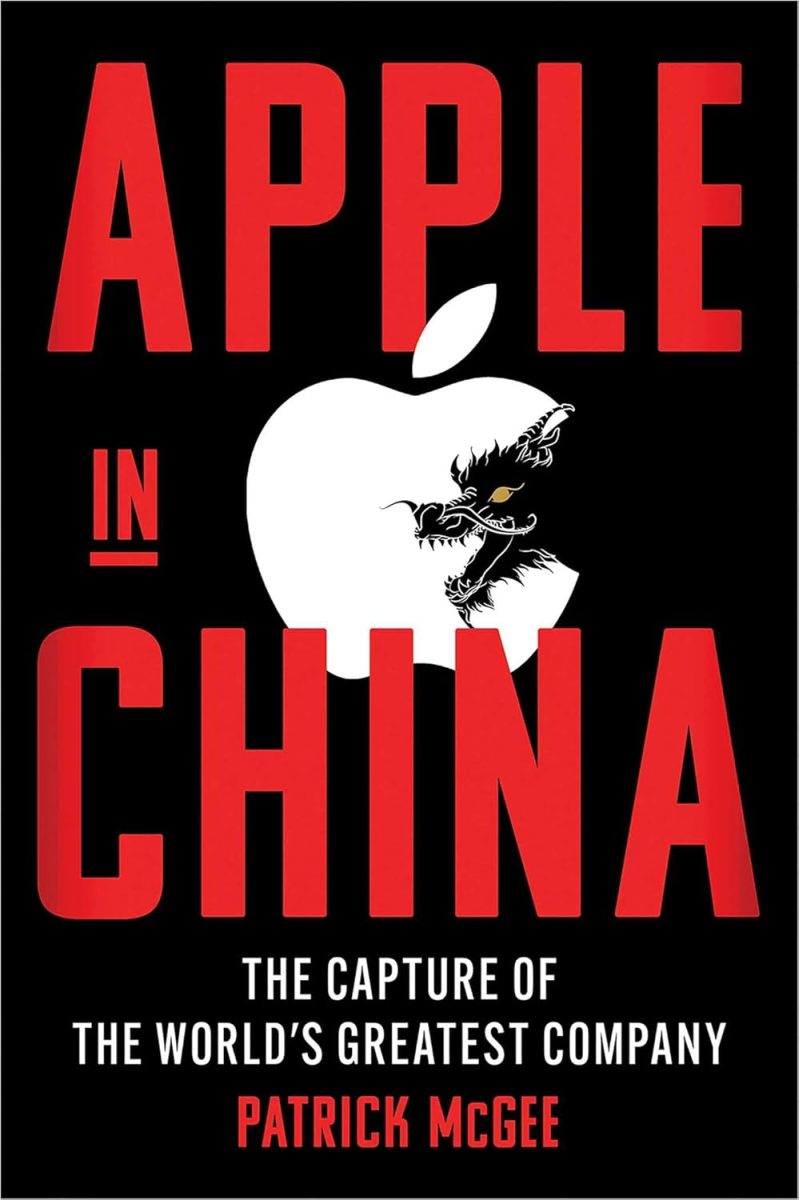
Apple is not just design genius
One of the myths about Apple was its design genius. It was the company which made things people really wanted – the first personal computer that was user friendly, the IPod and of course the I phone. Certainly it did have brilliant design people and a leadership, particularly Steve Jobs, who knew how to drive the expertise to get exciting new products.
However it was, and is, the same ruthless capitalist company which looks for the cheapest labour and captures the best engineering, technical and design talent in intense competition with its opponents. The book shows how the company constantly demanded lower and lower margins from the electronic component companies in Taiwan, India, China, Japan or Singapore. Apple demanded speed for the rapid production of new items.
Eventually the best deals were in China through Foxconn whose Taiwanese leader, Terry Gou, understood the big picture. Gou knew how to make connections with local and national regimes. Foxconn could get the products out fastest and to the right standard. He was prepared to take smaller profits because he was convinced that Apple would become market leader so the volume would eventually go through the roof.
Super exploitation
Patrick McGee recounts the story of the Foxconn manager who, told to get a new product out faster, went into the dormitories where thousands of employees were housed next to the factory and knocked 4000 workers up at 5 am with a cup of tea and biscuit to get onto the line. Inside the Apple company too the engineers, designers and product managers would be sacked at the drop of a hat too. Managers would make sinister jokes about the number of broken marriages caused by the extraordinary long hours Jobs and others insisted on. The company reacted not by changing the work culture but by offering new special bonuses and flying the partners out to nice hotels where the worker was based..

Foxconn workers protest in Zhengzhou
Apple managers knew exactly how Foxconn was able to produce stuff at such low margins. Its leadership was able to exploit its good relations with local and national Communist Party leaderships to get low tax deals, practically free infrastructure and cheap land to build the vast factories. Labour was cheap, flexible and plentiful as the Chinese Communist Party leadership organised the mass migration of rural workers with limited rights into these big new factories in the boom towns of South West China near Hong Kong. The flexibility was perfect for Apple too, McGhee comments:
Internal documents obtained for this book detail how Apple’s need for Chinese labor would fall below 900,000 in the slow months of spring, but then ramp up to more than 1.7 million in the peak season before iPhone launch.
At the beginning of course the key feature of Apple, as opposed to Bill Gates’ Microsoft, was its insistence of producing the hardware and the software. Microsoft leased its operating systems and software out to all the new PC computer companies like Dell or Compaq. Apple did not allow any open source programmes to be released. Eventually this meant its progress went into reverse and it nearly went bust. So Apple started to outsource its production and focus on the production of new products like the Imac and the Ipod. The latter was a huge success and showed how it could work with companies like Foxconn to deliver the goods.
How international capital works today
The book shows how international capital works today with a division of labour between the master company and all its suppliers which are often located outside the US and Europe. It does not mean that these companies have become techno feudalist in character as people like Varoufakis are arguing . There is no better modern example of surplus value extraction than the mega factory in China today.
McGhee’s key thesis is that there has been a huge transfer of knowledge between a US capitalist company and China. Apple poured billions dollars into China sending thousands of engineers to train millions of workers and build the world’s most advanced electronics supply chain. The author suggests that you can compare the scale of this to the Marshall Plan financed by the USA that helped transform post war Western Europe.
The result of all this is that China has a flourishing independent high tech manufacturing sector. It is already competing with the West on electric cars, AI systems and of course solar panels. It is quite wrong to see China today as low tech, making money mainly from cheap plastic products sold in the West. China’s home grown smartphone brands grew to dominate the local market, capturing 74% in 2014, up from 10% in 2009.
Implications for the US?
Some commentators in the US are concerned that this means Apple has been ‘captured’ and is vulnerable to the whims of an authoritarian government. Already Apple has made unsavoury ‘compromises’ with the government there over censorship issues. Apparently there is dedicated team at Apple that deals with navigating political issues with the Chinese and US governments. Certainly this book could be read by Trump’s MAGA coalition as backing up their concerns and reinforcing the idea of American First and stimulating in-sourcing.
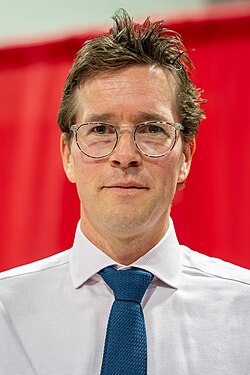
Patrick McGee is a journalist who worked for the Financial Times between 2013 and 2023. During his time at the newspaper, he worked in Hong Kong, Germany, and then California, with a focus on tech relations between China and the United States as well as global supply chains. Between 2019 and 2023, he was the principal reporter covering Apple Inc.… Through legal cases Apple has been involved in he has been able to supplement the sources he already built up as the lead FT reporter on Apple with thousands of emails released in the court processes.
Wikipedia reported on reaction to the book from Apple and China:
In a statement to Vanity Fair, Apple Inc. claimed that the book was “full of inaccuracies”.[8]
In his May 20, 2025, review for The China Academy, Chen Jing, a manufacturing observer, argues the story is “greatly exaggerated”, challenging the claim that Apple single-handedly empowered China. He disputes the $55 billion annual investment figure as overstated and questions the Marshall Plan comparison, suggesting a Western bias that credits American companies for China’s rise while ignoring its internal capabilities.
Another world is possible
For ecosocialists it reveals how Apple profits are built on the super exploitation of Chinese labour and the active support of provincial and national CP governments in China. We want a different model of production which says we do not need continual new editions of essentially the same product. Our happiness does not depend on having Iphone 6 (or wherever they are up to today).
We also need to question whether the development of production both in the USA and China with such long supply chains really benefits the workers in either country or is good for the environment. We have to balance the need for an efficient smart phone with our demand to prioritise overall production to create a better, happier, sustainable world. So for instance our health can be better, social care can be of high quality for all and we have more common goods for free, like public transport.