


Prime Minister Modi has been humiliated by the bravery, creativity, and ingenuity of the Indian youth protesters. The resignation of his education minister, Dharmendra Pradhan, which was the key demand of the young activists, may not seem a big victory in the context of most Western parliamentary systems where ministers are either dismissed or forced to resign if their continued presence damages the governing party.
In fact, many BJP spokespersons openly said that India was not the UK, where ministers are forced to resign under public pressure. Not bowing to any public pressure was projected as the sign of Modi’s leadership quality and the steely strength of Hindu nationalism. The humiliation of forcing his minister to resign after having repeatedly and arrogantly ignored the protesters’ demand for weeks has revealed severe cracks in that steely frame.
This is only the second time during Modi’s 12-year rule that he has been humiliated into accepting defeat and conceding the demands of those who have been opposing his authoritarianism rooted in the ideology of his Hindu nationalist party Bharatiya Janata Party (B.J.P.) geared to create a centralised Hindu state in India.
First victory
The first historic victory against his rule was in 2021, led by Punjab farmers and supported by farmers of neighbouring food-growing North Indian states. There is a deep commonality between these two glorious struggles, along with several distinctive features of these as historic mass protests. Both were revolts against centralisation.
Farmers revolted against the Modi government’s farm laws, which were aimed at centralisation of India’s agriculture under the control and dominance of big agribusiness corporations. The educated youth revolted against increasing centralisation and privatisation of education.
The project of centralisation and dismantling federalism, democracy and diversity are at the core of the unitarist Hindu nationalist vision. Because the unitarist Hindu nationalist project seeks to weaken federalism, democracy and diversity, both victories defended an alternative vision of India based on federal devolution, decentralisation, pluralism, and democratic governance.
The political project of unitarist nationalism, as opposed to the idea of multiple nationalisms and the form of governance enabling coexistence of those multiple nationalisms, has a long history in India. There is no other geographical entity in the world that is as diverse as India in terms of languages, scripts, religions, castes, regional cultures, traditions, and customs.
Colonial annexation of India attempted various forms of legal and economic integration of these diversities geared to the objective of colonial extraction of surplus from labour and nature. Against this colonial extractive capitalism, two opposing tendencies emerged: one led by the Congress party under the leadership of Gandhi and Nehru for political independence from British rule, and the other led by various left-wing groups for socialist socio-economic transformation.
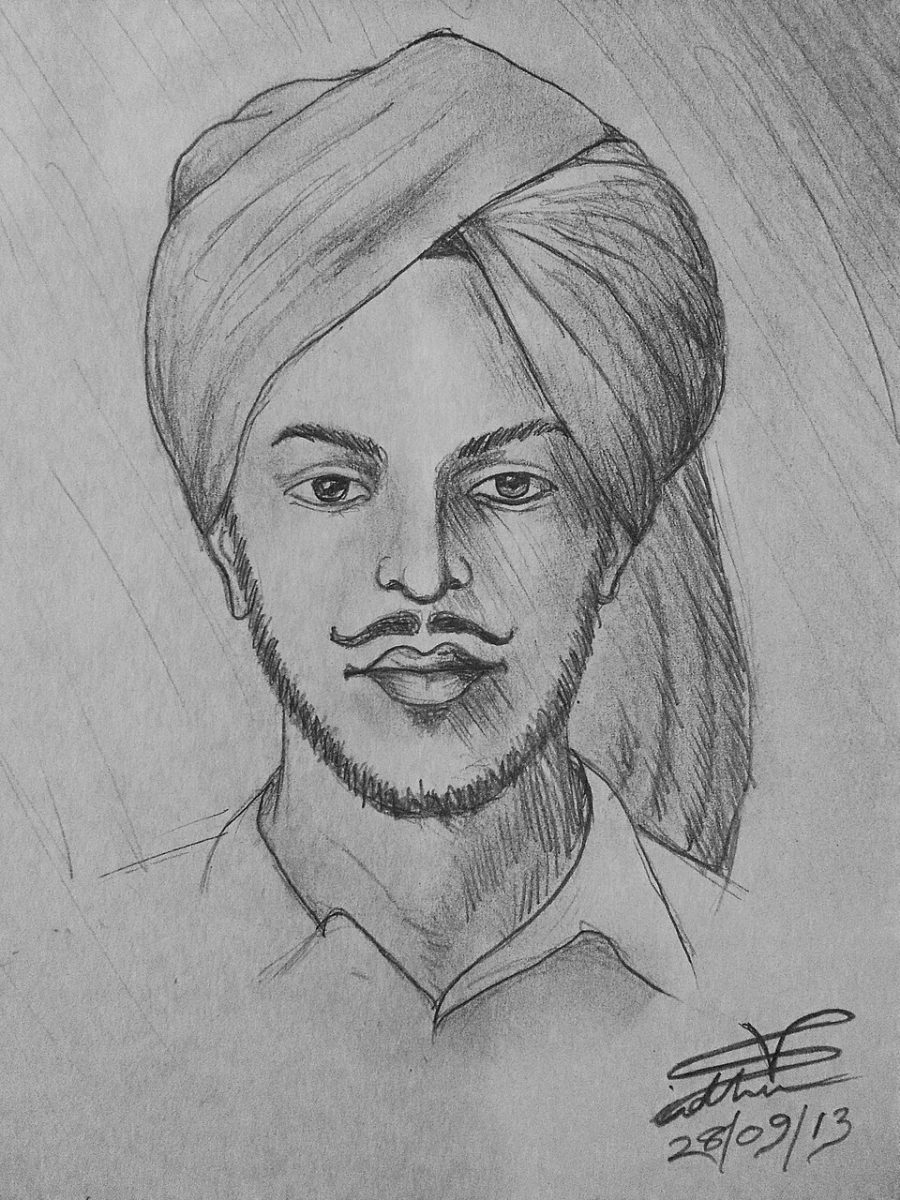
The revolutionary Bhagat Singh emerged as the most iconic figure of the latter. Gandhi-Nehru side prioritised Indian unity over diversity to achieve the goal of political independence. This laid the ideological foundations of unitarist Indian nationalism, which has mutated in various ways but without abandoning the central core. The socialist groups did not have any clearly articulated position on dealing with diversity.
The colonial rulers disliked both tendencies but feared the socialist revolutionaries. They hanged Bhagat Singh but negotiated peaceful transfer of power to the Gandhi-Nehru tendency after India was no longer economically and militarily governable due to Britain’s economic and military decline after World War 2.
The inevitable centralism of that unitarist nationalism always had a majoritarian Hindu bias and created the fracture with the Muslim community, the second largest religious minority (nearly 33 per cent in the whole of colonial India and over 55 per cent to 90 per cent in some provinces). The Muslim leadership wanted considerable state autonomy in the provinces where the Muslims were a substantial majority and pleaded for devolutionary powers to the provinces.
The unwillingness of the Congress leadership to accede to these devolutionary demands led to the partition of the country into a Muslim-majority Pakistan and an overwhelmingly Hindu-majority India. Had a devolutionary mode of governance been accepted and partition avoided, India’s Hindu majority would have been just about 65 per cent and not nearly 80 per cent as it is now.
The partition led to both India and Pakistan becoming highly centrally governed; Pakistani centralisation led to its further division after a military crackdown on its Bengal region seeking federal devolution and regional language rights. The repression of the Bengali language rights movement against centrally imposed Urdu domination eventually resulted in secession and the creation of Bangladesh in 1971.
In India, the partition further strengthened Hindu majoritarian centralisation in the framing of India’s constitution. The Indian constitution allocates powers between the centre and the states through three lists: the union (subjects where the centre has exclusive power), the state (exclusive legislative authority to the states), and the concurrent (subjects where both the union and the states may legislate) lists.Though in the original constitution, both agriculture and education were in the state list, the actual workings of the Indian political economy have seen both come under heavy central control.
Education was taken out of the state list during Indira Gandhi’s imposed Emergency in 1975 and moved to the concurrent list, which theoretically implies co-sharing between the centre and the states but in practice becomes a central subject because the constitution provides that in case of conflict between the centre and a state, the centre has overriding powers.
Trigger for protest
It is a characteristic of mass protests that though discontent might be accumulating over time, something acts as a trigger for that discontent to erupt into spontaneous upsurge.
The trigger for the student protests was a paper leak of the National Eligibility cum Entrance Test (NEET) for undergraduate medical degrees. This test, now centrally conducted, has become dysfunctional given the vast size of the country. This centralisation is a departure from the previous practice when the state governments used to offer admission to medical and dental colleges located in the state based on performance in the final school examination. A few leading medical colleges used to conduct their own entrance tests suited to their specific needs.
As a part of the continuous centralisation of education, the state-based practices have been taken over by this centralised test despite protests from state governments. The most significant of these protests has come from Tamil Nadu, a state known as a leading champion of opposition to centralisation.
Students preparing for this entrance examination spend an enormous amount of time and energy, and families incur heavy expenditure on paying for private coaching to help their youngsters prepare for this test. After the test was conducted, it was cancelled because the paper had been leaked. Such leaking has taken place for several other examinations in the last few years. Corruption and sale of leaked papers through connivance with education officials have been a regular practice.
India’s pattern of capitalist development is widely known as a jobless growth model. Scarcity of jobs with an expanding youth population has resulted in mass-scale joblessness. Over 50 per cent of India’s 1.4 billion population is under the age of 25, with a median age of just 28.4 years.
While advanced capitalist economies with high median age (UK/USA 40, Germany 45/46, Japan 47/50) are confronted with the problem of an ageing population, a developing capitalist economy such as India is faced with declining job prospects for its vast young population. Over 2 million students had taken the medical college entrance examination for only 30,000 places. The cancellation of the examination due to a leak led to desperation. At least 21 students committed suicide, and among them was one 18-year-old woman, Akanksha, who wrote a suicide note which was widely reported in the media.
When the protesting students assembled in Delhi and started a protest march to India’s parliament on 20 July, the Modi government resorted to the method it had employed in suppressing all previous protests successfully (except for the abject failure during the farmers’ protest), namely police violence including against women students.
Despite a disinformation campaign by pro-Modi mainstream media, which has come to be called sarcastically as “Godi [lap-dog] media“, the students used social media, especially Instagram, to record and publicise police brutalities. The young generation outwitted the pro-Modi media in the media war. The massive student and youth march in Kolkata (previously, Calcutta) on 24 July, 2026, reached an unprecedented scale, with independent witness estimates placing the crowd size at well over 100,000 demonstrators. It is being recognised as one of the largest civic uprisings and student-led protests Kolkata has witnessed in recent history.
One left-wing farmer organisation from Punjab announced a solidarity march to Delhi on 26 July. The government panicked at the prospect of farmer-student unity leading to mass civil unrest. It surrendered on 25 July. The discredited education minister resigned. The students, youth and their supporters danced to celebrate their marvellous victory.
Heroes
Every mass movement produces heroic figures. This movement produced several. I will mention just two who emerged as the most prominent ones. One was Abhijeet Dipke, a Dalit student at Boston University, who coined the name Cockroach Janta Party (CJP) to ridicule the BJP and the chief justice of India’s Supreme Court, who had called the young student protestors parasites and cockroaches. The ridicule proved to be a master stroke. It touched a chord with the angry young in India. Dipke’s Instagram account of the CJP attracted over 20 to 20 million followers.
Encouraged by this unexpected upsurge of support, he returned to India and called for a protest at Jantar Mantar, the officially designated space in India’s capital, Delhi, for public gatherings. He is inspired by the teachings of Dr B R Ambedkar (1891-1956), the visionary Dalit leader. His calm, dedicated, and thoughtful leadership of the movement was a significant factor in its success. It is under his leadership that representatives of the CJP negotiated with the government to secure Pradhan’s resignation as well as an agreement not to prosecute any person who protested on 20 July at Jantar Mantar, Delhi, or anywhere else in the country.
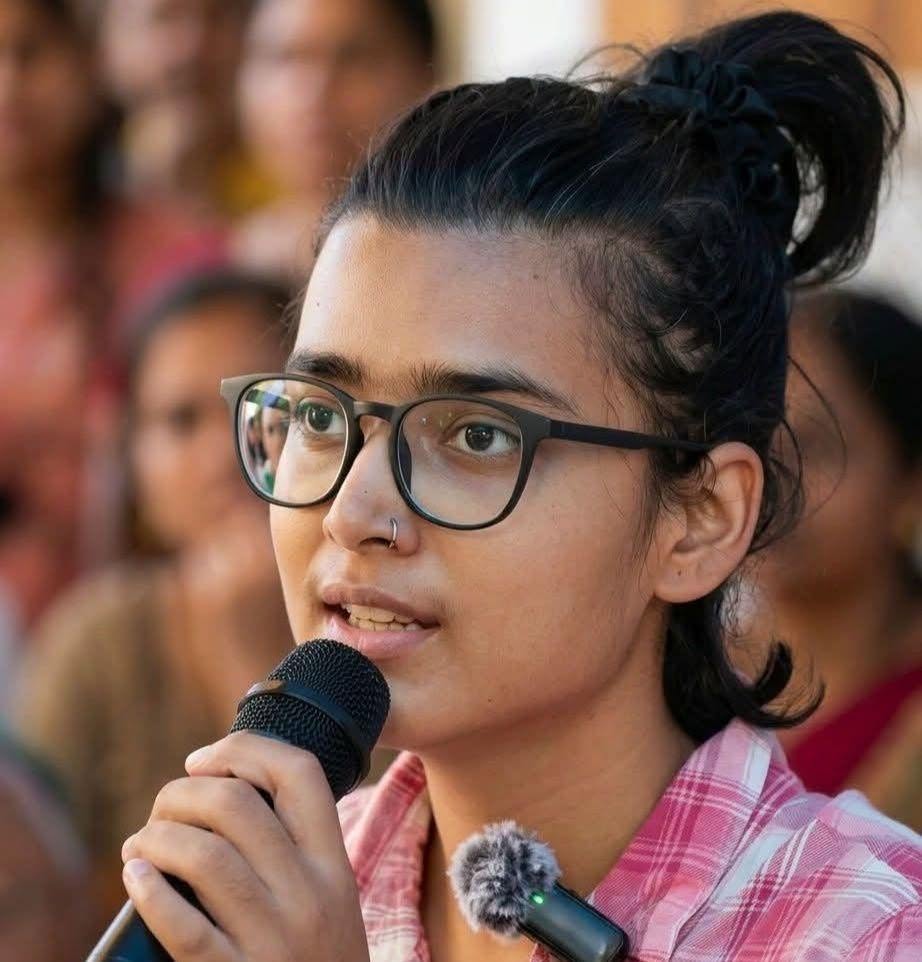
The other prominent leader is one young PhD student, Neha Bora, who emerged as one of the strongest voices of the movement. She revolted against her pro-BJP family and undertook a long hunger strike at the protest site in Delhi. It emerged later that she was pleasantly surprised when her mother had come to see her while she was on hunger strike, and later on congratulated her when the education minister resigned.
Neha heads a left-wing student organisation and is demonstratively brilliant and fearless in articulating her ideas. A journalist interviewing her asked her how they could dance after their victory when so many of them had suffered serious injuries from police violence during the protests. She said that despite all the pain and suffering, they had a right to be happy and then proposed that being happy is a form of resistance against arrogant rulers who would like them to remain miserable. She has also been forcefully and consistently speaking against the centralisation of education and supporting Tamil Nadu’s demand for restoration of state rights over education.
Neha’s class, religious and regional background spells danger for Modi’s Hindutva politics. She comes from an upper-middle-class urban Hindu family from the Hindi heartland state of Uttar Pradesh. This cohort has constituted until recently the most loyal electoral supporter base of Modi’s BJP. It may not remain so now and in the future.
Another shining social aspect of the movement has been large-scale mass participation and politicisation of young girls for the first time in the country’s political process. Passionate rejection of BJP’s anti-Muslim politics and projecting the Dalit leader Ambedkar and the revolutionary Bhagat Singh as the leading figures of their inspiration symbolised a significant break with the traditional politics of the mainstream bourgeois parties in India.
Both Abhijeet Dipke and Neha Bora are now on two separate national tours of the country to keep the momentum of youth mobilisation for building a political movement and culture of accountability.
There is a view that both the farmers’ movement and the student movement were successful because these were focused on a single demand: farmers asking for withdrawal of market-led farm laws and the students demanding the education minister’s resignation. It is argued that such single-demand movements might have a greater chance of success, but they leave the larger institutional structure intact. Indeed, the structure of agricultural management has not changed, but the student and youth leadership has learnt from the farmers’ movement and will not remain content just with the minister’s resignation and will demand structural changes in education, especially regarding examination management and accountability.
Change
Every successful or failed struggle leaves its imprint. There is certainly no doubt that the success of the farmers’ struggle provided an inspirational role for the student movement. The success of the student movement has already initiated a change in the political culture in the country. The spell of fear that had gripped and paralysed political opposition has been broken. A culture of protest is becoming infectious. A video has emerged showing school students led by a young girl in Fatehpur town of Uttar Pradesh state protesting against an insufficient number of teachers to teach them. Accountability of officials and politicians will emerge as a key issue in a country where there has been a long tradition of impunity. Accountability will strengthen democracy, and strengthening democracy is key to defeating centralised authoritarianism.
A massive social and cultural upheaval has taken place that touched almost all sections of the population, even though it was centred on the young and students. Its larger political, social, and cultural ramifications will unfold in the coming days. The arrogance of majoritarian Hindu nationalism is certainly bruised, and this is unlikely to remain merely psychological damage. It may prove to be more than a thin end of the wedge to break the hegemony of centralist Hindu nationalism.
I am thankful to Meena Dhanda and Raj Mann for comments on an earlier draft. The usual disclaimer applies