


Anti-Capitalist Musings Jun 24
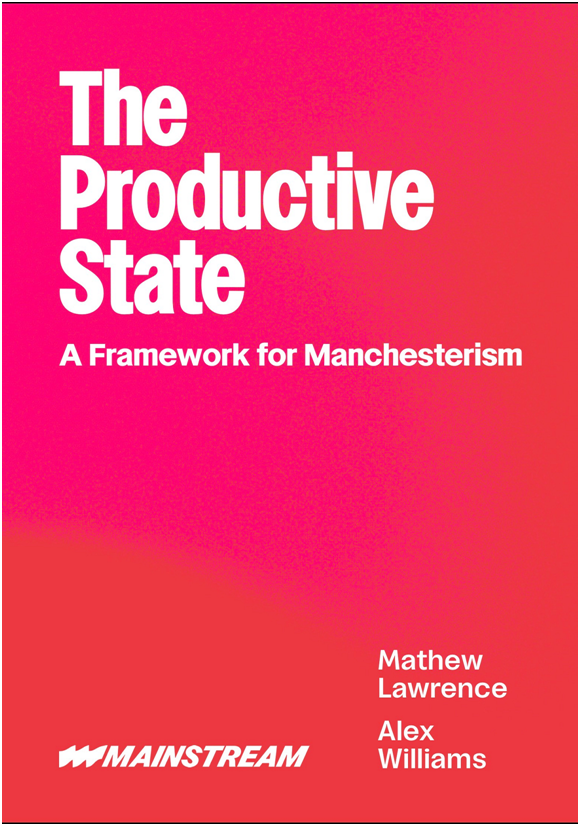
The state ameliorates without ever being permitted to cure directly. That sentence, from The Productive State by Common Wealth’s Mathew Lawrence and economist Alex Williams, names something that years of commentary on British decline have circled without landing on. The state has not disappeared from energy, water, housing, transport or care. It has become reactive: paying, compensating, bailing out, absorbing risk after the fact. What it does not do is produce.
The diagnosis runs deeper than that single line. Four decades of retreating public control have handed the essentials of life to actors whose mandate runs to private return, not social need. Lawrence and Williams call the result the “privatisation premium.” A better phrase would be organised tribute: every bill, fare and rent increase becomes a small act of compulsory upward redistribution, structural and permanent, from ordinary households to shareholders and bondholders.
The bottom income decile spends roughly three times the share of income on energy as the top. Twenty-eight per cent of an English water bill goes to debt servicing against ten per cent for publicly owned Scottish Water. Since the mid-1990s, privatised transport, energy and water companies have paid out close to £200 billion in dividends while delivering lower investment rates than their publicly owned predecessors1.
Public money into public assets for public provision
The fiscal consequences follow from this with a logic the report traces carefully. Welfare payments rise because rents rise. Energy support subsidises a system government refuses to control. Housing benefit is, as the report puts it, “the fiscal half-life of a council home that was sold and not replaced,” which is the most compressed description of the housing catastrophe available anywhere in current policy literature.
Regulation grows more elaborate because ministers no longer possess the simplest lever, which is ownership. The state ends up wide in scope and weak in control, generating what the report calls the fiscal escalator: rising prices drag public spending upward without addressing their cause, while undermining the political settlement that guarantees the welfare state itself. The ratio makes the argument plainly. Roughly £37 billion in housing benefit forecast for 2025-26. Roughly £5 billion in capital investment in social housing. These are not independent variables.
The proposed remedy is the Productive State: public money into public assets for public provision. Not another tax credit, not another attempt to unlock pension capital, not another regulator with a sharper tone. Lawrence and Williams are specific about the institutional vehicle. The public corporation, operationally independent, borrowing in its own name against its own revenue streams, protected from Treasury short-termism and shareholder extraction.
The historical record assembled in support is serious. The Central Electricity Board, a not-for-profit entity established not by a socialist government but by Baldwin’s Conservatives, built the first National Grid on time, under budget, in nine years. Postwar nationalised industries financed a generation of capital projects at a cost of capital private finance could not have matched. Municipal electricity firms were nearly two-fifths more efficient than private equivalents, growing their market share from thirty to seventy per cent in two decades. The question, the report correctly insists, is not whether to build. It is who builds, at what cost of capital, and under what form of institutional control.
Civic universalism
The political argument follows directly. The far right feeds on scarcity, telling people that unaffordable housing, degraded services and daily insecurity can be explained by immigration or cultural enemies. Liberalism has generally replied by rebuking the explanation while leaving the conditions intact. Public ownership of essentials does not merely reduce bills. Shared institutions produce a solidarity that means-tested benefits and market transactions cannot.
The report draws on Mahmood Mamdani’s account of civic universalism: genuine political belonging is constituted not through ethnic or cultural identity but through common membership in institutions that serve all. Britain’s own history supports this. The NHS did not only treat illness. It created a form of shared civic life in which every person was equally entitled to care regardless of income or background, which is why it remains the most politically durable institution the country has built.
So where does the argument break down?
The report acknowledges, with unusual directness for a document addressed to Labour’s internal audience, that “privatisation was not an economic experiment that failed. In the upward transfer of wealth and power, it was a political project that worked as intended.” That sentence is the hinge on which everything turns.
A project that worked for a class requires a class force to reverse it. Lawrence and Williams name the opposition with precision: utility shareholders, bondholders, infrastructure funds, the financial institutions that structure and refinance private infrastructure debt. What they do not name is the subject, the organised social force that would fight for the Productive State when that opposition mobilises in earnest. What appears instead is the language of broad coalition: households, businesses, communities. These are not wrong categories. Interests do not automatically become coalitions, though, and coalitions do not sustain structural transformation without an organised leading force2.
The obvious candidate is organised labour. The document treats it mainly as a governance mechanism, workers on boards, worker voice in planning, which is not the same thing as treating it as a political agent.
Democracy question underplayed
This matters because the democracy question the report also underplays is not a separate problem but the same one wearing different clothes. The postwar nationalisation model failed partly, as Lawrence and Williams correctly argue, because accountability ran upward to ministers rather than outward to the workers and communities the institutions served.
The proposed correction is arm’s-length governance with commercial mandates and boards holding clear public interest mandates. These protections are real. Treasury pressure on nationalised industries did real damage, suppressing maintenance investment regardless of operational need, directing pricing decisions that should have been operationally independent. Institutional design has to guard against repetition.
Yet “operational independence” and “commercial mandate” are not innocent phrases. They can protect public provision from ministerial vandalism or they can insulate it from democratic pressure, and the distance between those two outcomes depends on questions the report raises without resolving. Who appoints the boards and who removes them? What rights do workers hold beyond consultation? What recourse do communities have when efficiency arguments override their needs? Democratic ownership and state ownership are not the same thing, and the slippage between those categories runs through the document without ever being arrested.
I should be direct about where this lands for me personally. Rail privatisation in the early 1990s is not an abstraction. It is a set of observable consequences: conditions eroding through every franchise change and restructuring, each operator arriving with promises about investment and departing having extracted what they could. The fragmentation argument in the report is technically precise. What costs flow from that fragmentation are not primarily technical.
A Productive State built without the active agency of the people whose working lives constitute the point where the model’s contradictions actually land will remain vulnerable to reversal the moment political conditions shift. People defend what they feel they own. Democratic ownership is not a governance add-on. It is the condition of durability.
Dealing with the bond markets
The financing section is where the structural tension within the report becomes most visible, and where Lawrence and Williams are most candid. Gilt rate risk is real. Markets may treat large revenue-backed public entities as carrying implicit sovereign liabilities regardless of formal fiscal classification. Programme credibility shapes market response as much as programme content does. The September 2022 episode demonstrated what happens when fiscal announcements interact badly with financial structures and weak signalling. I want to state this clearly, because dismissing these constraints as timidity would be wrong.
Britain is a financialised, open economy with a twin deficit and historically high borrowing costs. Transformative politics has to engage with this reality rather than wave it away. The problem is the logic that follows. A programme calibrated never to frighten bond markets may find itself governed by bond market expectations before the first public corporation is incorporated.
Lawrence and Williams want to reduce the power of private capital over essentials while demonstrating to private capital that they remain responsible custodians of its expectations. That may be tactically unavoidable. It is also structurally unstable, because the moment the Productive State begins to work, the opposition named in the report will mobilise fully, and meeting that mobilisation cannot be another round of careful fiscal sequencing and OBR sign-off.
This is where Burnham matters, and where the report is most honest about what it cannot deliver.
Greater Manchester is the proof of concept: the Bee Network, public control of buses, routes restored to communities the market had written off as insufficiently profitable. Patronage has increased. Coverage has expanded. A public operator optimising for coverage and frequency rather than fare recovery demonstrates in practice what the report argues in theory, that removing the structural bias against socially necessary but privately marginal provision is fiscally and politically viable.
The report builds a national programme from this foundation: energy and water under national public corporations, housing and transport at city-region scale, care through municipal providers. Thames Water through the special administration regime provides the clearest immediate route to public ownership. GB Energy, given a genuine trading mandate rather than constrained as a subsidy vehicle for private generation, becomes the dealer function the theory requires.
Will Burnham implement the report?
Whether Burnham would do this is a question the report cannot answer, because the report is not really about Burnham. It is about what the people around him hope he might become. He has demonstrated, in Greater Manchester, that he understands what public control can achieve at the scale available to him. Governing Britain would require choosing conflict at a different order of magnitude: the Treasury, the City, the privatised utilities, the developers, the private care chains, and the accumulated common sense of forty years.
The report says the forces of resistance are “real and specific.” They are. The counter-force is larger, the workers, households and communities still paying the privatisation premium long after it was supposed to produce the cheaper bills it was sold on. Whether that constituency gets organised as a political subject, or simply addressed as a target audience, is the only question that ultimately matters.
The report is the opening shot. As opening shots go, it lands. What it hits depends entirely on what follows.ow
You can download the report for free from the Mainstream website
Hettie O’Brien, The Asset Class: How Private Equity Turned Capitalism Against Itself (2026). O’Brien documents the extraction mechanism across sectors in granular detail; the report’s care and water analysis follows her findings closely.
Grace Blakeley, Vulture Capitalism: How to Survive in an Age of Corporate Greed (2024). Blakeley makes the argument the report approaches but will not fully state: that what is described here is not dysfunction but design, requiring organised class opposition rather than a broad coalition of household interests.