

As Donald Trump was shaken by the scale of the Republican defeat in the US midterm elections, and members of his administration openly disagreed about its causes, the sounds echoing outside the White House were those of marching feet and shouted slogans against zombie neoliberalism.
Why zombie neoliberalism? Because after the financial crash of 2007–08, the political leaders of the right could think of nothing better than to double down on austerity and attacks on the working class. Despite the disastrous consequences of these policies, neoliberalism has staggered on, politically discredited but still dominating economic policy.
Now the working class and its allies are standing up, and young people — Generation Z, broadly those born between the late 1990s and early 2010s — are increasingly at the forefront of the struggle.
For much of this generation, the future appears bleak. Young people face fewer secure jobs, astronomical rents that can consume 40–50 per cent of disposable income, low wages, soaring prices and, for many, a growing mental health crisis. It is hardly surprising that they are taking the lead in challenging a system that offers them so little.
France: workers and youth unite
At the forefront of this wave of resistance are the workers and young people of France.
On 5 November, huge demonstrations once again swept across the country in protest against the cost-of-living catastrophe. According to the CGT trade union federation, around 1.6 million people participated, while the Interior Ministry put the figure at approximately 575,000. Workers, students, pensioners and unemployed people joined forces to demand higher wages, better public services and an end to the policies that are driving millions into insecurity.
Sophie Binet, general secretary of the CGT, had called for a new stage in the struggle, declaring that “the strike must take over” from the earlier demonstrations.
On the day of mobilisation, Binet insisted that “nothing will stop us”, arguing that the ovement would continue until the government and employers responded to workers’ demands. Marylise Léon, leader of the CFDT federation, also called for an increase in the minimum wage and meaningful negotiations to secure higher pay across the economy.
The significance of the French movement lies not simply in its size but in the growing convergence between young people protesting against their lack of a future and organised workers fighting to defend their living standards.
Germany: Generation Z takes to the streets
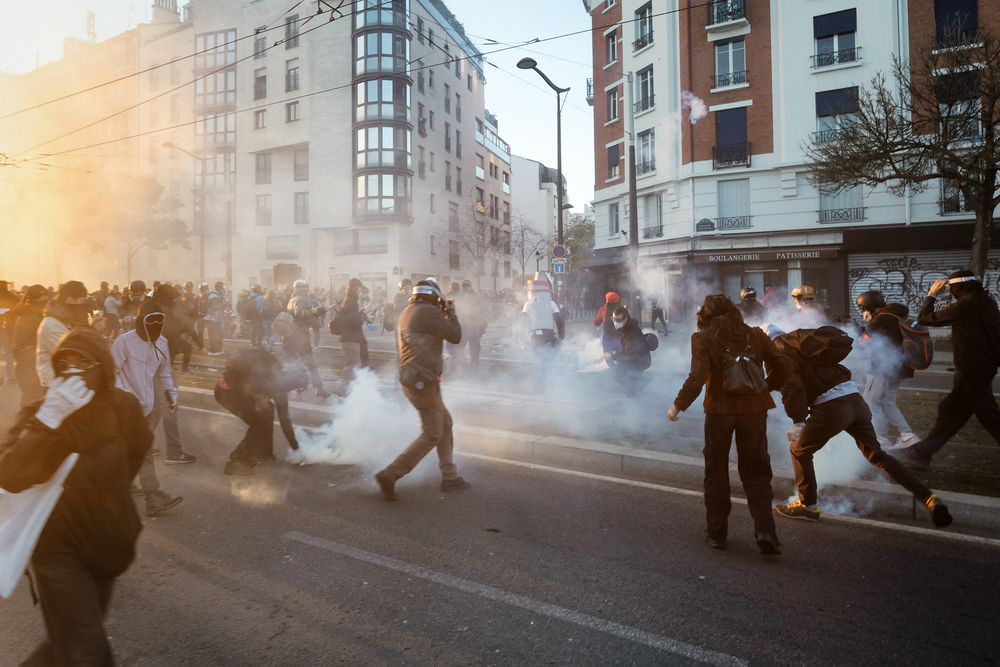
On 31 October, Germany experienced a major new wave of youth-led demonstrations.
Organised by a loose coalition calling itself Gen Z regelt — roughly translated as “Gen Z takes charge” — protests took place in 34 German cities, including Berlin, Frankfurt, Munich, Hamburg and Cologne. Organisers claimed that more than 100,000 people participated nationwide, although police estimates were considerably lower.
The demonstrators protested against the rising cost of living, cuts to education and public services, and the growing drive towards militarisation and compulsory military service.
The anger was particularly evident among students who see their educational opportunities deteriorating while the government pours billions into military expenditure.
Veronika Dinter, a 23-year-old political science student who travelled from Hanover to Berlin, explained the financial pressures facing her generation:
“I wanted to start studying to develop critical thinking and learn something new, but I didn’t realise how much it would cost to do so.”
She condemned government spending priorities, arguing that education and social services were being cut while military budgets expanded.Another demonstrator, 24-year-old Emma Heymann, expressed the anger of a generation facing deteriorating living standards and declining public services.
Phil Tziartzianis, who travelled eight hours from Kassel to join the Berlin demonstration, explained the importance of collective action:“It feels important for me to be here among other young people who feel the same way.”
Although most demonstrations were peaceful, clashes occurred in several cities, with serious disturbances reported in Frankfurt.
The German protests demonstrated that the youth revolt spreading across Europe was not confined to countries with traditionally militant labour movements. It was reaching the heart of Europe’s largest economy.
Spain: general strike against the housing catastrophe
On 11 November, Spain was shaken by a nationwide general strike called by the country’s two principal trade union federations, the Workers’ Commissions (CC.OO.) and the General Union of Workers (UGT), alongside housing campaigners.
The strike was directed against soaring prices, stagnant wages and, above all, the country’s increasingly severe housing crisis. Early reports indicated substantial participation among car workers, transport workers and employees across the public sector, with significant disruption to industry and public transport.
The housing question has become particularly explosive in Spain. Large numbers of young people are unable to afford independent accommodation, while rents in major cities and coastal areas have risen dramatically.
Housing is increasingly treated not as a basic human necessity but as an asset for speculation and the extraction of enormous profits.The leaders of Spain’s two largest trade union federations declared the strike a success.
Pepe Álvarez, general secretary of the UGT, and Unai Sordo, general secretary of CC.OO., said participation had “exceeded expectations”. Álvarez described the mobilisation as a major general strike, rejecting attempts by employers to minimise its significance.
The determination of the strikers was matched by police repression. In Madrid, police used pepper spray against pickets, including at the Mercamadrid wholesale market, where protesters required medical treatment.
Álvarez condemned the police interventions as “unacceptable in a democratic country”, while Sordo announced legal action over the use of pepper spray against informational pickets.
The Spanish mobilisation demonstrates the potential for linking organised working-class action with the struggles of young people over housing and the cost of living.
Young Spaniards are joining their French, German and Italian counterparts in challenging zombie neoliberalism. Increasingly, Generation Z is taking the initiative.
Bangladesh: garment workers fight back
The continuing struggle of garment workers in Bangladesh provides another inspiring example of resistance.
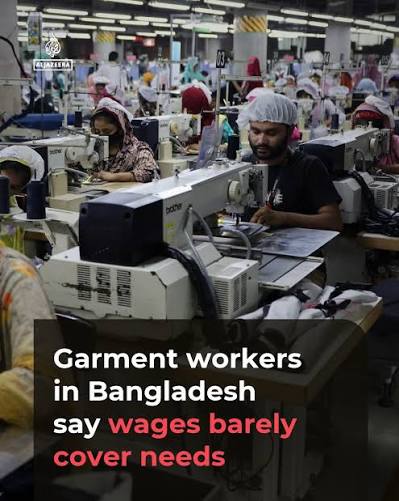
While rents and prices have skyrocketed, garment workers’ wages have remained desperately low. Bangladesh is one of the world’s principal centres of garment production, supplying the international fast-fashion industry.
Workers producing clothes for some of the world’s largest fashion brands have frequently earned the equivalent of around £100 a month or less.
Housing costs in Dhaka can consume an enormous proportion of these wages. Many workers and their families are forced into overcrowded single rooms, often sharing inadequate sanitation facilities with dozens of other residents.
The garment workers’ struggles have exposed the brutal conditions underpinning the profits of the global fashion industry.
During the major wage confrontations of 2023, widespread factory shutdowns and militant demonstrations forced the government and employers to respond to demands for higher pay.
The authorities attempted to contain the movement through wage-board negotiations and promises of future increases. But workers continued to demonstrate, block roads and erect barricades. Several workers were killed during the confrontation.
The outcome of those struggles did not resolve the underlying problems of poverty wages, unsafe conditions and the enormous imbalance of power between workers and multinational corporations.
The workers who generate billions in profits for the international fashion brands, while occupying a crucial position in global production networks, have repeatedly said a resounding “no” to their inhuman conditions.
Their struggle remains a reminder that the rebellion against neoliberalism is not confined to the advanced capitalist countries.
Electoral defeats for the right
The upsurge in social struggles must also be considered alongside important electoral developments in Brazil and the United States. In Brazil, Lula’s victory in 2022, supported by a broad social and political alliance, blocked Jair Bolsonaro’s attempt to secure another presidential term.
That victory was an important setback for the far right, although it did not eliminate the political and social forces that had sustained Bolsonaro. Across Latin America, the political picture remains contradictory, with victories for both left-wing and right-wing forces in different countries.
In the United States, the November 2026 midterm elections produced a major defeat for Donald Trump and the Republicans.The Democrats won control of both the House of Representatives and the Senate, demonstrating the scale of public dissatisfaction with the administration.
The election was widely interpreted as a rejection of Trump’s economic policies, the rising cost of living and the consequences of his war on Iran, which contributed to sharp increases in energy prices. At the same time, the administration’s Immigration and Customs Enforcement (ICE) operations against immigrant communities have provoked widespread opposition.
The electoral coalition that carried Trump to victory in 2024 appears to be coming under increasing strain. In the presidential election, Trump had made significant gains among young Black and Latino men. The extent to which those gains have been reversed requires closer examination, but the wider political shift is unmistakable.
The Republican defeat demonstrates that the authoritarian right is far from invincible.
A Generation denied a future
The growing role of Generation Z in the movements in France, Germany, Italy and Spain could also challenge the electoral appeal of the far right.
In Spain, Vox has sought to exploit social discontent. In France, Marine Le Pen’s National Rally has built substantial support, while Giorgia Meloni’s government in Italy represents another important expression of the European far right. But the new movements demonstrate that there is also enormous potential support for anti-racism, solidarity and collective resistance to the system that is depriving young people of a future.
For millions, the traditional aspiration of a secure job, somewhere affordable to live and the possibility of raising a family increasingly appears out of reach.
These are not simply the frustrations of an impatient generation. They are the consequences of an economic system that has subordinated basic human needs to profitability, speculation and the accumulation of private wealth.
Housing, education, healthcare and secure employment are treated as costs to be reduced or opportunities for profit rather than as fundamental social rights.
The significance of the new wave of rebellion is that increasing numbers of young people are beginning to connect their individual difficulties with the wider failures of the economic system.
The danger of another global economic crisis
There are, of course, numerous dangers facing the anti-austerity movements.
Donald Trump’s economic and military policies have intensified the danger of another global economic crisis — a danger already inherent in the contradictions of the capitalist economy.
The enormous accumulation of debt that followed the financial crash of 2007–08 was never fundamentally resolved.
Central banks responded to that crisis through quantitative easing and other extraordinary interventions designed to stabilise financial markets and prevent economic collapse.
The huge sums mobilised during the Covid-19 pandemic, together with the continuing expansion of public and private debt, have added further strains to an already unstable international economy.
Another major global crash would be a disaster for millions of working people. It could also prove much more difficult to contain than the crisis of 2007–08.
For the movements now emerging, the challenge will be to resist attempts to make workers and the poor pay once again for a crisis they did not create.
Al Jazeera
From Europe to Asia: an international revolt
The wave of resistance extends far beyond Europe.
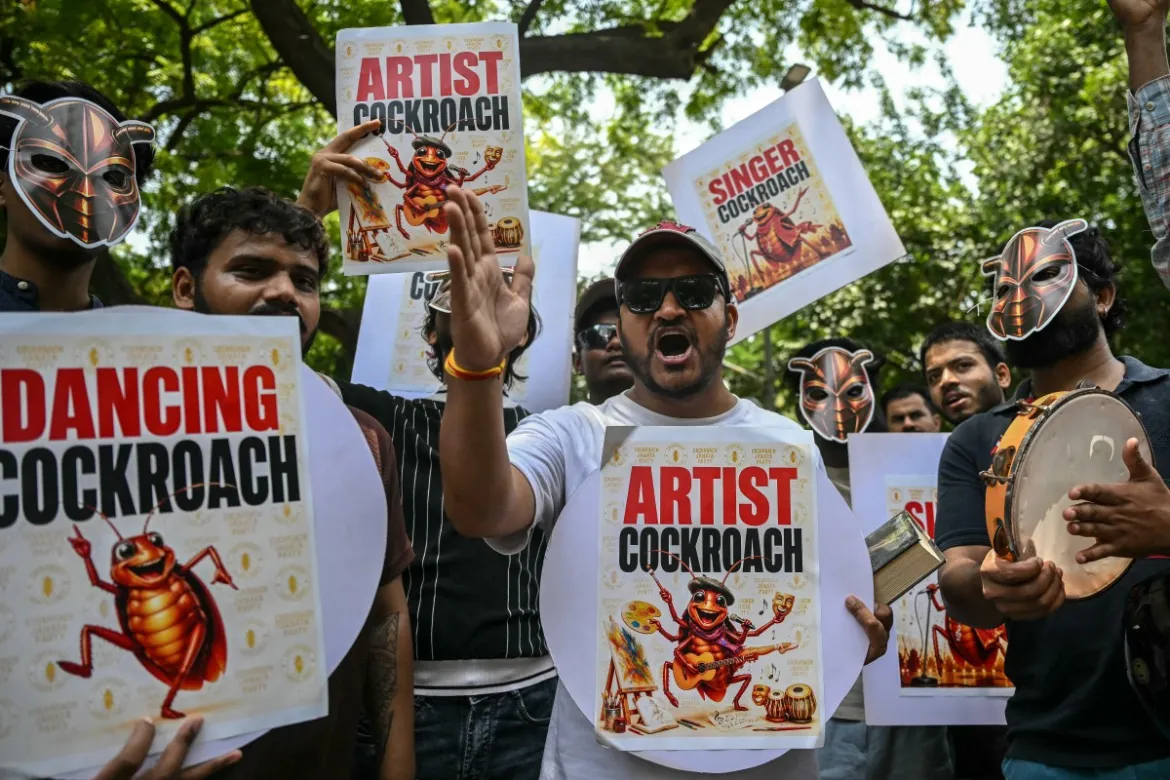
In India, young people have been involved in protests against corruption, authoritarianism and the policies of Narendra Modi’s hard-right government.
Generation Z has also played an important role in movements in Thailand and elsewhere in Asia.In Japan, anti-militarism has become an important focus of youth activism, reflecting growing concern about the expansion of military expenditure and the country’s changing defence policies.
It is worth noting that opposition to militarisation was also a significant feature of the German demonstrations on 31 October.Support for the right of the Ukrainian people to defend themselves against Russia’s invasion should not blind us to the enormous resurgence of militarism across Europe and elsewhere.
The increase in military spending is taking place at precisely the moment when governments claim that there is insufficient money for schools, hospitals, housing and social provision.
This contradiction is becoming increasingly visible to young people, who are being asked to accept declining living standards while vast resources are diverted towards military expansion.
The challenge to zombie neoliberalism
The central question is whether these movements can develop beyond individual demonstrations, strikes and electoral protests into a sustained challenge to the political and economic system itself. The struggles of young people over housing, education and their future must be linked with the organised power of workers in industry, transport and public services.
The French and Spanish mobilisations show the potential for such an alliance. The German demonstrations reveal how rapidly anger can spread among young people previously regarded as politically passive.
The struggles of garment workers in Bangladesh remind us that the exploitation sustaining the global economy is international in character, and that resistance must be international too.
Zombie neoliberalism has survived repeated crises because the ruling classes have continued to impose its policies, whatever their social consequences.
But the growing waves of rebellion suggest that its capacity to command consent is weakening.
A generation denied a future is beginning to fight for one. The challenge now is to turn that anger into an organised movement capable not merely of resisting austerity, but of transforming the society that produces it.