

Many reviews of James Vanderbilt’s 2025 film Nuremberg tend to focus on the quality of acting, or the pace of the narrative.Some, however, do also comment on how the film explores the nature of evil and mass psychology.
Probably the most-rounded review has come from the USA’s National Public Radio (NPR):
This review addresses how the capacity for “such genocidal abominations” as committed by fascism in Germany is “latent within our own reality” – and concludes that this is “too frightening to hear” and a “responsibility too terrible to accept and yet too prescient to ignore.”
Yet even this review fails to seriously address the actual important lessons the film has for our times.This is despite the fact that Vanderbilt – who also wrote the screenplay – does not in any way dodge that issue. One lesson – and warning – is clearly expressed by Sgt. Howie Triest (played by Leo Woodall):
“You want to know why it happened here? People let it happen. Because they didn’t stand up until it was too late.”
Then, towards the end of the film, US Army psychiatrist Douglas Kelley (played brilliantly by Rami Malek) is shown – after the Nuremberg Tribunal – appearing as a guest on a radio programme in the US, discussing the book he wrote based on his experiences. He is desperate to communicate his troubling discovery:
“They [the Nazis] are not unique people. There are people like the Nazis in every country in the world today.”
When the radio host denies this could be true of the US, Kelley replies:
“Yes,in America. Their personality patterns are not obscure. There are people who want to be in power. And while you say they don’t exist here, I would say I’m quite certain there are people in America who would willingly climb over the corpses of half the American public if they knew they could gain control of the other half. … They stoke hatred. It’s what Hitler and Göring did, and it is textbook. And if you think the next time it happenswe’re going to recognize it because they’re wearing scary uniforms, you’re out of your damn mind.”
The Trump-Farage ‘Window’
Those lessons couldn’t be more timely. Over the past decade, Trump and Farage – following far-right populist ideas propounded by US fascist Bannon – have succeeded in widening the ‘Overton Window’ as regards what cn apparently be said in ‘mainstream’ political discourse.

Fig. 2 – Trump, & the UK’s cheap & nasty Poundland version!
In the UK, Farage has been helped in this by those media outlets who constantly give him prime TV slots.Creeping fascist Farage has used such opportunities to dismiss his racist and antisemitic bullying – whilst a pupil at the very expensive Dulwich College – as “playground banter.”While Refuk Deputy Leader Tice tried to pass off the repeated kicking of a former girlfriend by a Refuk MP as merely “a teenage indiscretion.”
But, in the first week of February 2026, US President Trump went a step further: sharing a post which depicted ex-President Obama and his wife as apes. Like Farage and Tice, Trump tried to dismiss it as ‘merely’“an internet meme” – and even to criticise what he called“fake outrage.”As one US observer commented: “That kind of imagery has a history” – which was used to justify slavery, rationalise lynching, and make segregation and the Jim Crow laws feel ‘natural.’
After having seen Nuremberg, it’s important to say – and say out loud and clear – that every genocide starts with that same first step: trying to persuade people that certain ‘others’ are not fully human. Given such a context, silence is both damning and dangerous.Not to condemn such an action in the strongest terms is effectively to accept a little more contempt and cruelty, and to dehumanise a group of people. Not to speak out, and not to protest, is to allow ourselves to become a little less human too.
Silence in such circumstances is NOT neutral – merely shrugging our shoulders and passing on is to become part of such hateful and dangerous politics. And that’s precisely one of the most important lessons of Nuremberg. Not to learn that lesson is not only to betray all those exterminated by the Nazis – it’s also to betray the ethnic groups and refugees demonised today by the likes of Trump, Farage and ‘Robinson’.
Is non-violent resistance enough?
Another issue arising from the film – thought not directly – is the whole question of how to push back and defeat such hateful politics. Given the increasingly-violent international scene – with the US and Russia both grabbing what they want from other countries – this raises the question of whether non-violent resistance is enough? Or when it ceases to be enough.
This question also increasingly relates to domestic politics – in the US, this has been raised in relation to the state violence used by ICE in Minneapolis.
History has shown many times that non-violence can be an effective tactic in the arsenal of self-defence. But, unfortunately, history does not always ‘allow’ non-violence as a practical and effective option. This is most apparent during extreme state violence and genocide – and, increasingly today, with ecocide. In such circumstances, should not resisters at least consider ‘full-spectrum resistance’, with all methods on the table?
There are strong arguments in favour of non-violence – but what about those arguments relating to self-defence? On the same political platform, Roger Hallam (of XR and Just Stop Oil) continues to defend NVDA against any kind of violent self-defence.
But is he right, in all instances? One problematic issue is that he seems to assume violent resistance will always result in more deaths than passive resistance. It could be argued that a violent resistance on the part of Jewish people – and other Germans – in the late 1930s might have prevented the Holocaust of the 1940s. Similarly, a strong international response in defence of the democratically-elected Spanish government after 1936 might have prevented the Second World War – and its 70 million deaths.
Having just seen Nuremberg, one question which arises is – knowing what we know now – should we have fought WW2? Or should we have continued with appeasement? And, if we should have fought WW2, should we have begun fighting earlier?
“We are Gustav!”
Regardless of the non-violent vs. self-defence resistance question, resistance is what matters when it comes to opposing – and hopefully stopping – movements that are morally-wrong. One man who refused to go along with German fascism’s evil violence was Gustav Wegert. As can be seen in the photo, whilst all his workmates around him gave the Nazi salute, he refused:
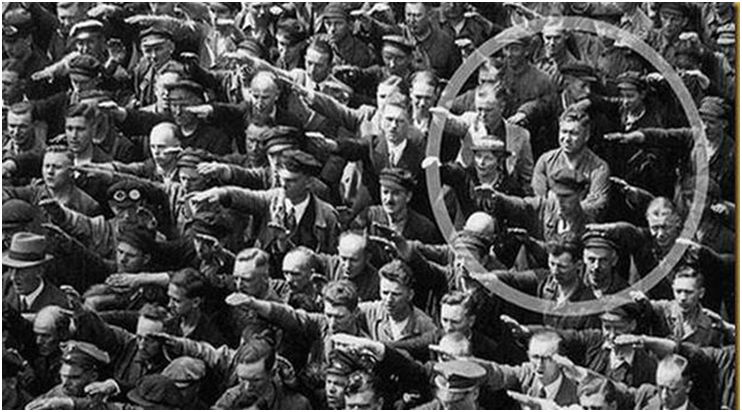
Fig. 3 – Against the stream: Gustav Wegert’s resistance.
Sadly, his resistance was on an individual basis only. Whilst that is an important starting point, to be effective – i.e., successful – resistance has to be done in the company of others. Though some people are like Gustav, and don’t need others to resist – known as ‘zeros’, according to psychologist Cass Sunstein – most need to see others also resisting, before they step up. [R. Bregman, 2026, Moral Ambition, p.36] In fact, most people tend to stand on the sidelines – and tend to be influenced by groups of committed individuals. Often, the 80/20 ‘Pareto Principle’ seems to apply, with most of us not acting until we see others acting first. The initial resistance of a small minority can then spread like a virus, soon spreading to millions. That’s why revolutions can gain momentum so quickly.
It’s like towards the end of the film ‘Spartacus’, when Crassus offers not to crucify the captured rebels if they will just identify which one is Spartacus – & they ALL stand up to say: “I’m Spartacus!” Courage is contagious – again, as Spartacus (more or less!) says: “When one person says ‘No!’, Rome begins to tremble. If tens of thousands say ‘No!’, Rome falls!” Gustav Wegert was both right and brave to say “No!” – but he needed those tens of thousands to be effective.
‘Together’ against the far right
An important opportunity to resist, together, the rising tide of far-right authoritarian populism (aka creeping fascism) – and outright fascism – will take place in London on Saturday 28 March:
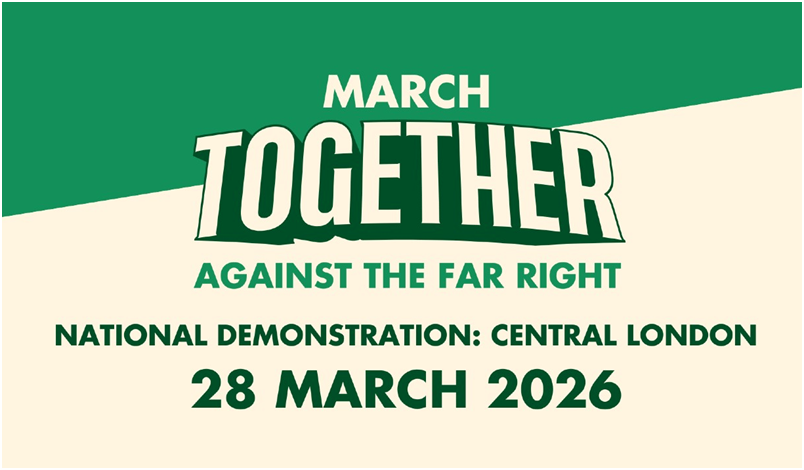
Fig. 4 – Saturday 28 March – time to stand together against the far right.
An important reminder of why we need to stand together – in large numbers – is provided by recent developments concerning Farage and Refuk. Refuk’s candidate in the Gorton and Denton by-election – Matt Goodwin – has just been endorsed by outright fascist Tommy Robinson. Previously, Goodwin has been photographed with far-right politicians such as Santiago Abascal (Spain) and Steve Bannon (US). Neither he nor Farage has distanced themselves from Robinson’ and his endorsement – Farage in fact is quoted as saying he “wasn’t bothered” by that endorsement.In accepting that endorsement, Refuk are allowing hatred and division to go unchallenged – in Manchester, and in the whole country.
Furthermore, it’s now emerged that Refuk’s Treasurer, Nick Candy, maintained links with Epstein after the latter’s conviction of having sex with a child.
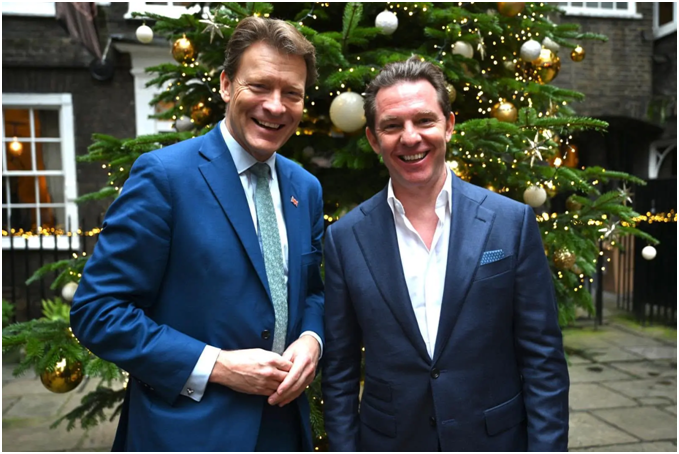
Fig. 5– The Epstein Connection? Refuk’s Treasurer, Candy (R) with Refuk’s Deputy Fuhrer Tice
If it was wrong of Starmer to appoint Mandelson (which it was), why isn’t it equally wrong of Farage to appoint Candy? And why, now the facts are out, has Farage not sacked Candy – like Starmer eventually sacked Mandelson?
Sadly, the answer is too painfully clear: Farage is convinced he is headed for No. 10 – and now sees no reason even to attempt to hide his creeping fascist beliefs.
That’s precisely why we need a BIG turnout on 28 March:
Unfortunately, it coincides with the Green Party’s Spring Conference. Let’s hope most Greens prioritise the more important event!
It might be useful to end this review with the words that end the film, which give a painful reminder of what some people will do – If we let them:
“The only clue to what man can do is what man has done.”
[R. G. Collingwood (historian)]