


Fashion model, photographic artist, surrealist, feminist icon, anti-fascist, war correspondent, war photographer, host for artists, and gourmet cook – Lee Miller was all of these in her 70 years of life. Creative artist and fearless radical, she once said, ‘I go out on a limb andcut the branch off behind me’.
Sadly, in her last decades, she suffered from poor health, so who knows how many more lives she could have lived. The Tate Britain has a major exhibition that ends on 15 February, but there is a wide range of written and visual resources you can consult online to learn more about this remarkable artist.
By the age of twenty, Lee Miller was a successful American model, appearing on magazine covers such as Vogue. She epitomised the garçonne, the ultra-modern style of the 1920s, with cropped hair, cloche hats, and drop-waist dresses. Traditional feminine images were replaced with a more androgynous look. She had already studied in Paris before her modelling career. Aged 18, she had dumped her chaperone and studied stage design there.
Working with Man Ray
Leaving fashion modelling behind, she moved to Paris in the late 1920s and turned up unannounced at Man Ray’s studio. She told him she was Lee Miller, his new student. Man Ray – a well-known surrealist artist – replied that he had no students and said he was leaving for Biarritz the next day. She replied, ‘So am I.’
Most art historians accept that Miller and Man Ray produced work as a team, and it is hard to know who influenced whom and whether you can attribute artworks to just one of them. By chance, she discovers the solarisation process, in which negatives are exposed to light while still sensitive, partially reversing the black-and-white tones. Her photograph Exploding Hand (1930) plays with composition and reflections to reimagine an otherwise ordinary scene.
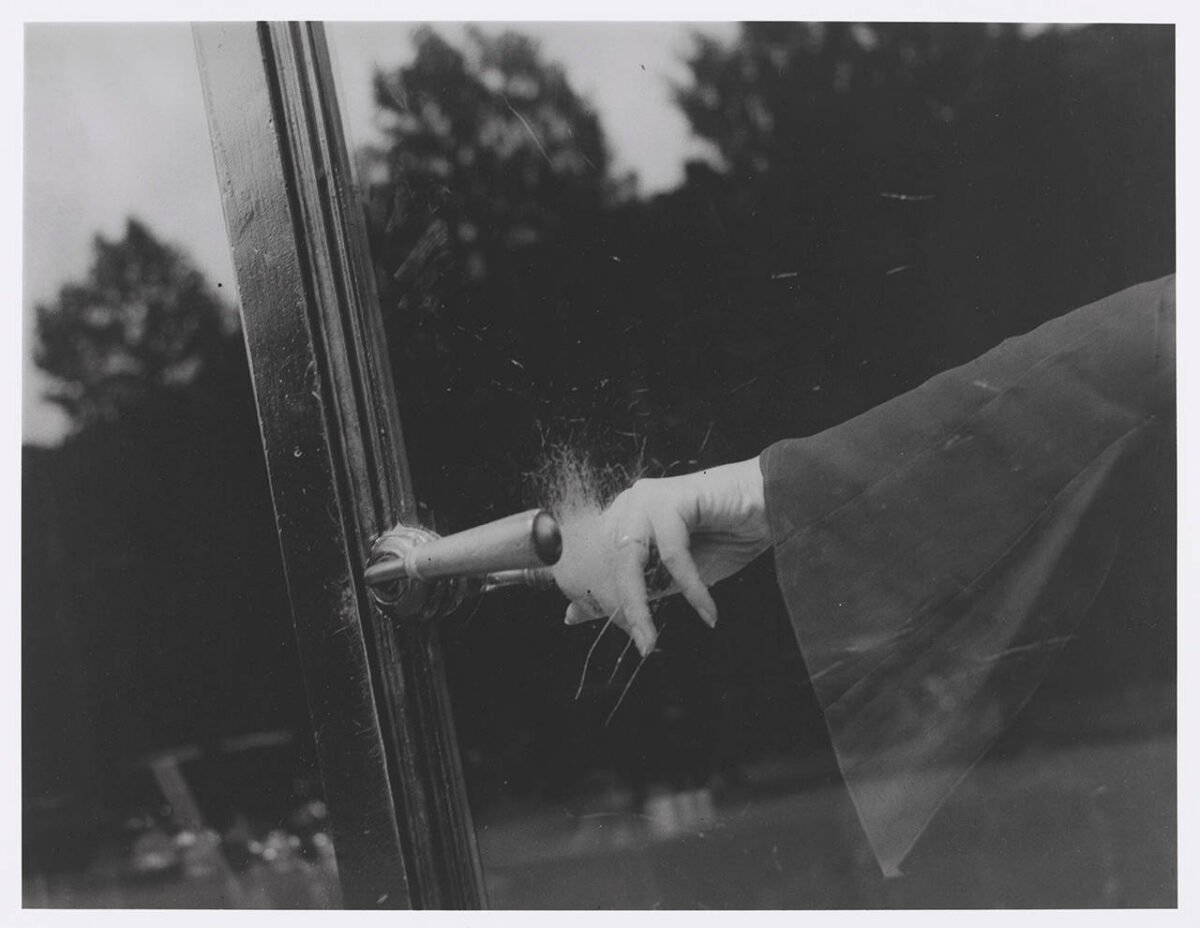
During this period, Lee became one of the pioneers in establishing photography as an accepted art form. Later in the show, there is a picture of Kenneth Clark producing a film about art and the Second World War. He refused to add Lee’s work because he did not think photography could stand alongside painting or sculpture as proper art!
In the Tate show, you can see a clip of Miller’s role as a statue that comes to life in Jean Cocteau’s avant-garde film Le Sang d’un Poete, which had a big impact at the time.
Not only is Lee working with the groundbreaking surrealist artists, but she also identifies with the anti-fascist movement. Her photography is shown for the first time in an exhibition mounted at the International Red Aid headquarters by the Amateurs Photographes Ouvriers (APO) an anti-fascist group championing photography as ‘proletariat weapon and art’.
Egypt
Miller has close professional and personal relationships with artists such as Max Ernst and Picasso. She has taken some of the most well-recognised pictures of the Spanish artist. In the years running up to the war, she travels extensively in the Middle East, and her pictures of Egypt in the exhibition are particularly good.
Surrealists looked for beauty in the unexpected, the everyday, and their dreams. Landscapes and people were not there just to be recorded; their beauty or meaning was constructed for the photographers to compose a picture. The photo below has an abstract quality, with the squares and triangular lines.
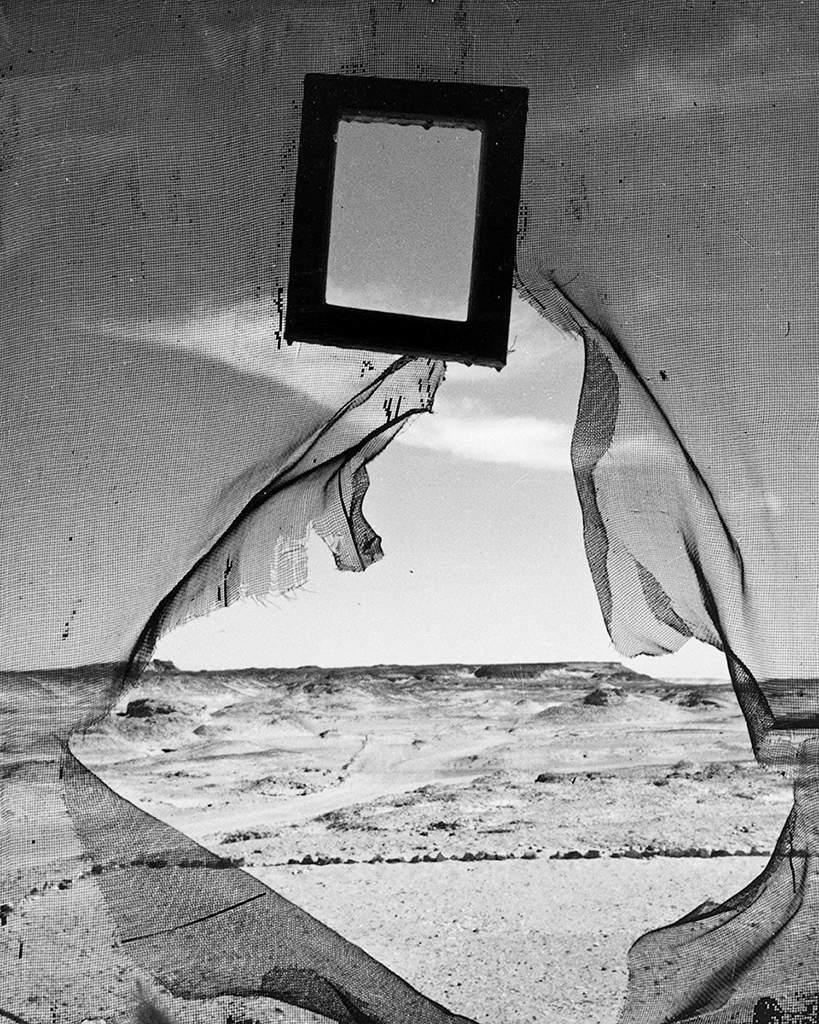
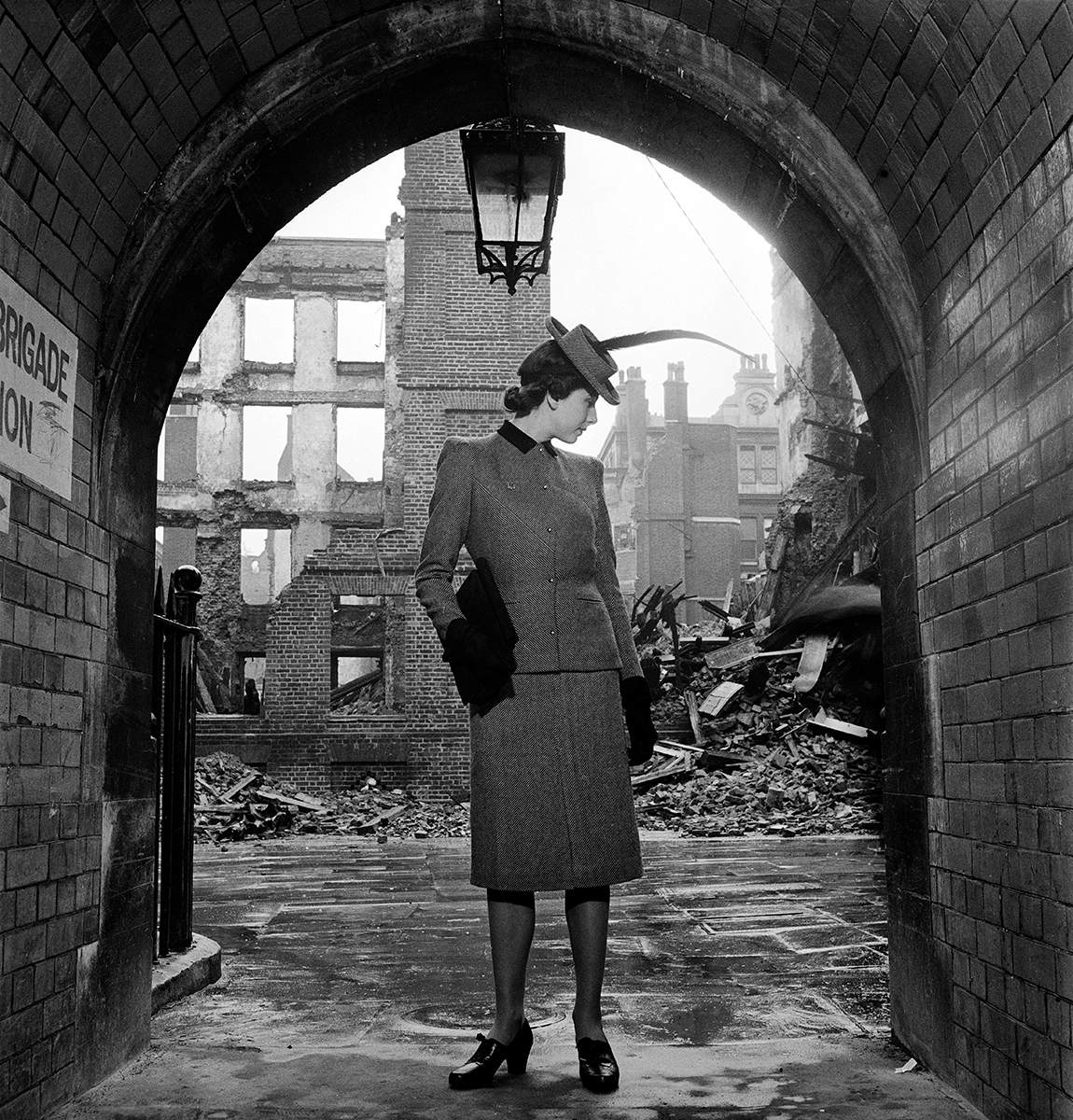
One can argue about which period of her life was the most creative or had the greatest impact. Certainly, her photography from London during the Blitz and her work for British Vogue are remarkable. She also celebrated the role of women in the war effort. Wrens, flight auxiliary staff, mechanics, pilots, and anti-air raid women were all celebrated in her pictures.
It sounds paradoxical, but her photos of bombed-out London make you look twice – they show the devastation, but they have something else. She finds symmetry and uncanny juxtapositions. Working conditions were difficult, and the Vogue offices were bombed, but she carried on and produced some of her best work that has become part of the British cultural memory of the war. You would have surely seen some of the photos she took without knowing who had taken them
A woman war correspondent
Miller, as always, was itching to get where the action was. She managed to persuade the US military to take her on as a war correspondent and photographer. Now she was not just taking photos but also writing about the situation. She arrives in Europe just after the Normandy landings and is able to capture the troops and displaced civilians just behind the front line. Lee follows the army into the liberation of Dachau and Buchenwald concentration camps.
Her pictures record the horrors, the piles of bodies, but we also see the captured camp guards. Some are quite young with beaten-up faces and terror in their eyes. The same look in another photo on the faces of the shaven heads of French women who were accused of sleeping with the enemy. We see Nazi officers dead after they have taken suicide pills. There is a very striking image of a Nazi’s daughter dead on a sofa.
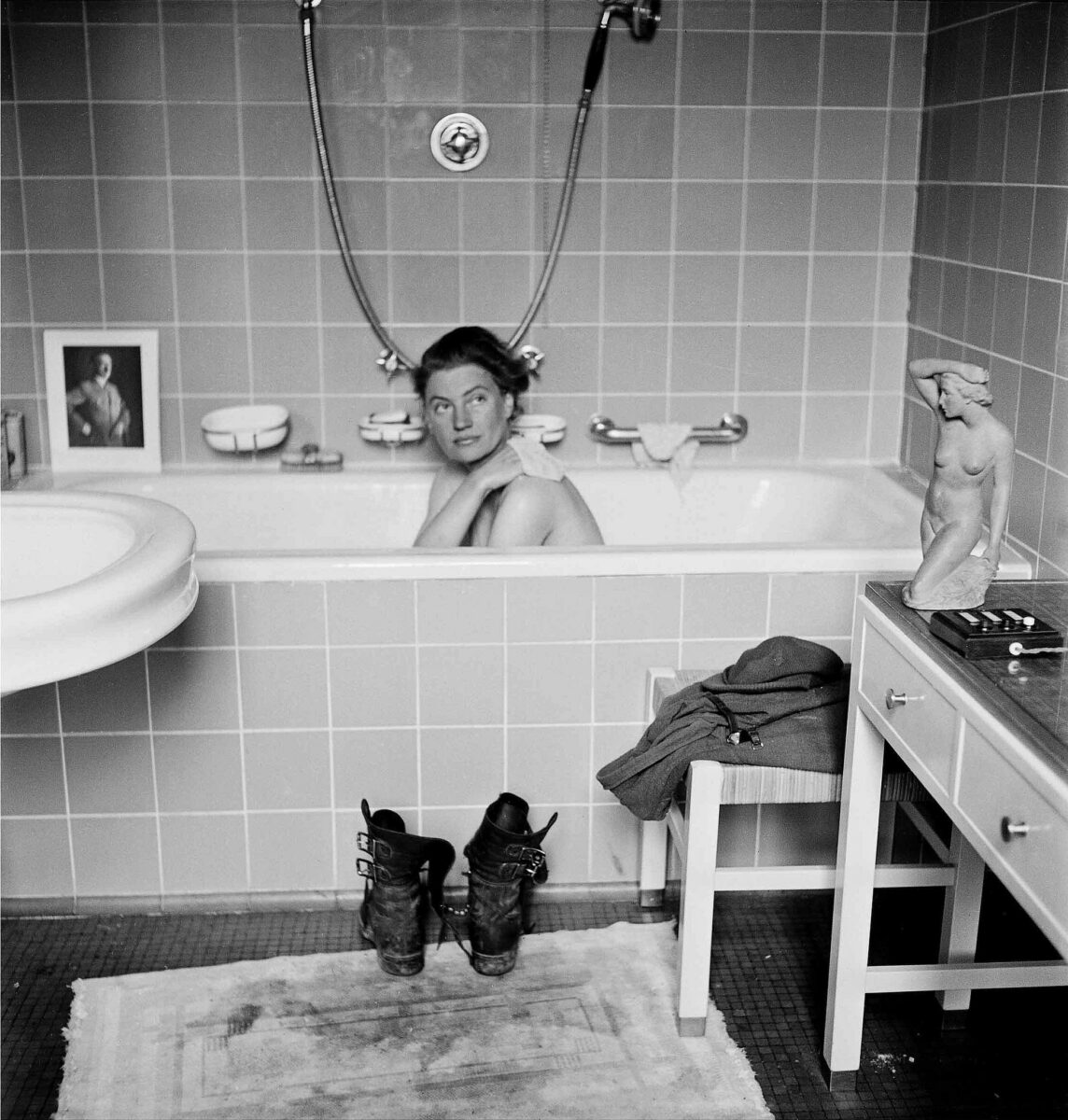
After the camps, it is Berlin and her entry into Hitler’s house. She takes the famous picture of herself having a bath in his bathroom. The photo is staged carefully with Hitler’s portrait. In the companion picture of her friend and collaborator, a Jewish man, they display his boots, still covered in Dachau mud. It was more than a photo; it was a statement that the anti-fascists had one. Another photo that I had never seen before was the firing squad executing the Hungarian fascist leader.
After the war, Lee returned to England with her husband, the surrealist, Robert Penrose. They had family home in the countryside and they hosted weekend parties for the modern artists they knew so well. We can see some portraits of them helping out on the estate in the show.
However, she produced much less work in the last decades of her life. She is active in developing the International Contemporary Arts (ICA) centre, which will play an important role in fostering new art. Miller becomes an enthusiastic and experimental cook; for example, she prepares an all-white menu for her old confidante, Man Ray, in tribute to the Bal Blanc (White Ball) they had worked on together at a retrospective of the artist in New York in 1974.
The difficulties of the last decades were also due to a serious drinking problem that is said to be connected to the trauma she experienced while photographing the concentration camps. There were some problems in her marriage with Penrose, too. He had affairs. In 1975, he published a biography of Man Ray that underplayed the actual role of his wife. Lee gave an interview with an American magazine that corrected that version.
More work was discovered after her death in 1977, further reinforcing her status in twentieth-century art history. The sterling work of art historians and critics in rescuing women artists from a male-dominated art canon has also contributed to Lee Miller’s current reputation.
(Acknowledgements to the excellent chronology in the exhibition catalogue).
Art Book Review Books Capitalism China Climate Emergency Conservative Government Conservative Party COVID-19 EcoSocialism Elections Europe Fascism Film Film Review France Gaza History Imperialism Israel Italy Keir Starmer Labour Party Marxism Marxist Theory Palestine pandemic Protest Russia Solidarity Statement Trade Unionism Ukraine United States of America War