

With Andy Burnham now established as Prime Minister, we need to consider measures which are vital to him providing a better government than those of the Tories and Starmer.
Starmer’s government attacked the welfare state and therefore continued the undermining of the interests of the working-class as was carried out by the Tories. Starmer also continued the Tories policy of benefiting the super-rich and failing to uphold justice for members of the working-class, whatever their gender and ethnic background. These injustices would worsen under a Reform government. The next part of this article is concerned with discussing bad government policies. We will then consider alternative policies in a further part. The media blames the poor for problems, we will see here that blame for Britain’s ills actually lies with the rich and powerful.
Past developments
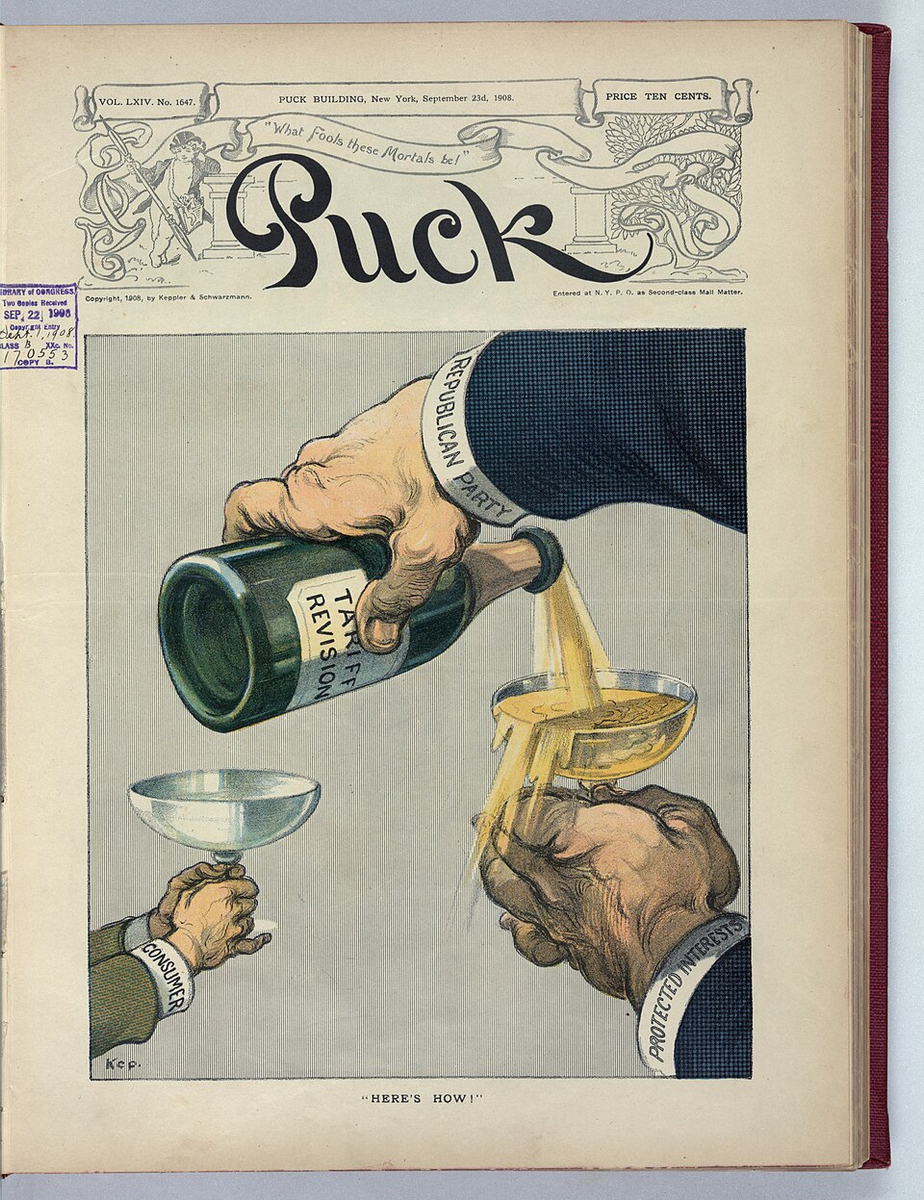
Subsidies to the Rich. The Conservative government resented providing welfare for the poor which it dismissed as the ‘something for nothing’ society, in order to demoralise the working-class. Starmer’s government also displayed this attitude towards welfare for the poor. However, the British government has operated a welfare system for the rich, with the money of working-class tax payers. This has none of the stigma surrounding welfare for the poor. Thus there are tax breaks for the super-rich. This welfare for the rich has also included bank bailouts, at truly exceptional cost, which the rich have been given even after their irresponsible decisions wrecked the entire economy. These bailouts can therefore be seen as the ‘something for the worse than nothing’ society. The Starmer government funded bailouts in relation to Thames Water i, despite that company’s inefficiency and pollution of rivers, and for British Steel in Scunthorpe. ii
Another subsidy provided by this welfare system for the rich, which operates for the more fortunate members of society, has been Quantitative Easing (QE) as discussed by Richard Murphy iii. Murphy has expressed his disapproval of any moves to arrange for QE to be revived. iv QE is also dealt with by Owen Jones. v QE means the buying of government bonds by the Bank of England which then enables financial institutions to further increase their wealth by selling these bonds.
When David Cameron was Tory leader, he spoke of welfare for the poor as being a ‘dependency culture’. However, this welfare system for the rich is clearly a dependency culture run absolutely riot. The welfare system for the rich shows that there is a ‘safety net’ for the rich which is not given to the poor. vi Thus the Conservative government was clearly concerned with upholding the security of the rich as opposed to the security of the poor. Labour under Starmer continued this disregard for the rights of the working-class who deserve better pay and social security. We also should note that private industries have benefited from state help such as subsidies for research and development. The state which has done so much to fund the super-rich. It should do more to fund the poor.
Health – Jones deals with government moves to increasingly privatise the National Health Service (NHS vii). We will discuss the need to oppose this below. The working-class includes disabled people who are pauperised when the state does not give due recognition, to their right to welfare, even when their disability prevents them from having a potential to work. So the disabled have suffered both benefits cuts, and cuts in social care. Frances Ryan has dealt with the appalling maltreatment of disabled people viii. The cinema and theatre versions of I, Daniel Blake have also dealt with this maltreatment. Furthermore, the NHS has increasing waiting lists for operations as noted by Dorling ix.
Food Policy – As Danny Dorling says, ‘There are now almost twice as many foodbanks in the UK as there are MacDonald’s outlets. The poorest are increasingly likely to go hungry in the most unequal of rich countries’. x Thus we have seen the obscene complacency of the Tories, and then Starmer, who made working-class children starve, whilst ensuring that they and their fellow super rich enjoy the ‘fat of the land’. As a recent anti-capitalist resistance article by Dave Kellaway points out, we need to bear in mind Burnham’s record as Mayor of Greater Manchester xi. In Manchester, Burnham seriously sought to end food poverty. Hopefully Burnham will continue to seek to end food poverty now he is prime minister. Measures to make the working-class better-off in relation to food will be considered below.
Future trends
It is clear that there is a need for greater solidarity between the various sections of the working-class in Britain xii. Increasingly it is the super rich who look better off. Many of the relatively better off members of working-class people find that their pensions and property values show signs of increasingly falling xiii. The state should not stigmatise welfare for the poor, and any moves against such welfare should be met with the utmost indignation. So, for example we should support Disabled People Against Cuts (DPAC) and other groups opposing attacks on welfare. The wealth of the rich is supposed to trickle down and benefit the majority of people. This is a completely misleading myth as Dorling, and others have found xiv. Dorling notes that many young men and young women in Britain are in low paid jobs xv . Owen Jones points out that, ‘The majority of people living in poverty actually have a job’ xvi. A living wage enforced by statute is needed to put people above the poverty level. Disadvantaged people without work should be provided with social security payments that at least cover the cost of essentials such as food and heating. These people should not need to rely on food banks and winter fuel allowance. There should also be better provision of pensions.
The Socialist Campaign Group (SCG) , of left-wing MPs, have made the following proposals for Burnham to carry out: xvii.
Firstly we should note public ownership proposals. These proposals include extending nationalisation to water and energy. In relation to the health service these proposals also include:
- Scrap plans for PFI-style schemes to fund new NHS health centres
- Get Palantir , and its manipulation of patient data, out of the NHS
- Implement plans for a National Care Service
This is essential to ensuring patient care is put before private profit.
Initiatives to oppose health care privatisation should be given full support. The SOS NHS coalition is an example of an organisation carrying out such opposition.
The SCG also has proposals for tax and fiscal justice:
- Equalising capital gains tax
- Then we have a wealth tax which involves introducing a two percent levy on assets worth more than £10 million. This would raise £24 billion a year.
- Windfall taxes on sectors making unearned “super-profits”, including banking sector
- Clampdown on corporate tax loopholes and other tax privileges
Furthermore, the pressure group 38 Degrees has launched a petition calling for a wealth tax, this should be given full support. There is a need for such taxation to recover money spent on bank bailouts and other subsidies to the rich. This taxation is essential to pay for hospitals and schools, affordable housing, tuition fees and providing better treatment for the disabled.
There have been claims that rich people will simply go to another country to avoid taxation. In reality, the evidence shows that members of rich corporations leaving Britain are from businesses who were not even paying taxation in Britain in the first place. We should also note that the people leaving came mostly from the backrooms of corporations rather than from the top. Furthermore, tax receipts flowing into the Treasury have increased when government has increased taxation. Critics had wrongly claimed that this would be counterproductive xviii.
To conclude, there is a need by the rank and file of organisations and those in the Labour Party, to call for government to make the country more equitable. Any attempts by Burnham to try and provide better government for the working-class will be discouraged by the media. There have been reports of a U-turn by Burnham on the issue of caps on political donations xix. Thus, initiatives such as petitions, open letters, and public meetings need to be continued in order to urge Burnham in a progressive direction. People must campaign to bring about a fairer tax system and thus obtain the money for social programs to improve the lot of the working-class.
Footnotes
i Sandra Laville, (2025) Appeal court rules in favour of £3bn bailout for Thames water, Guardian 17 March .
ii PA Media ,(2025) Bill to save British steel plant becomes law after king’s approval, Guardian 12 April.
iii Richard Murphy, Money for nothing: and my Tweets for free, (London: The Finance Press, 2022).
iv Richard Murphy, Funding the Future (2025), online, Do we need more quantitative easing?, April 9.
v Owen Jones, The Establishment: And how they get away with it, (London: Penguin Books, 2015) 259-60.
vi Jones, Establishment, 259.
vii Jones, Establishment, 194f.
viii Frances Ryan, Crippled: Austerity and the Demonization of Disabled People, (London:Verso Books, 2019).
ix Danny Dorling, Shattered Nation: Inequality and the Geography of a Failing State, (London: Verso Books, 2023), 164.
x Danny Dorling, Shattered , 53.
xi David Kellaway, (2026), Burnham – A Left Response, Anti-Capitalist Resistance article, online,28 June.
xii Dorling, Shattered, 230-32.
xiii Dorling, Shattered, 232.
xiv Dorling, Shattered, 232.
xv Danny Dorling, Inequality and the 1%, (London: Verso Books, 2014) 56 .
xvi Owen Jones, Chavs: The Demonization of the Working-class, (London: Verso Books, 2020), 203.
xvii Daniel Green, (2026), Socialist Campaign Group sets out demands for next Labour leader, Labour List article, online, 24 June.
xviii Jones, Chavs, 265.
xix https://leftfootforward.org/2026/08/andy-burnham-urged-to-keep-promise-to-campaigner-and-voters-over-donations-cap/
Just about the only radical policy in the Scottish election by the SNP was the commitment to price controls by the end of the year, a move that despite the Attlee government using it throughout its 6 year tenure, Burnham seems likely to block through invoking the post-Brexit UK Internal Market Act that Labour voted against as “an attack on devolution”.
The Scottish Greens are proposing a massive increase in the Scottish Child Payment, one of a number of important devolved social security benefits, in the upcoming budget negotiations in order to protect living standards.
Pretending “Britain” is a unitary state with a single government and politics doesn’t help with highlighting that alternatives are possible and that there is significant constitutional and political complexity in the plurinational nature of the UK state and its economic and welfare provision beyond England.