


BREAKING: Man City have been found guilty on all charges relating to breaches of Premier League financial regulations. As a result, Everton have been deducted 10 points.”
Paddy Power, 25 September 2026. Domino’s went with: “I’ve heard enough, relegate Everton.”
By Friday afternoon the Manchester City news had produced the only joke Evertonians were ever going to get. Paddy Power did it. Domino’s did it. Domino’s had done it before, when Chelsea were punished in March: “I’ve heard enough, dock Everton 10 points.” It is not sophisticated, but neither was the experience it is built on. Everton spent part of 2023-24 as English football’s unit of punishment. Something went wrong somewhere and the gag wrote itself.
Domino’s Pizza UK@Dominos_UK
i’ve heard enough, dock Everton 10 points
The original was not a gag. In November 2023 an independent commission deducted Everton ten points for breaching the Premier League’s Profitability and Sustainability Rules. The club admitted the breach, so I am not interested in turning Moshiri-era Everton into some wronged innocent. The striking part was how quickly the accounting dispute entered the game. Ten points disappeared while the season was under way. In February four came back on appeal. In April another two went. You stopped reading the table normally. Every result carried two calculations, the one on the pitch and the one imposed from outside it.
City under investigation for ever
Manchester City have operated on a different clock altogether. Alex Ferguson had “Fergie time”; I am not sure what you call eight years of this. Reports on Friday said an independent commission had found the club guilty on 114 of 115 charges relating to Premier League financial rules. City deny wrongdoing and are expected to appeal. The full decision has not been published and the process is not over. All of that needs saying, partly because rival supporters are perfectly capable of turning a legal case into pub law within five minutes. But the case has been hanging over English football for years. By the time a final outcome arrives, whole teams will have come and gone. Some had even managed to blame England’s defeat to Spain on the City contingent feeling hard done by.
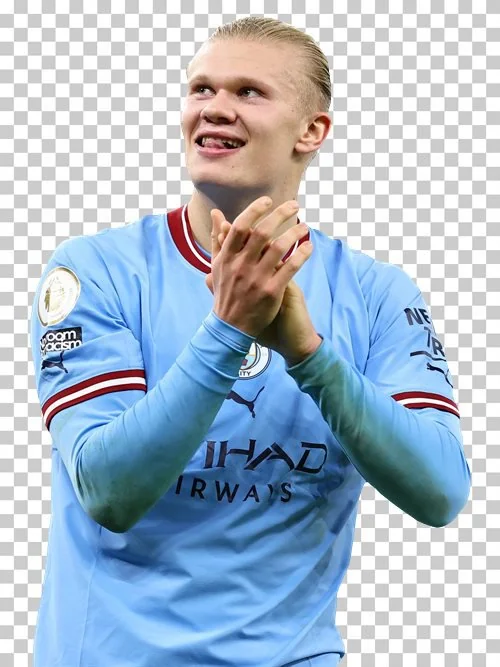
Haaland, Man City superstar
That long delay is not proof that money has bought City an escape route. It shows something more mundane about money and law. Wealth lets an argument continue without exhausting the institution making it. Counsel can keep reading, experts can keep arguing over numbers and disclosure can produce another dispute about the dispute. Everton had lawyers as well. The Moshiri years were hardly a worker-run alternative to modern football. Scale is the point. One club experiences regulation as an immediate sporting event; another has the resources to live with litigation as part of normal business for years.
Where’s the consistency?
In most industries delay is annoying. In football it alters the meaning of the case. The competition is chopped into seasons and supporters live by that rhythm even when owners do not. A three-year legal process is not an abstraction when a manager lasts eighteen months, a striker is sold after two seasons and a title is settled by a single point. Capital can wait through several versions of a team. The people in the ground cannot step outside the Saturdays while the lawyers finish.
Everton pushes you towards the obvious demand for consistency. We lost points, so what should City lose? The numbers quickly become fantasy football for sanctions: ten, thirty, fifty, relegation, titles removed. I understand the impulse because I have it. Still, the more I look at the two cases, the less interesting the arithmetic becomes. The useful comparison is the structure around them. Clubs are privately controlled businesses whose consequences are lived collectively by people with almost no say over the decisions that caused them.
Football clubs are more than commercial interests
Football clubs are peculiar assets because so much of their value is already there before the buyer arrives. A new owner of Everton does not have to manufacture Evertonians. Generations have done that work for free. The attachment is in families, streets, old programmes, journeys to the ground and a ridiculous willingness to check the score on an afternoon when you have promised yourself you are not bothered. The purchase acquires legal control over something whose cultural value was made elsewhere, by people who are not on the share register.
Sportswashing is a useful word but sometimes too tidy for what happens next. It suggests concealment, a rich owner using football to cover something less attractive. Ownership can work more deeply than that. Money enters an institution with a local history and starts borrowing its emotional vocabulary. Criticism of the owner can begin to sound like criticism of the club. Supporters react because the club really is theirs in one important sense: they were there first, often long before the current owner knew the ground existed. That genuine loyalty is part of what was bought.
City supporters did not design the financial arrangements now under examination. Plenty of them followed the club through Maine Road, relegations and years when nobody imagined Manchester City as the centre of a global football group. Evertonians did not approve Farhad Moshiri’s spending or decide which losses counted under PSR. Yet the corporate decision eventually arrives in the stand. A figure in the accounts becomes a points deduction, a transfer restriction, a season spent looking down instead of up. The owner decides; the club absorbs it; the supporter feels it.
Capitalism is a dirty business
I would not bother creating a league table for the dirtiest business in capitalism. Banks, property, extractive industries and arms manufacturers can fight that out among themselves. Football has a different distinction. It moves huge sums across borders through transactions in which value can be unusually elastic. A player’s price changes with form, age, contract length and the desperation of the buyer. Sponsorship is negotiated rather than discovered. Agents and corporate structures sit between the money and whatever the public eventually sees. None of this makes every deal crooked. It gives opacity plenty of room.
The European Union has already decided that the risk is serious enough to regulate. From 10 July 2029, professional clubs and football agents come within the EU’s anti-money-laundering regime. There is something wonderfully deflating about that bureaucratic fact. The same industry sold through badges, childhood heroes, football stickers and “the beautiful game” is being folded into rules designed for sectors where regulators assume that large and opaque flows of money deserve a closer look.
Rui Pinto makes the whole story harder to clean up. He hacked systems and was convicted in Portugal of unlawful access and attempted extortion. A later case involving 241 charges was thrown out. He also supplied the Football Leaks material that dragged private football business into public view and helped trigger investigations. Since cooperating with investigators he has lived under police protection as a protected witness. He now says there is more material still to come.
Rui Pinto did his job
I do not need Pinto to be a hero. What nags at me is that elite football has auditors, regulators, governing bodies, compliance officers and lawyers everywhere you look, yet some of the material that changed what we know about the business arrived because one man broke into systems and copied files. The official machinery was not blind, but it plainly was not seeing enough. Football Leaks forced open a room that had been closed to supporters while billions moved through it.R
There will eventually be a City sanction, an appeal result, perhaps another legal turn nobody has thought of yet. I will not pretend to watch it with scholarly detachment. I remember opening the table after Everton’s deduction and doing the relegation sums. If City receive a severe sporting punishment, the Evertonian part of me will enjoy it and I am not going to dress that up as political theory.
It will still leave the ownership question sitting there. Everton were punished after decisions made by people supporters did not choose. City’s wealth arrived by a different route and on a scale Everton could never approach, but neither set of supporters controls the thing they spend their lives calling “ours”. I say “we” when Everton sign a player, when they waste money, when they lose and when they somehow win. I have no vote over the debt or the next owner. Saturday will come and I will say “we” again. Whoever owns Everton can rely on that.