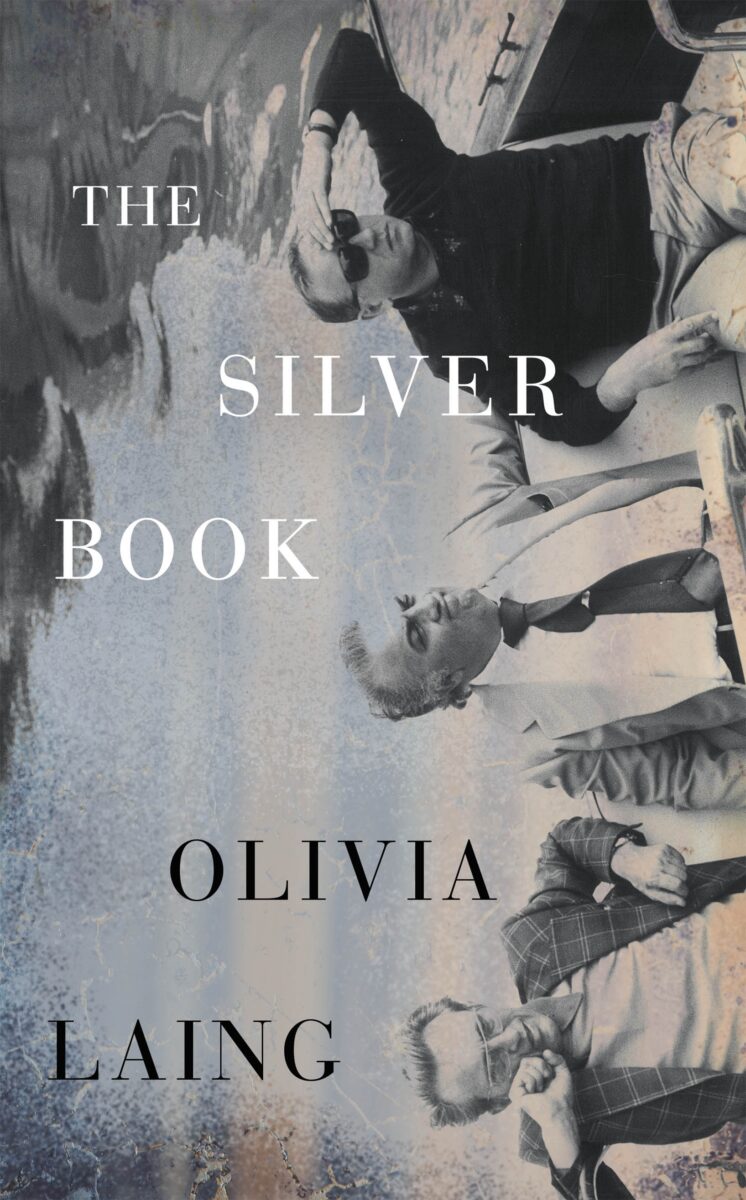


There is so much is this fine novel. It takes you on a tour of how Fellini and Pasolini made their films and the role of the costume and set designers in making truth out of illusion. At the same time it is a moving, erotic queer love story between a maestro costume maker and a young English artist on the run from his own traumatic secret. It also reopens the murder of communist and anti-fascist Pasolini. It covers all this this with brilliant, economic literary skill.
Laing has clearly done a huge amount of research on these two greats of the Italian cinema. As she says in an afterword:
“Many of the characters in this book have their origins in real people and some of the events described did happen, though no doubt not quite like this” Page 245
Anyone who has seen any Fellini or Pasolini films will discover a lot of behind the scenes’ secrets about how the costume and set makers produce the visual reality desired by the director. The most unexpected materials can be made to look real on screen – bottle tops, trash bags, cotton wool, paint with sawdust, old lace curtains. I am itching to see one of their films again and just look at the sets and costumes…
Fellini controlling
Laing also creates pen portraits of these two maestri of the silver screen. How Fellini was totally controlling. Often he dubbed the actors and actresses after filming them – even using different actors sometimes. Apparently this is why Elisabeth Taylor refused roles with him. Throughout the making of Casanova, which is the film featured in this book, Fellini was consistently tough, insolent, even bullying with Donald Sutherland, the lead actor. However as Danilo, the costume designer and one half of the queer love story, says, this meant the performance caught exactly what Fellini wanted, a pleading, emotionally empty and confused Casanova.
Pasolini, on the other hand, has the film in his head already and is much less confrontational with his actors and actresses. He cajoles and gets down with the non-professional people he uses. Laing uses an apt metaphor to describe his quiet intensity, he is described a ‘coiled snake or a broken electrical wire bouncing across tarmac’. Unlike Fellini he was much more politically committed, wrote poetry, novels and political articles.
Perhaps not many people have seen Salo – or the 120 days of Sodom. The film is a loose adaptation of the 1785 novel (first published in 1904) The 120 Days of Sodom by the Marquis de Sade, updating the story’s setting to the World War II era. It was Pasolini’s final film, released three weeks after his murder.
After the allies landing in the South of Italy and the march towards Rome the Italian fascist government fell and the Nazi army stepped in to resist the Allied advance. Mussolini was rescued and taken north to preside over the puppet Salo Republic (1943-45). As the Italian resistance pushed out the Nazis in the north before the Allies arrived a unit captured Mussolini and hung him up with his partner on lampposts in Milan.
Salo – a subversive film
The film is notorious for its brutal scenes of rape, abuse, torture and murder. It features four rich fascist libertines who kidnap 18 local teenagers and subject them to four months of torture. The film is structured in 4 acts based on Dante’s Divine Comedy: Anteinferno, the Circle of Manias, the Circle of Shit, and the Circle of Blood. The book explains how the ‘shit’ scenes were made by using chocolate. Certainly it is a hard watch. I saw it in 1980 and was quite shaken by it. Despite its intellectual references to Nietzche, Pound and Proust many have condemned it as arthouse pornography. Its casting of quite young teenagers would most probably not be allowed today. Pasolini himself had sex with young men and often paid for it. He would claim this was consensual but it was still a rather unequal power relationship.. The film was banned in Italy and in most countries for quite some time.
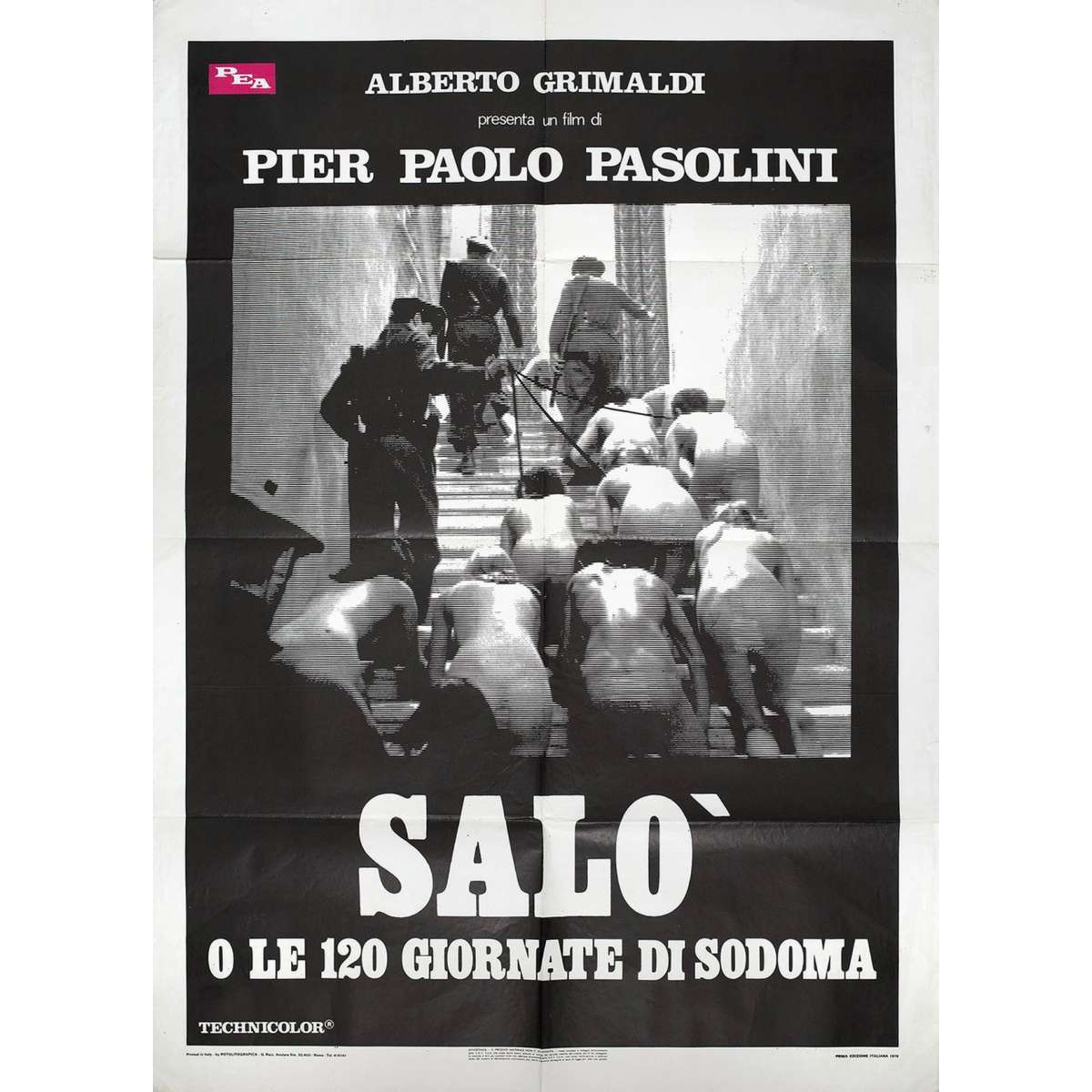
Laing shows how Pasolini with Danilo and others goes about selecting the locations, making the sets and the costumes. All this contributes to communicating the nature of fascism:
“One by one the girls are displayed, undressed, their assets considered. One is rejected because of a missing tooth. Symmetry, Nicolas thinks, is the dominant attribute of beauty under fascism. Individuality, heterogeneity is not tolerable.” Page 149
If you read extracts from the Epstein files you get the same processes used in how the young women were selected. The women Trump surrounds himself with as ministers or lovers seem to look the same too. The EUR fascist-built suburb of Rome has that same relentless, overpowering symmetry.
How costumes also make a film
Costumes for the film are consciously thought out to reinforce fascist ideology:
“Can clothes be evil? The libertines will begin the film in suits. At the end, they’ll wear these dressing gowns (…) They look like things the devil would wear. Cream damask. Crushed brown velvet. Black satin, with a vaguely deco pattern shout through it, a grid of circles and squares. (…) Both are garments of power. The law of the father extends through all spheres, outside and in, from the bedroom to the factory, the government, the bank. There is no alternative to it, not in the world Pasolini is depicting. Within this world no other exists, except as something to be debased.” Page 101
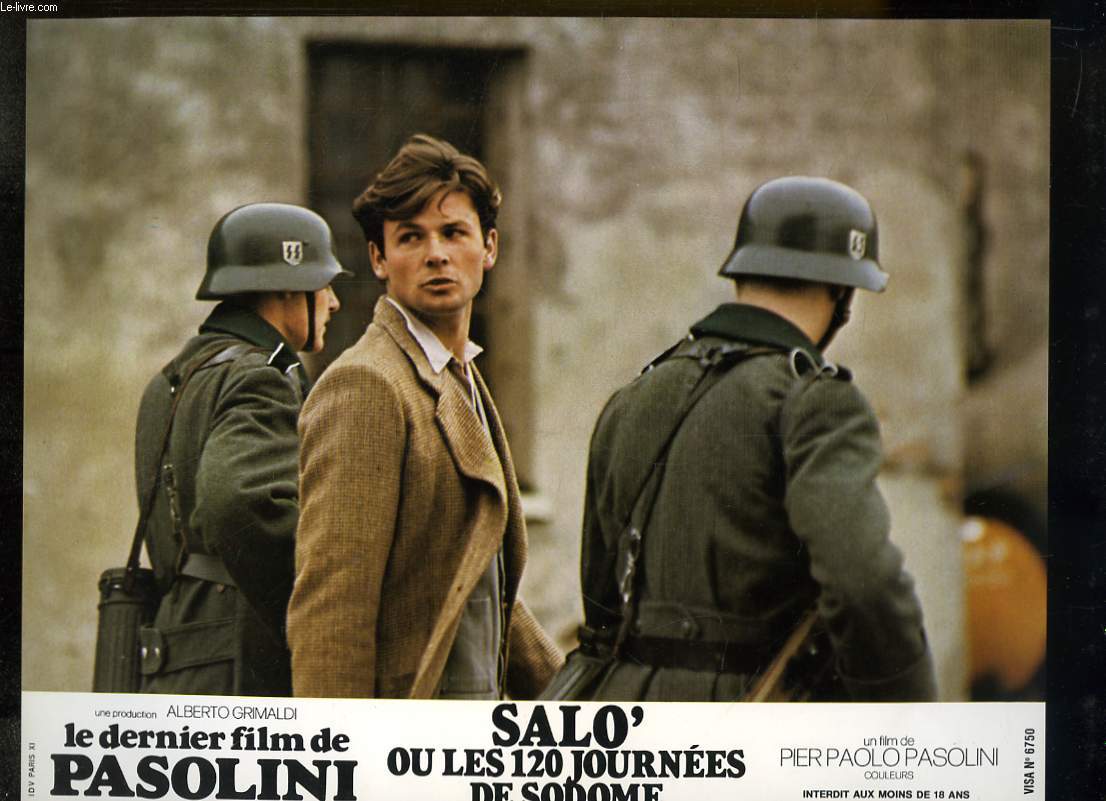
The film is prescient of so much of creeping fascism today. Pasolini is discussing with one of his writer/actors and wants him to misquote Baudelaire and he refuses to say the line:
“My friend, Pasolini says, we are demonstrating that facts are immaterial in fascism, that truth is dead, that meaning is on a permanent migration”.
Everybody at the time knew that the film was not about 1945 but about the risks of fascism in Italy at the time. Danilo who lived as a young man during fascism remarks how the fascists were not purged after the Liberation. This was because of the deal made between the Stalinist led left and the Christian Democrats (backed by US imperialism). Pasolini himself realized the risks he was taking and wrote an article entitled What is this coup d’etat? I know shortly before his murder. The historical record shows there were active preparations for a coup by the hard right and deep state in that period. Bombs massacred people in left towns like Milan and Bologna.
Pasolini – killed by the system
Laing cleverly puts the young Nicolas, the younger partner of Danilo, into the murder of Pasolini on an Ostia beach. The official story ‘proved’ by the subsequent court case was that an assignation with one of his young men went wrong and he was stabbed to death. This was convenient for the establishment who said this shows how his perverted lifestyle did for him.
Later it was clear that he was killed after being run over by his own car. Nicolas in the book is enticed into taking some film reels without permission. It is probable that these reels of Salo had been stolen for some sort of ransom and that it is possible that he was lured to the beach by an offer of their return. Whatever the actual details there is no real mystery – as Laing says in her afterword it was the system that killed him. Even the reformist left like the Italian Communist Party wanted little to do with this libertarian homosexual.
The queer love story between Nicolas and Danilo, which also structures the book, is both lushly erotic and unsentimental. We see the way the unequal power relations are negotiated through their love story. It shows how relationships between people of different ages can work for both sides. In different chapters it takes the point of view of one or the other. These are credible characters that the reader begins to really care about. Both have suffered as a result of their gay identity whether through their family or wider society – remember the story is set in the 1970s.
There is so much in this book – I have not touched on all the observations made about Fellini. It has a pace and structure that keep you hooked once you start it. It works as a love story, an examination of film making, an insight into the genius of two historic film directors and an understanding of fascism. All told with so much economy in less than 250 pages.
At one point in the book Danilo asks Pasolini:
“Why do you run so fast, if what you have to say is so pessimistic he once asked Pasolini, and in response, the sweetest smile. Because I am still burdened by the emergency of hope” Page 157