


The only Christmas card Poundland employees will be receiving from their shops’ owners this year will be redundancy notices. Most of them are probably on the minimum wage and they will be facing around £60 a month increase in their energy bills from January. If any of them are coming off of a 5 year fixed mortgage they will be looking at up to a £500 increase in monthly payments. If they have not worked two years continuously they will received no statutory redundancy pay. A significant proportion of workers will be in this situation given the turnover in these sorts of jobs.
If you do qualify for redundancy pay you are only awarded the princely sum of between 1.5 and 0.5 weeks pay per year worked according to age. Hardly a golden handshake… If a company becomes insolvent and there are no assets that can be used the National Insurance fund i.e. the government pays it. At the moment this is unclear for Poundland but it shows how private capital often ‘socialises’ its losses and failures.
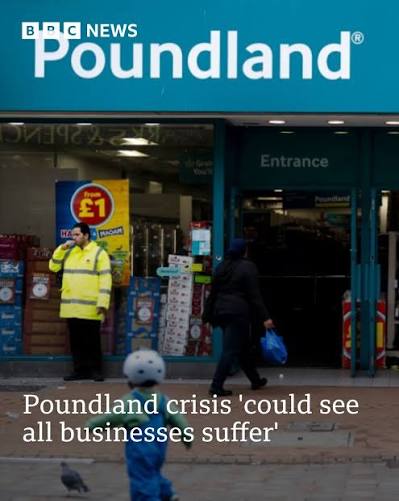
Some estimates say the closure will lead to a loss of thousands of other jobs in the 2000 businesses operating in the Poundland supply chain. Gordon Brothers could have made a different decision if it was less interested in short term profit and only shareholder value. Poundland was trading profitably last year. Continued investment from the huge cash resources of their owners could have pulled it through.
Private equity predators
Gordon Brothers, the current owners of Poundland and a private equity company, have a record of brand destruction in the UK. Private equity companies are not specialists in any particular sector – they do not necessarily have any historic expertise in high street retail. They look for opportunities to make solid short term gains by restructuring companies. In plain English this translates to cutting jobs, cutting the number of shops or workplaces and selling or keeping any profitable areas. In the increasingly deregulated world of capitalist business today they are hardly regulated by the state.
The Boston USA based firm was on the fringes of the infamous BHS collapse in 2016. It was also involved in the administration of fashion emporia Laura Ashley and LK Bennett.
The US finance firm, which bought Poundland for a nominal £1 from the European retail group Pepco. It made a loan to the company to support its development of over £30 million but since then newspaper reports suggest it has taken back up to £20 million in interest payment and in other fees. In any winding up of the company it will expect to take more repayments and cash in remaining assets such as stock and shop sites…
In its negotiations with two other buyers it rejected deals which would have repaid what is left of the loan on a longer term basis. They have openly stated that it could recuperate more money from the winding down of the company.
Weakness of trade union response
Since October 2026, shopworkers union USDAW national officer Bally Auluk has pressed owner Gordon Brothers for talks, warning that thousands of jobs were at risk and criticising the lack of engagement as takeover options and a potential management buyout were discussed. Following Poundland’s notice of intention to appoint administrators in late October, USDAW urged the government and MPs to step in to help protect jobs and keep the business viable.
However the low level of unionisation in Poundland means there is little real counterweight in the stores to the bosses’ power to act and decide. In some cases in the past workers have occupied premises and sequestered assets to defend their livelihoods. Unions with members in other business are not legally allowed to use their strength there to help win struggles in weaker sectors. So there is little or no possibility of shop workers in Tescos or Sainsburys taking action to save Poundland jobs. Getting back to that sort of trade unionism requires huge shifts in working class organisation and solidarity.
Labour’s rhetoric will not protect all Poundland workers
Liam Byrne, the Labour chair of the Business select committee has gone on TV denouncing Gordon Gecko, greed is good type capitalism but has offered not concrete solution except saying Gorden Brothers should not be involved in the insolvency process. Andy Burnham has said the government is looking at ways to get a rescue deal
“We will make every effort to secure a deal that protects jobs and keeps as many shops open as possible” (Guardian, 26 November)
No guarantees and he certainly accepts many thousands will lose their jobs. Some other discount retailers are obviously already interested in taking on some of the stores so Burnham is not exactly confronting the predatory private equity company with his call on saving as many jobs as possible. His rhetoric on taking back public control to respond to the ravages of the private market looks like what it is…more rhetoric.
Obviously any job saved is important but is this the limit of ambition of a Labour government that is supposed to be turning back ‘40 years of neo-liberalism‘?
Yesterday it was announced that the government has made a £8.6 billion deal with Babcock the defence company to maintain the British Nuclear submarine fleet. There is plenty of government money available for warfare but presumably not for keeping ten thousand low paid British workers off the dole.
A real alternative
A truly left government might seize such an opportunity to take over these shops and re-imagine how they could be used as hubs for promoting its progressive policies. It could even fit into Burnham’s plans for devolution and the role of local authorities and mayors to improve our society. Local people could be consulted on how these sites could be used to benefit the community.
Some stores could be retained as Poundland branches selling discounted items. Many comments made to the media show people appreciate the cheap deals. This reflects the extreme inequality that exists. Public involvement through outright or shared ownership might improve the quality of the products sold, ensure unionisation and decent salaries. The government could incentivise companies to provide more sustainable, useful goods to these shops.
Local authorities already sponsor regular repair days providing cheap or free repairs for household goods. The spaces could be used for cultural, political or other community events. Some could become places for the NHS to do screenings or promote healthy living. We have less and less accessible, affordable public spaces. Such an initiative would help revitalise the slow death of many high streets.
Apart from this the government could change the legislation as Polly Toynbee states in the Guardian today (27 November):
“He would change Section 172 of the Companies Act that gives primacy to shareholders. These laws enable private equity and restructuring firms to overload businesses with debt, as well as extract “proxy dividends” through debt repayments, and break up companies at the expense of high-street jobs.”
Other European countries like Germany have different rules. But unfortunately, as we have seen with the zero contract changes, Labour is retreating on tougher regulations on private capital. Planning regulations on environmental issues have already been weakened. Paul Nowak, TUC leader has said today that the weakening of the zero hours promises will potentially mean 1.4 million workers will miss out on increased protection.
Furlough for all Poundland workers
One of the causes of Poundland’s collapse has been the growth in online retail. These companies should be taxed more efficiently and the proceeds re- invested in face to face retail. Nobody is calculating the social, human price of the hollowing out of our high streets. If people have nothing to go there for there is less and less of the daily human interaction which makes a society more pleasurable.
Any Poundland worker could be paid on furlough as was done during Covid with training provided for new roles, some which could be in repurposed shops. Ten thousand more people unemployed will already cost a huge amount in government spending. Even at this late hour trade unionists and the movement should be campaigning for Burnham to step in and save these jobs.
An alternative is possible, the market and capitalist predators like the Gordon Brothers are not the only possible rulers of our lives.