

Stephen passed the eleven plus and went to South West Ham Technical School, a school with science labs and tennis courts that the netting had mostly rusted away from. At the age of 14 he made his first ideological decision: to become an atheist. He left school at 16 to work on the docks as an apprentice plumber on ships’ pipework.
By the time he turned 20 he had politicised, and joined the International Marxist Group, having seen the IMG’s newspaper Red Mole advertised in Private Eye. The IMG was the British section of what was known at the time as the United Secretariat of the Fourth International, identified by its leadership Ernest Mandel, Livio Maitan and Pierre Frank. At the time the IMG was around 400 members, disproportionately redbrick university students, eventually growing to around 800 members. His branch, the East London branch, organised a lot around the Troubles.
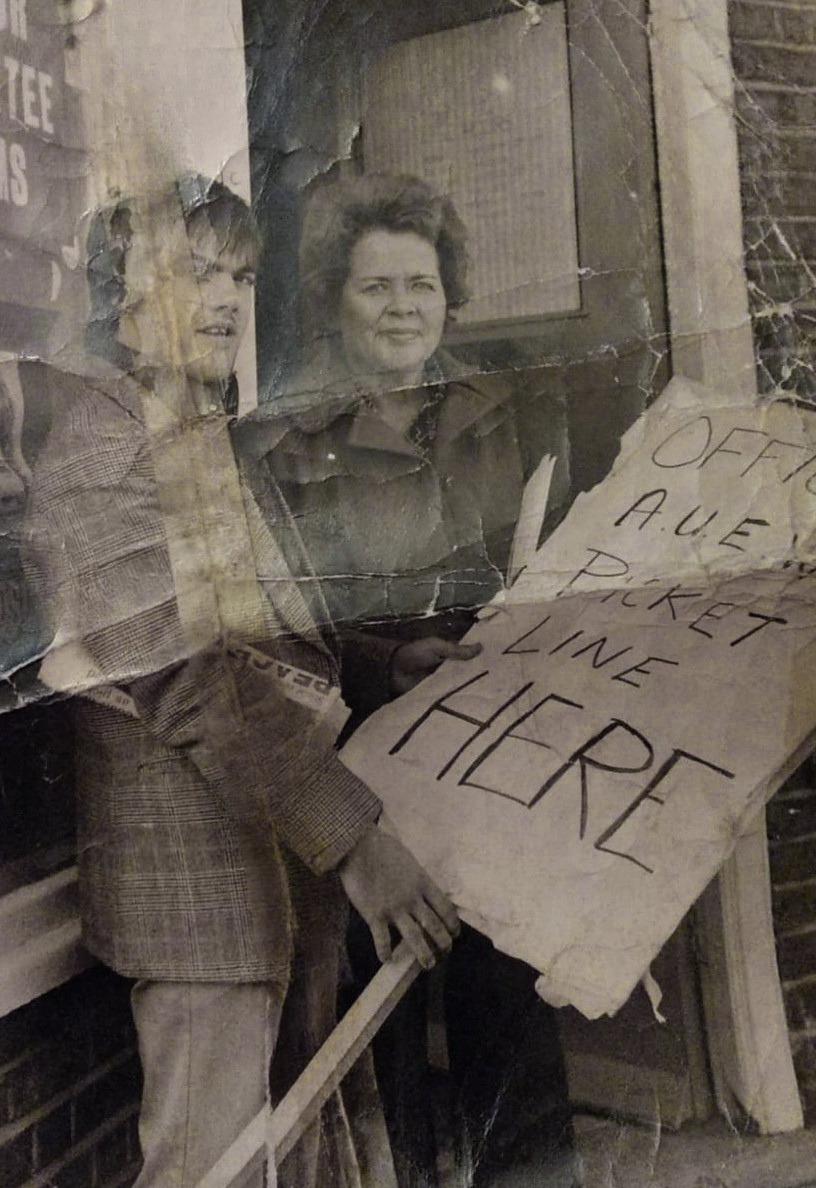
Stephen was very active in the IMG, and ended up taking a job at the highly militant Ford plant in Dagenham as part of an initiative to build a branch there (the IMG’s ‘Turn to industry’).
Stephen described his time at Fords as being almost constantly at war with management. This is an anecdote he told of his time working there:
One day he went into work and was incredulous at seeing that the shop floor had been covered in a carpet of what looked like snow – in fact it was broken cups that had been taken from the canteen and smashed by the previous shift (there were some activists agitating in the factory whose politics were influenced by the Operaismo movement in Italy). The workers didn’t have any money, a lot of them were migrants, and they probably wouldn’t have found it easy to get a job somewhere else. They’d come in at 10pm for their shift, paid the bus fare to come in and were being laid off at 11:30 without a penny. A lot of them didn’t have much to lose. It was almost a riot. Fords management wouldn’t call in the police because they had to keep industrial relations with the unions, and their focus was always to get the line running again. It was an assembly line so if one part of it had a dispute and went on strike the whole huge assembly line would stop. And there were always disputes going on.
He would describe Fords as an unbelievable place to work – militant in a way that you would never see today.
In later life he was critical of the content of the material the IMG circulated at Fords – their pamphlets would typically lay out a list of demands, how to organise, and – of course – some politics too. He said that the assembly line workers must’ve looked at these pamphlets and thought they were from Mars! He said that he and the other IMG activists at Fords looked down their noses at a socialist-anarchist group operating in the factory, Big Flame, whose pamphlets were more likely to advertise a Friday night party than push politics. A regret that he voiced was the amount of time he spent as a young man being sectarian towards other parts of the radical left, rather than working alongside them.
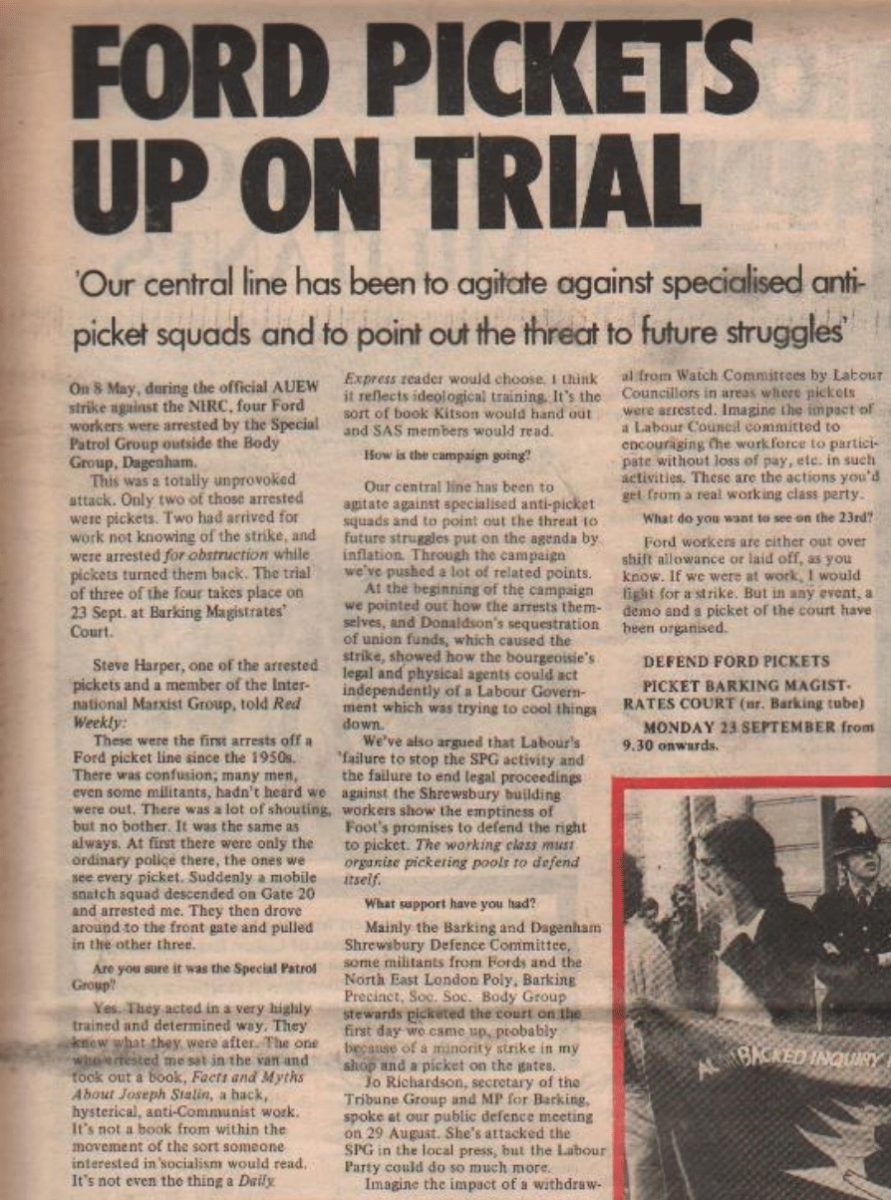
It was during this period that Stephen was interviewed in Red Weekly. Upon reading the interview again at the age of 70 he had a good chuckle at what he called ‘youthful naivety’.
Stephen left Fords after three years to work at London Underground as a fitter-turner, working on train axles at the Acton Works. He spent five years caring for his father who suffered from Rheumatoid Arthritis and passed away in 1978.
In 1983 he met and then married his wife Terry, and in 1987 they had a son and Stephen’s focus shifted to family life for the ensuing twenty years.
In 2008 with the arrival of the financial crisis Stephen returned to radical politics, started re-reading his old political books and joined Socialist Resistance. This second period of political engagement was focused on study, and he spent much of his spare time reading theory, watching lectures and attending meetings. He would speak at length to family and friends on topics ranging from the history of imperialism to bond markets and fractional banking. He could often be found at demos holding homemade placards, and he joined Left Unity and then later campaigned for Corbyn in the 2017 and 2019 general elections, although he never joined the Labour party.
In 2022 Stephen was diagnosed with bladder cancer. He became a grandfather later the same year. Given a prognosis of six months in early 2023, he lived for a further three years, spending several hours a week looking after his grandson. Stephen passed away peacefully on 23 April 2026.