

Naomi Klein and Astra Taylor begin with a vision of Gaza’s future in which Palestinians appear chiefly as a problem to be managed. Jared Kushner 1 and Steve Witkoff 2 have arrived at Davos with plans for a gleaming new Gaza, its waterfront lined with luxury developments. The authors describe arrangements under which Palestinians would provide much of the labour while their movements and purchases were tracked and their admission subject to biometric checks. Destruction has made the development possible; the surviving population must now be fitted around it. The presentation is full of optimism. From the investors’ side of the fence, there is much to look forward to.
Klein and Taylor call the politics behind this vision end times fascism. Powerful people have begun to abandon the prospect of addressing the crises threatening collective life, investing instead in arrangements that promise to protect a chosen population from their consequences. The refuge might be a billionaire’s compound or an ethnically purified nation. Religious believers have their own versions of deliverance. These projects differ, sometimes violently, but the authors find them converging in a “supremacist war over who is going to survive the future”.
I have been trying to understand fascism while it is still being built, before the consolidated regime makes the argument about its existence easier to settle. That requires more than identifying ugly opinions, although the willingness to voice them tells us something about what is becoming permissible. It means looking at how movements organised around purification acquire the means to impose it, how existing institutions are bent towards the project, how money and political organisation meet, and how people are taught to understand another person’s loss as evidence of their own recovery. Klein and Taylor approach much of this through a different question: what kind of future do the people making these alliances imagine for themselves?

Politics of subtraction
What I have been calling the politics of subtraction usually presents removal as a remedy. Get rid of the unwanted population and the country will supposedly begin working again. The homes will become available, the hospital queue will shorten, wages will rise, crime will fall. Klein and Taylor push this somewhere darker. The offer can continue even when general improvement has become difficult to imagine. You will be protected while others are exposed. Your children will retain a claim on what remains. The promise concerns your position relative to somebody else, which allows insecurity to become a reason for supporting the project rather than evidence of its failure.
Their description of fascism as a revolt of “the strong or relatively strong and injured” captures something important about how this works. The wealthy owner who resents regulation and the man who resents women’s independence do not occupy the same social position. A movement can nevertheless make their grievances politically compatible. Each is invited to believe that somebody else’s claim to equality has become an intolerable restriction on his own freedom. One wants the freedom to exploit labour or ignore environmental regulation, another wants a lost social authority restored. The forms of power differ enormously, but the language of injury allows them to appear as participants in the same rebellion
It is too easy to assume that the ordinary supporter receives nothing and has simply been tricked into defending somebody else’s wealth. Permission to dominate can be a political reward even when it does not improve a wage or reduce a bill. Klein and Taylor are good on the pleasures of punitive belonging, the satisfaction of being among people who share your resentments and will applaud their expression. Racism and misogyny cannot simply be peeled away to reveal the supposedly real economic interest hidden underneath. They help form the alliance and shape the way people understand their interests. That does not dissolve the class question. It makes it harder.
Fascism can happen without threat of workers revolution
Klein and Taylor describe fascism as “capitalism’s most ferocious threat response”, a means by which anger produced during periods of crisis is directed downwards at vulnerable populations rather than upwards towards the people and institutions holding economic power. They do not require a socialist revolution to be waiting outside the gates. Drawing on Ignazio Silone 3, they allow for a counterrevolution against a revolution that never happened. Their contemporary examples include environmental movements, attempts to regulate technology companies and workers beginning to organise inside industries whose owners had become accustomed to extraordinary freedom from restraint. Modest demands can feel revolutionary to people who regard accountability itself as an affront.
I am less certain that the strength of the challenge from below tells us enough about the present danger. Fascism historically confronted powerful working-class institutions that had to be destroyed. Much of the contemporary right operates after decades in which trade union organisation has been weakened, socialist parties have declined and the capacity of working people to obstruct capital has been reduced. Less resistance may require less violence in the early stages. The work of reaction can include ensuring that serious opposition is never rebuilt
That cannot become a theory in which every possible condition confirms the same conclusion. A strong left cannot prove fascism because it provokes counterrevolution while a weak left simultaneously proves fascism because reaction can advance without resistance. We still need positive evidence of what is being constructed. The balance of forces helps explain its speed, form and methods; it cannot establish its fascist character by itself.
“Fascism is capitalism with bared teeth”, Klein and Taylor write. It is a good line and an insufficient definition. Capitalist power has been defended through several varieties of repression, dictatorship and colonial rule. Naming the class relations a regime protects does not tell us how it organises political support, what kinds of opposition it seeks to destroy or what relationship exists between a popular movement and established elites. Fascism is not simply what capitalism does when it becomes nasty enough.
Capital not a single actor
Their own book repeatedly demonstrates why the distinction matters. Different sections of capital do not possess identical interests. Companies selling surveillance technology or detention infrastructure may profit directly from permanent insecurity. Other businesses may prefer stability, open labour markets or forms of liberal government that better suit their accumulation strategies. Alliances have to be made among these interests. They can shift and fracture. A popular movement can also acquire commitments that are inconvenient to sections of the capitalist class supporting it. Treating capital as a single actor with a settled plan would make those conflicts unintelligible.
The colonial history running through End Times Fascism makes the problem more complicated still. Klein and Taylor draw on Nehru and Du Bois to reject the comforting story in which fascism suddenly interrupted an otherwise civilised European development. Political rights enjoyed by one population could coexist with extraordinary violence inflicted on another. Europeans encountered practices that had already been used in colonial settings. The liberal citizen’s experience of the state was never an adequate description of what that state was doing elsewhere.
The authors are careful not to say that Nazism simply repeated colonialism. Their image of history is a spiral rather than a circle. Institutions, practices and ideas reappear in new forms and are put to new uses. That is more useful than collapsing the whole history of colonial violence into fascism. If everything brutal that preceded fascism was already fascist, it becomes harder to explain what changed when fascist movements took power.
The more disturbing possibility is that much of the machinery required by a fascist project can already exist. It does not necessarily need to build the coercive state from nothing. Powers developed against migrants, colonised peoples or supposedly exceptional threats can be inherited and extended to new populations. Institutions created under one political order may acquire another purpose once restraints are removed and the category of people considered dangerous expands. The continuity matters because it helps explain how a society can travel further than many of its citizens realise while they continue to recognise familiar institutions around them.

Do modern fascists just build through social media?
Klein and Taylor are persuasive about one change in the way the contemporary right mobilises its supporters. Twentieth-century fascist regimes drew people into party organisations, youth movements, paramilitary formations and institutions that attempted to organise everyday life. Much of the contemporary far right works differently. Its followers can remain physically isolated while becoming politically absorbed through podcasts, Telegram channels, streaming platforms and social media. The influencer depends on maintaining an audience rather than disciplining a membership, and the competition for attention rewards precisely the quarrelling and escalation that can make sustained cooperation difficult.
But the authors push the distinction too far when they write that “end times fascists wield power without disciplined institution-building”. Their own evidence suggests something more complicated. The Seven Mountain Mandate 4 is explicitly a strategy for capturing institutions. Project 2025 5 was a painstaking attempt to prepare personnel and policy for the return to government. Russell Vought 6 did not arrive at the Office of Management and Budget through meme warfare alone. Turning Point USA spent years building an organisation capable of recruiting, training and connecting activists. What has weakened is not necessarily institution-building but one particular relationship between the movement and its mass base.
The organisation may now be distributed unevenly across the coalition. The follower scrolls while somebody else drafts the legislation. The influencer generates anger while a think tank prepares the policy and a donor finances the infrastructure. A movement can therefore appear chaotic at the level of personalities while becoming considerably more disciplined closer to the exercise of power. That seems more dangerous than an absence of organisation. It also makes the connections between those layers more important to understand.
An audience is still not an organisation. A million followers do not necessarily produce a million people willing to turn up, obey instructions or accept discipline. The ability to generate outrage at enormous speed can coexist with organisational fragility. Klein and Taylor are right to see that weakness. What their own reporting suggests is something stranger than the replacement of organisation by social media: different political functions are being carried out in different places. One part of the movement manufactures affect, another develops policy, another supplies money, another provides personnel. The lack of a single obvious centre can make the structure harder to see without making it less real.
The Memphis example
Memphis brings the argument down from ideology to asphalt, electricity and lungs. The future imagined by the technology industry arrives as pollution in a neighbourhood already denied ordinary investment. Klein and Taylor meet Tony Terry, a former long-distance trucker training to teach, who wonders why Musk and the other wealthy people pouring money into computing infrastructure cannot bring improvements to public transport or repair the streets. His schools cannot afford the books their pupils need. Vast resources are available for one version of the future while another remains permanently unaffordable.
That question does more work than some of the grander claims in the book. Someone decides what gets built. Someone has the power to command land, electricity and public cooperation while other needs are deferred. The technological dream of escaping human limitations remains dependent on very earthly resources and political decisions. The billionaire imagining himself beyond ordinary society still requires contracts, infrastructure and protection supplied by the state.
There is no separation here between technological fantasy and political economy. The fantasy helps organise the political economy. A promised transformation of humanity can make objections from existing humans appear trivial. Clean air, reliable public transport or decent working conditions become parochial concerns beside an allegedly world-changing destination. People living near the infrastructure are asked to absorb costs on behalf of a future over which they exercise almost no control.
Klein and Taylor overreach when they write that “only fascist belief systems, rooted in an embrace of human hierarchy and human culling, are capable of rationalizing the level of harm to both people and the natural world that accelerated AI will wreak”. Their own colonial genealogy gives us reason to doubt the “only”. Liberal political orders have proved capable of rationalising extraordinary levels of human and environmental destruction. One does not have to minimise the present alliance between sections of the technology industry and the far right to recognise that capitalism has other ideological resources available when it wants to make suffering appear necessary.
AI can proceed without fascism
The evidence supports a strong enough argument without making the relationship inevitable. Particular technology interests have found authoritarian and fascist politics useful because democratic restraints, environmental regulation and organised labour interfere with what they want to build. That connection can be demonstrated. Saying that accelerated AI can only proceed through fascism turns a political alliance into a technological destiny.
The conclusion itself is more open. Klein and Taylor discuss public ownership, limits on particular uses of technology and democratic control over investment. Those possibilities imply that the technology is not politically predetermined. Ownership matters. Scale matters. The purpose for which systems are developed matters, as do the social relations governing the people required to build and operate them. None of this guarantees an emancipatory technology, but it keeps human decisions where they belong in the argument.
I am also unconvinced that the contemporary right has abandoned the future as completely as the term end times fascism sometimes suggests. Trumpism is saturated with restoration. The golden age remains one of its central promises. Nationalist movements elsewhere offer their own versions of recovered greatness. Klein and Taylor know this, and acknowledge that the material interests of the people running these projects make the promised prosperity unlikely to arrive for much of their base.
But a promise does not cease to organise people because those making it have no intention of delivering it.
The Gaza development with which the book opens is hardly a vision without a future. It offers an extraordinarily desirable one to people occupying the correct position within it. The same is true of the private compounds, technological transcendence and protected national spaces explored later in the book. What disappears is not futurity itself but the assumption that everyone possesses an equal claim upon it.
A supporter dreaming of national restoration and a billionaire preparing a fortified refuge do not need to imagine the same destination. They may agree sufficiently about who should lose rights, which regulations should disappear and what obstacles should be removed. The coalition can operate through shared enemies and immediate objectives without possessing a common belief that civilisation is about to end.
This is where Klein and Taylor’s idea of supremacist survivalism becomes more useful to me than the apocalyptic language surrounding it. Fascist politics can respond to collective danger by reorganising protection hierarchically. Climate breakdown, migration, economic instability or technological disruption need not produce demands for greater collective provision. They can become arguments for narrowing the circle of people entitled to protection.
That is the politics of subtraction carried into the future. Your security depends upon somebody else being excluded from it.
How to fight back
Klein and Taylor turn to the Jewish Labour Bund’s idea of “hereness” as an answer to these fantasies of escape. They are careful with a concept that could easily collapse into sentimental rootedness. “Hereness is portable”, they write. People have always moved to find safety or opportunity. Belonging therefore cannot depend upon ancestry or an inherited claim to territory. It has to arise from relationships among the people actually living alongside one another.
That qualification matters. Leaving can be emancipatory. The place someone else calls community may be the place from which you need to escape. A politics dividing the world between morally admirable stayers and rootless leavers would reproduce many of the exclusions the authors are trying to overcome. The decisive difference lies elsewhere. A refugee leaving danger is not doing the same thing as a billionaire using wealth to escape common obligations while retaining power over the society supposedly being left behind.
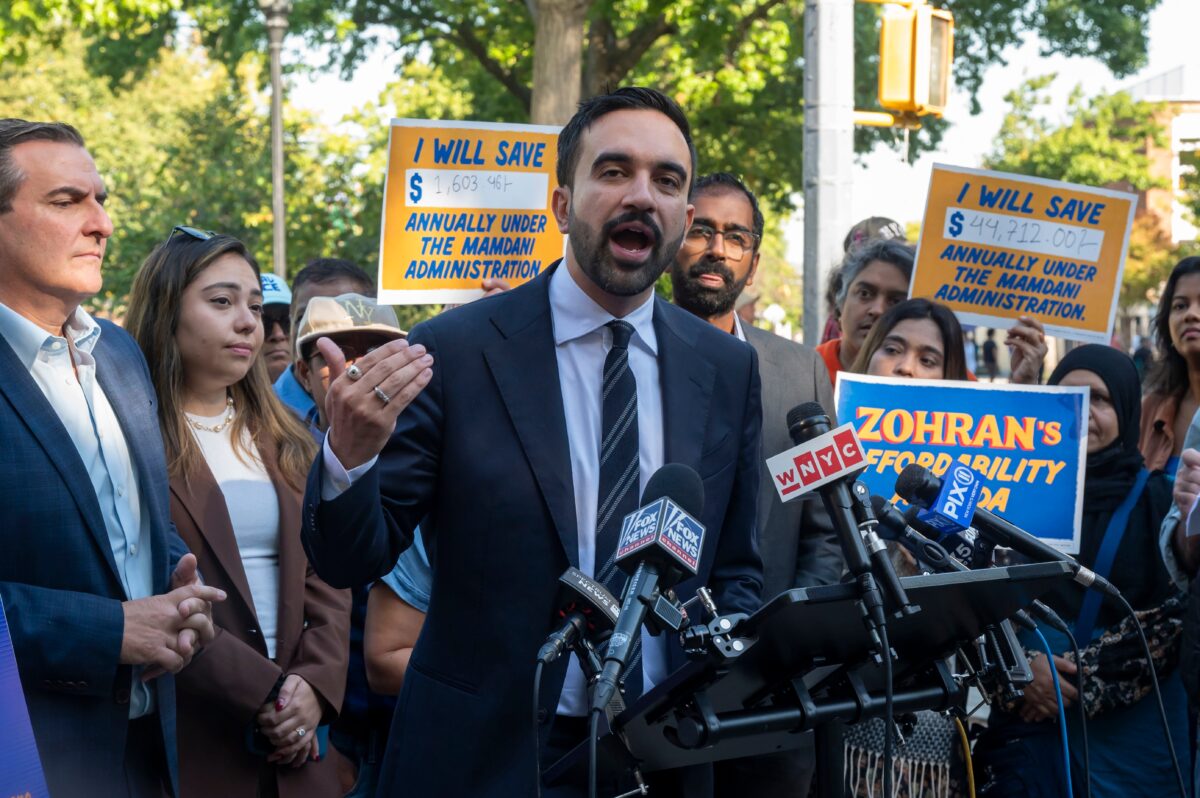
The account of Zohran Mamdani’s 7 campaign gives their alternative a harder political edge. They credit the Democratic Socialists of America with providing organisation capable of turning enthusiasm into coordinated activity. People did not simply encounter a better message. They entered relationships through which they could act with others. That experience matters because fascism also offers belonging. An antifascist politics which answers organised resentment with individual moral correctness has already conceded too much.
The limits appear quickly. Municipal governments operate within financial and legal structures they do not control. Communications remain dependent on privately owned platforms. Wealth can move. Governments above them can retaliate. Klein and Taylor acknowledge these constraints, which is why their conclusion reaches towards wealth caps and public ownership rather than resting with nicer local administration.
A wealth cap, however, is not primarily an ethical statement about excessive consumption. It is an attack on accumulated political power. People possessing fortunes large enough to influence governments, control infrastructure and determine investment are unlikely to accept their own dispossession because the argument for it has been well made. Public ownership raises its own questions about who exercises control once ownership changes and what power workers and communities possess inside the institution. The problem returns to organisation.
Selective survival
Tony Terry’s schools do not lack books because society has forgotten that children need to read. Resources are being directed elsewhere because some actors possess far greater power to decide what the future requires. That decision can be challenged only by building another source of power strong enough to contest it.
Klein and Taylor have helped me think more clearly about what contemporary fascist politics can promise while material conditions continue to deteriorate. It does not have to make everybody prosperous. It can offer hierarchy, belonging and the hope of admission to the protected zone. It can turn the failure to provide collective security into an argument for denying security to somebody else. The bunker matters less as an architectural curiosity than as a political principle.
I would not make end times fascism the definition of the movement we are confronting. Fascism still has to be understood through the political forces being assembled, the alliances they construct, the institutions they penetrate and the opposition they seek to disable. Klein and Taylor sometimes stretch the concept until it risks becoming another name for capitalism’s capacity for violence. Yet their idea of selective survival catches something that a narrower account can miss. The question being fought over is no longer simply who governs the existing order. It is increasingly who will be protected from the crises that order produces, who will pay for that protection and who can be left outside.
we can commit to building the unruly, boundary-crossing movement they so deeply fear”
Klein and Taylor, End Times Fascism
Footnotes:
1 Jared Kushner is Donald Trump’s son-in-law and served as a senior adviser during Trump’s first administration. He has remained closely involved in Middle East policy and investment projects.
2 Steve Witkoff, a property developer and longtime Trump associate, became Trump’s special envoy to the Middle East during his second presidency.
3 Ignazio Silone (1900–78) was an Italian socialist writer and anti-fascist, best known for novels including Fontamara. Having broken with the Italian Communist Party, he became an influential critic of both fascism and Stalinism. Klein and Taylor draw on his idea of a counterrevolution directed against a revolution that has not actually occurred.
4 The Seven Mountain Mandate is a current within American Christian dominionism which argues that Christians should seek influence or control across seven major spheres of social life, generally identified as government, education, media, business, religion, family and arts or entertainment.
5 Project 2025 was a Heritage Foundation-led programme developed before Trump’s return to office, combining policy proposals, personnel recruitment and plans for restructuring the federal executive. It matters here because it complicates the claim that the contemporary right lacks disciplined institutional preparation.
6 Russell Vought is a leading figure in the American Christian nationalist right and served as director of the Office of Management and Budget under Donald Trump. He was also closely involved with the Heritage Foundation’s Project 2025 programme for restructuring the federal government around an incoming conservative administration.
7 Zohran Mamdani is a democratic socialist politician in New York and a member of the Democratic Socialists of America. Klein and Taylor use his electoral campaign to discuss the organisational infrastructure required to turn political enthusiasm into sustained collective activity.