

Inside Liverpool town hall… two portraits of important looking men from the 18th Century… both were Liverpool mayors and rich business people. Peter Brancker and John Earle were slave traders who had invested in over a hundred slave trading expeditions. They contributed to the expansion of Liverpool from a fishing town of 5000 people mid century to the industrial and trading metropolis it grew into through the 19th Century. Profits from slavery were bigger that those in other sectors of the economy athough there were some risks and your investment took months or over a year to come in.
Commentators on the political right try to separate out the slave trade from the rest of British history but as one of the historians featured in this programme says – the slave trade is British history in the same way as the Civil War or the Glorious Revolution.
Collaborative history research
David Olusoga leads this documentary and shows us the amazing collaborative history project that has produced a Register of British Slave Traders. We observe the painstaking, forensic work examining thearchives and cross referencing different sources. Some are beautiful artefacts in their own right like a colourful 16th Century atlas but the researchers constantly acknowledge that all these documents are in some way or other drenched in the blood of millions of Africans.
This register will be freely available for anyone to access online. You can research what the connections are in your own town. Although the programme focuses on the big slave trading ports like Bristol, London and Liverpool we find out that slave trading ships went out from many other ports – for example Whitehaven in Cumbria.
13,000 people were investors or traders in slave trade – responsible for sending 3 million Africans to the plantations in Latin America, the Caribbean and North America. The involvement went beyond the richest and the elites. It also included well off, middle class investors.
Olusoga takes us into the elegant, regency Queens Square in Bristol. He points to two neighbouring houses and talks about the families living there who made big profits from slavery. Colston was one of the most famous Bristol born slave traders. He operated more out of London but his statue prominently stood in Bristol centre until a few years ago anti-racist activists dumped it in the docks from where the slave ships departed.
His name was everywhere in Bristol where I grew up – Colston hall, Colston school, Colston square and so on. The documentary shows how Bristol museum has saved the statue but now displays it – lying down part covered in red graffiti – with an appropriate commentary. We might have done some work in school on the slave triangle but the real horror and the whole economic picture was never really taught.
Monarchy fully involved
The relationship between the British state – its monarchy – was at the heart of the trade. Elizabeth ! ordered a Royal Naval ship to be the first British slave ship. For a while there was a Royal monopoly set up with the Royal African Company that also filled the monarchs coffers. British naval power was used to defend the slave traders against the Portuguese, Spanish and French colonialist competitors. Later on the monopoly ended but royal investment continued in the more fragmented market. James II had direct experience of slave trading.
Many prestigious institutions – the Royal Society, St Barts hospital, Guys Hospital, Bristol Old Vic theatre – all benefited from investment in this horrific human trafficking. Some of these investors may not have known the savage details but most were aware of key parameters like ‘wastage’ – calculating how many Africans died in the middle passage. It always started from a minimum 10%.
The City of London was intimately connected with it from the start. Given the risks, insurance was a profitable business. Investors had to attracted and the market organised. Banks could provide loans. The traders usually had important governance and political posts to help protect their business.
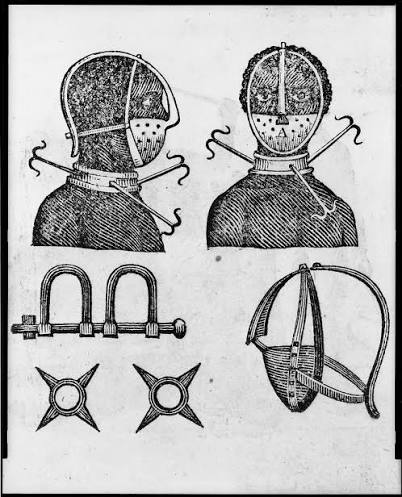
Olusoga takes us on a journey to Gambia and elsewhere showing us the slave forts where Africans were assembled and imprisoned before being put on the ships. All the way through the two part documentary, the narrative is spliced together with the historic images of the way the ships ‘packed’ the slaves to get the maximum numbers on board and of the various forms of restraint used. Ironmongery business boomed as the slavers needed these terrible instruments. They included forms of torture.
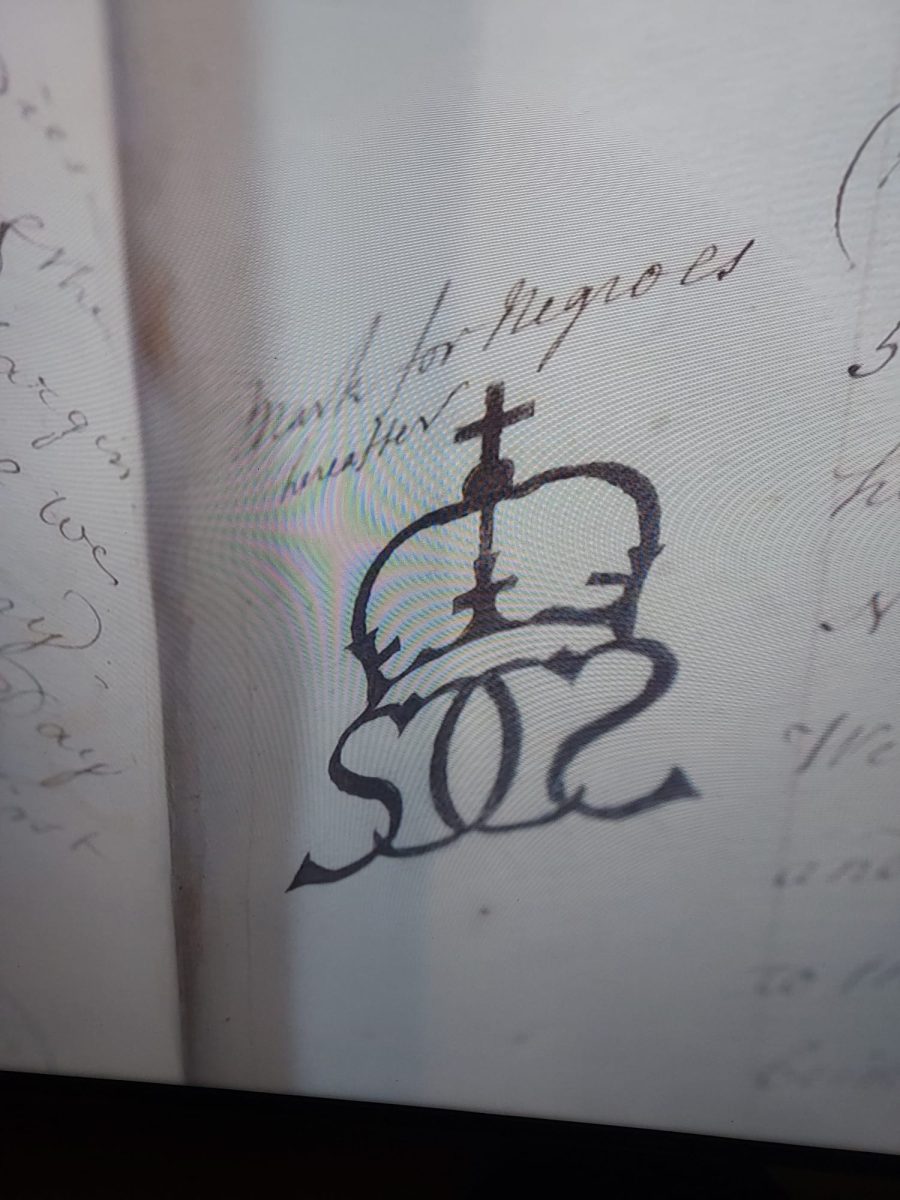
Slaves branded like cattle
There is one moment when even Olusoga takes a breath and has to pause for a moment. He is examining a document from the South Sea Company. We see an image of the company brand that is burned into the skin of all slaves, men, women and children. On top of the company letters is a crown representing Queen Anne. Then we read a report of the directors’ meeting when they are told that the company doctor in Buenos Aires is recommending that they stop branding the slaves. He says too many are getting infections and dying.
Now of course this is not just the doctor expressing a bit of humanity – they wanted fit slaves not dead ones to sell to the plantations. Nevertheless on the next page we see the response of these most ‘civilised’ directors insisting that the branding continues but that some palm oil is applied before and after. As Olusoga acidly comments, after calmly deciding this barbarism these good citizens would then go home to their families and comfortable houses.
Such a programme helps explain how the material embedding of the slave trade in our society for over 200 years also structured in a deep lying racism. Today Caribbean and African nations are demanding historical reparations for the biggest, violent, forced human trafficking in world history.
The Right want to cancel this history
At one point the list of investors in the Liverpool/Manchester ship canal is displayed. Many of them are slave traders. It is the same story with other important infrastructure like the ports, railways and bridges. Factories and mills also were built with the blood money of the slave trade. African societies were severely assaulted in order to make Europe rich.
The far right and many Tories do not want to hear the history explained in this programme. The European slave traders organised the human trafficking of over 10 million Africans. It was a forced migration for profit. Several million died. In order to more easily see migrants as the enemy and the cause of the crises we face, the right have to erase the historical reality of the Britain’s leading role in the slave trade.
Colonial extraction of African resources, climate change produced mostly by the West’s fossil fuel corporations and the imperialist role in regional wars are the main factors behind today’s global migration. This programme does a good job in putting the slave trade at the heart of British history. Schools need to use it to give young people the full story.
Watch – or watch again- here
We’ll never get to a point where any meaningful redress is applied to this horrendous piece of British Colonial history. As we now know many of the British aristocracy made their fortunes literally ‘Off the backs of blacks’ a disgrace.