

.
When workers in the post war years organised strongly in unions, and when industry needed labour, they were able to raise their earnings. Among the most successful were the car workers.
The employers moved against this, and a long battle ensued. Alan Thornett was one of the stewards who fought back, and over time became the most important part of this fightback.
He started in the Leyland plant in Cowley Oxford in 1959, becoming a shop steward of the transport department in 1964.
In 1968 one-third of the registered strikes in the country were in the Assembly Plant where he worked and by then he had become one of the deputy senior stewards. Many of these strikes were over piecework rates.
The Wilson Government supported the employers’ attempt to beat down the workers’ struggles with new legislation, ‘In Place of Strife’.
There was a mass rank and file movement against this, so the industrial struggles were politicised. This is where Alan excelled, he had become a political activist, a Marxist, who analysed what was happening to his workforce.
Alan was at the centre of organising conferences of workers, uniting struggles, dockers, engineers, etc. So, Cowley was involved in strikes against anti-trade union legislation, and when in 1972 the Heath government attacked the miners, the transport department refused to move coal from one side of the plant to the other effectively, stopping it.
The same year, action took place in Cowley demanding the release of the Pentonville Five dockers from prison
In 1974, when the oil crisis hit, Cowley, like most factories, was put on a three-day week. We occupied the plants. When I started in the Body Plant in 1971, I had known Alan for eight years. We did discuss amongst ourselves alternatives to car production in the plants, but Alan later regretted not pushing for something like the Lucas plan, for ecologically useful production.
Meanwhile, British Leyland had started pushing a policy called Measured Day Work (MDW). This was to get away from the piecework system, which had allowed Cowley car workers to have some of the best wages in Europe. There were several strikes, but the company were successful. However, they had to agree that workers had to agree to work rates, giving an element of workers’ control.
Again, Alan was a big element in the following battles over this. Over a period of time, the company managed to get more control. The bosses wanted to squeeze further the working day and it led to the company taking away the washing-up time at the end of the day – this resulted in a 6-week strike.
Alan had a lot of support in the plant, especially women in the canteen, and the trim shop.
This is just a glimpse of the industrial battles. A new more political one arrived when the Labour government nationalised the company, and appointed a vicious manager, Michael Edwardes, and then Tony Benn was made the responsible minister.
As a controlling measure, they introduced ‘Participation’, by which they tried to get workers to participate in their own control. Union officials supported it. The Communist Party in the shape of Derek Robinson, in Longbridge, completely supported it. Alan, alongside most workers at Cowley, opposed it.
Edwardes’ job was to break the unions, close wherever necessary, and bring he business back to private ownership.
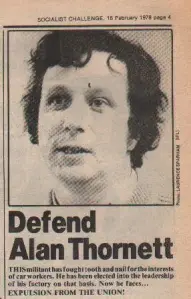
He had the full support of the union’ national leadership, and the media. The union nationally carried out enquiries and actions against Alan and his supporters, and the media created a myth. Alan became the ‘Red Mole’. There were national newspaper headlines using that name when he was up for election as one of the senior stewards; he couldn’t go into a pub alone.
His supporters came under attack, Bob Cullen deputy senior, was sacked for violence on the picket line, which the real perpetrator actually admitted to.
Alan Thornett became a symbol of the country’s workplace militancy.
He was finally sacked in 1982, for not renewing his heavy goods driver’s license, which the company previously did automatically; others in the same position were let off.
He continued to be active in Oxford as President of Oxford and District Trades Union Council and as chair of the Trades Council’s Miners Support Committee in the 1984-85 strike, one of the best in the country. He continued in political activity, particularly on ecology.
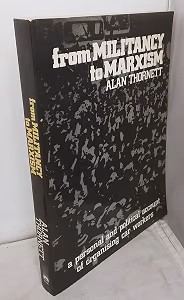
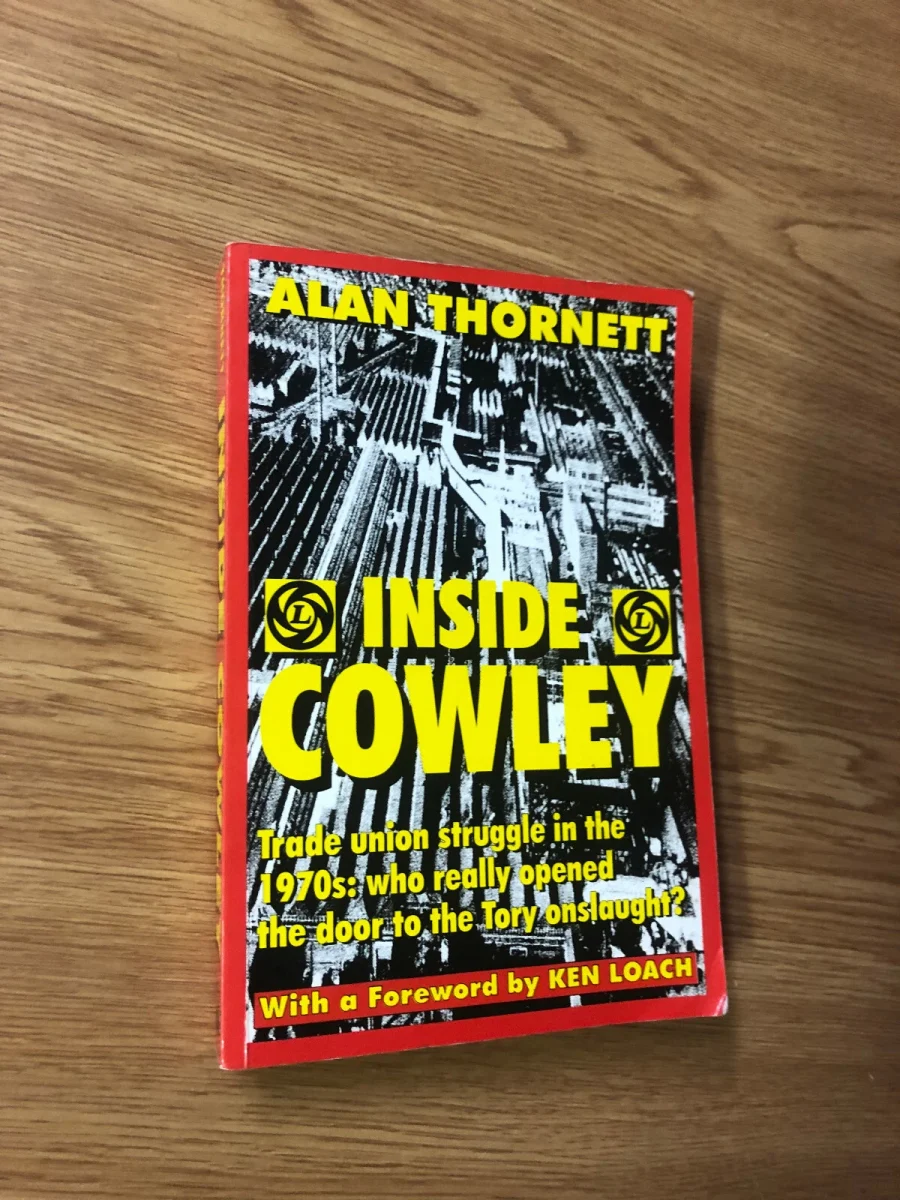
Alan authored three books on the Cowley struggles: From Militancy to Marxism (1987), Inside Cowley (1998) and Militant Years (2011). These are probably the only serious books on workers’ struggles analysed by a worker from within, as opposed to a journalist going in.
His book Facing the Apocalypse: Arguments for Ecosocialism (2019) represented his last twenty years of his work.
Alan was in and led a number of political organisations: the Socialist Labour League/Workers Revolutionary Party for ten years before being expelled for trying to democratise it, the Workers Socialist League and later attempts to form a united left group, and finally in the Fourth International (current England and Wales affiliate Anti Capitalist Resistance).
Alan Thornett, born 15 June 1937, died 9 October 2026, aged 89. He is survived by his daughter Charlotte and son Julian.