

Source >> International Viewpoint
In this context, the Tunisian presidency has even developed theories of the “great replacement” to justify this treatment, and has followed in the footsteps of the Tunisian National Party, a small but extremely racist (and anti-Semitic) party.
BORDER GUARD
A month ago, (French Interior Minister) Darmanin came to officialise an agreement turning Tunisia into a border guard, following in the footsteps of Italy, which had made the same request in January. For a few million euros, the Tunisian government has undertaken to discourage people from leaving for Europe from its shores, with the tacit agreement that as long as the flow of migrants decreases, France will be less strict about human rights.
The situation deteriorated sharply in the port town of Sfax – which, because of the configuration of the tides, is the one most conducive to crossing – where, following a fatal altercation with a migrant, real pogroms took place over several nights in front of a police force that was passive at best. Several dozen injured people filled the hospital in Sfax. Some of the people forcibly evicted from their homes and robbed included people who were “in order” as far as Tunisian immigration was concerned.
DEPORTATIONS TO LIBYA
The authorities have chartered buses to forcibly take migrants fleeing the city to the Libyan border. To date, there are around 1,200 of them, including at least 29 children and three pregnant women, and their situation is unknown. They have to get by without water or food in the desert, and organisations and journalists are forbidden to intervene. On the Libyan side, they have been threatened and have had to turn back. Their situation is dramatic. Several people have already died of dehydration. Those who did not get on the buses are wandering in the suburbs of Sfax, with nowhere to shelter and no humanitarian aid other than individual solidarity.
Fanning the flames of the structural negrophobia that exists in the Maghreb by acting as a safeguard against European racist policies while developing a vague anti-imperialism façade: this is the recipe of the Tunisian state. The massive scale of the deportations nevertheless represents a break with the past. There is an urgent need to develop solidarity with organisations supporting migrants in Tunisia, and above all for us to demand an end to the Fortress Europe policy. No one is illegal and all immigrants are welcome.
Translated by International Viewpoint from l’Anticapitaliste.
Art (63) Book Review (128) Books (114) Capitalism (69) China (83) Climate Emergency (99) Conservative Government (90) Conservative Party (45) COVID-19 (46) EcoSocialism (71) Elections (87) Europe (46) Fascism (75) Film (49) Film Review (69) France (81) Gaza (65) History (45) Imperialism (105) Israel (136) Italy (48) Keir Starmer (59) Labour Party (117) Marxism (50) Marxist Theory (47) Palestine (204) pandemic (78) Protest (158) Russia (355) Solidarity (161) Statement (50) Trade Unionism (148) Ukraine (361) United States of America (143) War (378)
Latest Articles
- Holborn and St Pancras: you can’t judge a principle by a by‑election
 Duncan Chapel’ replies to Dave Kellaway about Zack Polanski’s tactics on the Zionism is Racism motion
 - Alan Thornett 1937‑2026 : a working‑class leader who faced the apocalypse
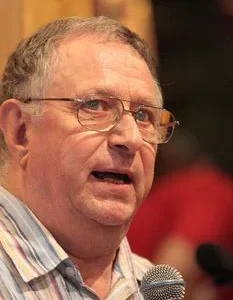 Here we publish an initial tribute to Alan Thornett who died on 9 October from Duncan Chapel, We welcome comments on this and expect further appreciations we will carry over the days ahead.
 - Trade union support for the convoy keeps growing
 Dick Nichols reports on the growing trade union support for the international solidarity convoy with Ukraine
 - Labour Holds Holborn and St Pancras but Green challenge remains
 Dave Kellaway examines 5 key takeaways from yesterday’s by-election in the London seat of Holborn and St Pancras
 - Surviving a nuclear war?
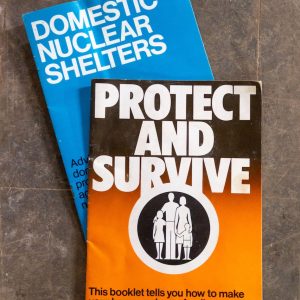 Dave Kellaway reviews Sheltered by Kim Gordon-Bates which tells the story of one government bunker once the bomb goes off. We also have an exclusive interview with Kim below.