


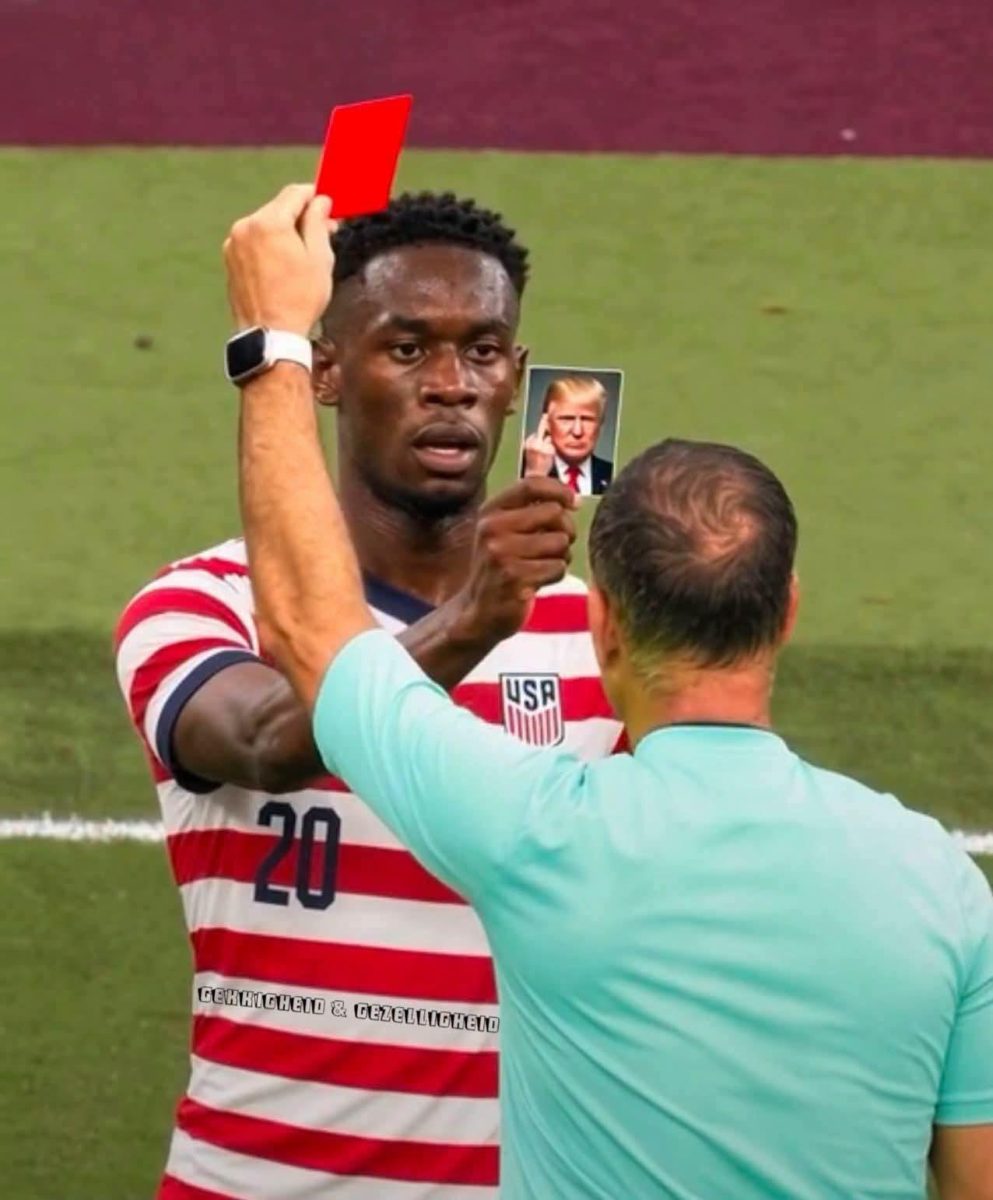
Belgium settled the argument the way these arguments get settled, with a centre-forward rather than a committee. Four-one. By then nobody much cared whether the phone call forty-eight hours earlier had achieved anything. Charles De Ketelaere ran the show. Belgium were two up before the game had really started. Folarin Balogun, restored to the side after Donald Trump’s lobbying campaign, touched the ball ten times in the first half, fewer than anyone else out there. The White House lifted a suspension. It did not give the man a first touch.
Some people will want the story to end there. Belgium won comfortably, which apparently settles everything. It doesn’t. It is a nice idea and it rests on a mistake. Results tell you who played better. They do not tell you whether the competition was run straight, and that question got answered on Sunday, before a ball was kicked. Had Balogun scored three, none of this would look any different. A head of state rang the president of FIFA and a one-match ban vanished. UEFA called it incomprehensible. Coming from UEFA, that takes some doing. Rudi Garcia thought he was the victim of an elaborate practical joke. He was not. The call happened, and no scoreline erases it.
Sack Infantino, then. Plenty will want to, and he has done little to earn sympathy: a man who seems permanently available for a photograph with whoever currently holds the biggest office in the host country invites exactly the criticism he is getting now. Football has been here before. Havelange understood how power moved and built a career on it. Blatter refined the technique with the Gulf states and with Russia. Infantino has not invented anything. He has updated it. Every handshake becomes a photograph. Every photograph becomes publicity. Same politics, better cameras. Sack him tomorrow and the man who replaces him inherits the same arrangement on his first morning: FIFA needs governments to fund its tournaments, governments want the prestige a tournament brings, and the job rewards closeness to power. It always has. Whoever sits in it soon discovers the same thing. Get rid of Infantino and somebody else will be sitting in the chair next week doing much the same thing.
The forty-eight-team argument is different. Expansion was sold as inclusion. It also happened to produce more television markets and more grateful FIFA voters. Funny that. The old thirty-two-team format carried very little dead weight. Weak groups were rare, and a bad team rarely got far enough to embarrass anybody. This year’s tournament has produced fixtures that feel more like contractual obligations than contests, and teams have advanced who would not have got near the finals under the old system. Shrink it back to thirty-two and the football probably improves. It will not touch the relationship between a FIFA president and whoever happens to be running the host nation, because that relationship was never about touches in the opposition box.
A phone call got a striker back onto the pitch. It could not organise a back four. Belgium move on to face Spain. The United States go home. At least they did not have far to travel.