

Burnham
Burnham’s platform, as he has stated it, is straightforward enough. Energy, housing, water, transport: put them back under public control. He did it with the buses in Greater Manchester, brought in the £2 fare, demonstrated the principle works at regional scale, and now wants to apply it nationally. “The country gave away its control with basic things that people depend upon every day,” he said. “That was a big mistake.”
He is not wrong about the diagnosis. The water companies have been visibly collapsing for years. The energy market delivered a cost of living crisis that is still not resolved. The buses in most of England outside Greater Manchester still run for shareholders rather than passengers. The policy has a concrete record behind it, not just a rhetorical tradition, which distinguishes it from the Corbyn manifestos of 2017 and 2019 that proposed the same things without the mayoral proof of concept.
The problem is not the policy. The problem is what the policy does not address.
Linda Bibby, 55, an insurance broker in Ashton who usually votes Labour, explains why Makerfield is turning right. “They want change that isn’t happening quick enough. They think the immigrants coming here are bringing down the area, they want a harder line on that.” Peter Hurst, 73, voted Reform in the locals. “It’s the immigration problem for me,” he says. “A lot of money is wasted in the country and we need to sort that out.”
Renationalisation of water and energy speaks to one version of what was taken from these communities: the assets, the control, the institutional capacity stripped out during the decades of deindustrialisation. That is a real and material grievance, and the policy addresses it materially. What it does not address is the adjacent grievance, the one about who arrived after the capital left, and what that arrival means for people who were already losing ground. Those are not the same argument. Burnham is only making one of them. He is not addressing the migrant issue even it the progressive terms that the Greens are.
This is not a communication failure. It is a structural gap in the platform, and it is not obvious how it gets closed without either abandoning the universalist economic framing or moving onto terrain that the left has historically, and for good reasons, refused to occupy.
Burnham’s answer, insofar as he has given one, is to talk about reindustrialising the north-west, about technical education routes, about good jobs. That is the right argument in principle. It addresses decline as a material condition rather than a cultural one, and it refuses the Reform framing that attributes that decline to immigration rather than to capital. But it is a long-term argument being made in a constituency where Reform just won every ward. The people who voted Reform last week are not waiting for a reindustrialisation programme that might, over a decade, change the employment base of post-industrial Lancashire.

There is also the paradox that Anthony Barnett identifies in an interview published today on the New Statesman website, though he does not quite name it as a problem. Burnham’s entire political identity rests on devolution: the argument that power exercised closer to the people it affects produces better outcomes, that Manchester knows Manchester better than Whitehall does. He demonstrated this with the buses, the trams, the Hillsborough campaign. Head North, the book he wrote with Steve Rotheram, ends with a call for a written constitution and something close to a German model of powerful regions. That is a coherent and serious political philosophy.
He is now using a local byelection to position himself for the most centralised office in the British state. The argument for devolution and the argument for his own prime ministership are not straightforwardly compatible, and he has not yet reconciled them publicly. Barnett reports that in a private Compass meeting Burnham said he would not return to Westminster “unless it changes root-and-branch.” That is a significant commitment if it is genuine. It is also a commitment made in private, to people already sympathetic to constitutional reform, in a conversation that is not binding on anything.
Joan Preston, 82, who abandoned Labour under Starmer and wants Burnham back, puts her faith in simpler terms. “Burnham is for the working people.” That is not a platform assessment. It is a character judgement, and in the absence of a detailed programme it is doing most of the work. Whether a character judgement is enough to win back the voters who went to Reform last week is the question Makerfield will answer, whether it wants to or not.
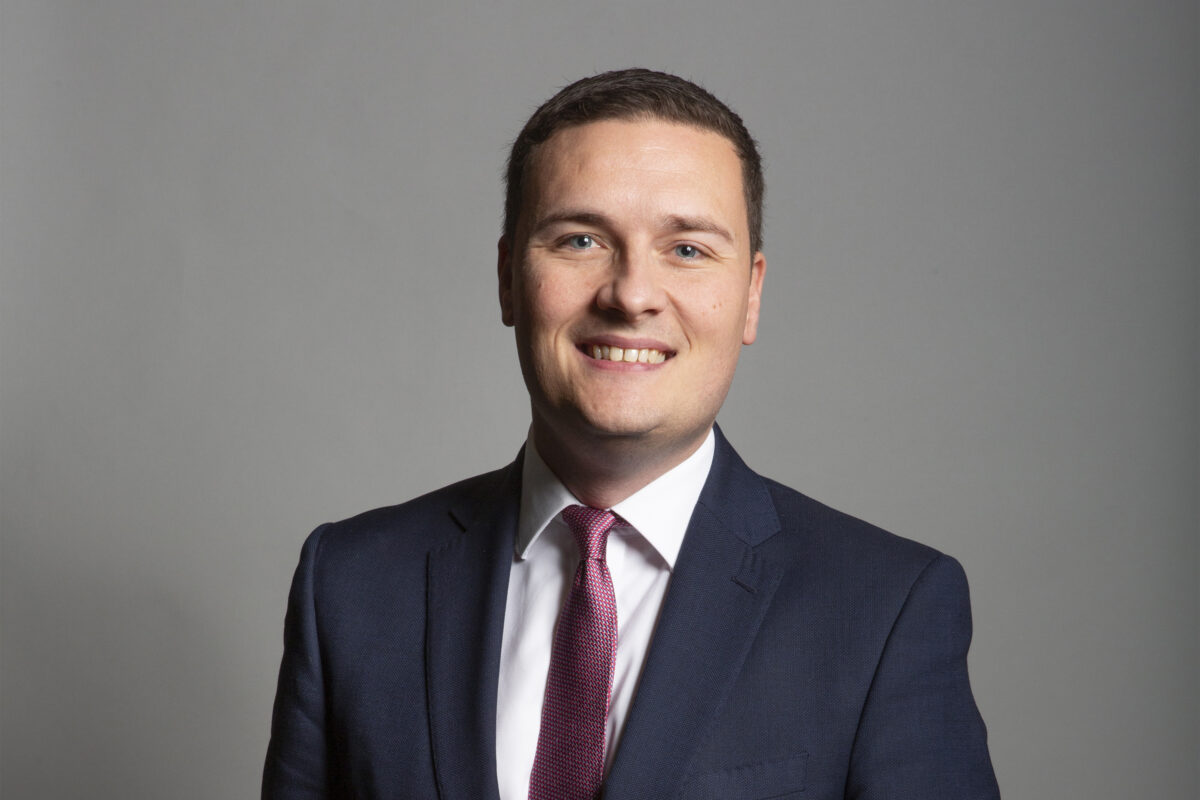
Streeting
Wes Streeting resigned as health secretary on Thursday. By Saturday he was at the Progress think tank conference in central London, confirming he would stand in any leadership contest and calling Britain’s departure from the European Union “a catastrophic mistake.” The speed is notable. So is the venue. Progress is the organisational home of the Labour right, the tendency that has run the party, with one interruption, since 1994. Streeting was not speaking to the country. He was securing his base.
The EU commitment is the most substantive thing he said, and it will define his campaign whether he intends it to or not. Rejoining is not a mood or a direction of travel. It is a concrete policy position with concrete consequences: years of negotiation, significant political capital, a second referendum question hanging over every other priority. Streeting has chosen to lead with it, which tells you something about who he thinks his electorate is. It is not Makerfield.
He also said that Labour “arrived in government underprepared in too many areas and lacking clarity of vision and direction.” He described the winter fuel cut as “a catastrophe.” He criticised the “heavy-handed” leadership culture that had stifled policy debate. All of this is accurate. None of it acknowledges that Streeting spent two years in that cabinet, voted for that culture, and said nothing of this publicly until the week he resigned. The criticism lands, but it lands on him as much as on Starmer.
This is the central problem with Streeting as a candidate, and it is not about policy. It is about the credibility of the witness. He is asking Labour members and eventually the electorate to believe that the man who was inside the room for two years, who defended the government’s record in hundreds of media appearances, who was briefed against by Downing Street and still did not break publicly, has now correctly identified what went wrong and knows how to fix it. That is possible. Politicians do learn. But the timing, resignation Thursday, leadership pitch Saturday, suggests the learning curve was steep and recent.
Tom McTague’s arithmetic, published in the NS earlier this month, is useful here. Streeting believes he has the MP numbers to trigger a contest. His rivals do not believe he can win the membership. He said himself at Progress that a contest without Burnham would “lack legitimacy.” That is an honest assessment of his own weakness dressed as procedural principle. If he genuinely had the members as well as the MPs, the legitimacy question would not arise.
What Streeting offers is a recognisable political product: centrist, pro-European, media-fluent, comfortable in the idiom of reform without rupture. In a different political moment, after a different kind of defeat, that product might be exactly what Labour needs. The problem is that the local election results, Reform winning 24 of 25 seats in Wigan, the collapse of the northern vote, the Makerfield operation itself, are not pointing toward a demand for a more articulate version of the existing direction. They are pointing toward something that feels categorically different, even if nobody has yet defined what that something is.
Streeting’s warning that Labour risks becoming “the handmaidens of Nigel Farage and the breakup of the United Kingdom” unless it changes course is the sharpest line of his speech. It is also a continuity argument in radical clothing. The implicit logic is: do not destabilise the party, do not rush the contest, let the process work. That benefits whoever is best placed within the existing parliamentary arithmetic, which is Streeting. It does not obviously benefit Makerfield.
He said he would go door-knocking in Makerfield for Burnham. The image of Labour’s two main leadership candidates canvassing the same street, one seeking the seat and one seeking the goodwill of the members who will decide the leadership, captures the situation with accidental precision. Makerfield is not the place either of them would have chosen for this. It is the place the arithmetic produced.
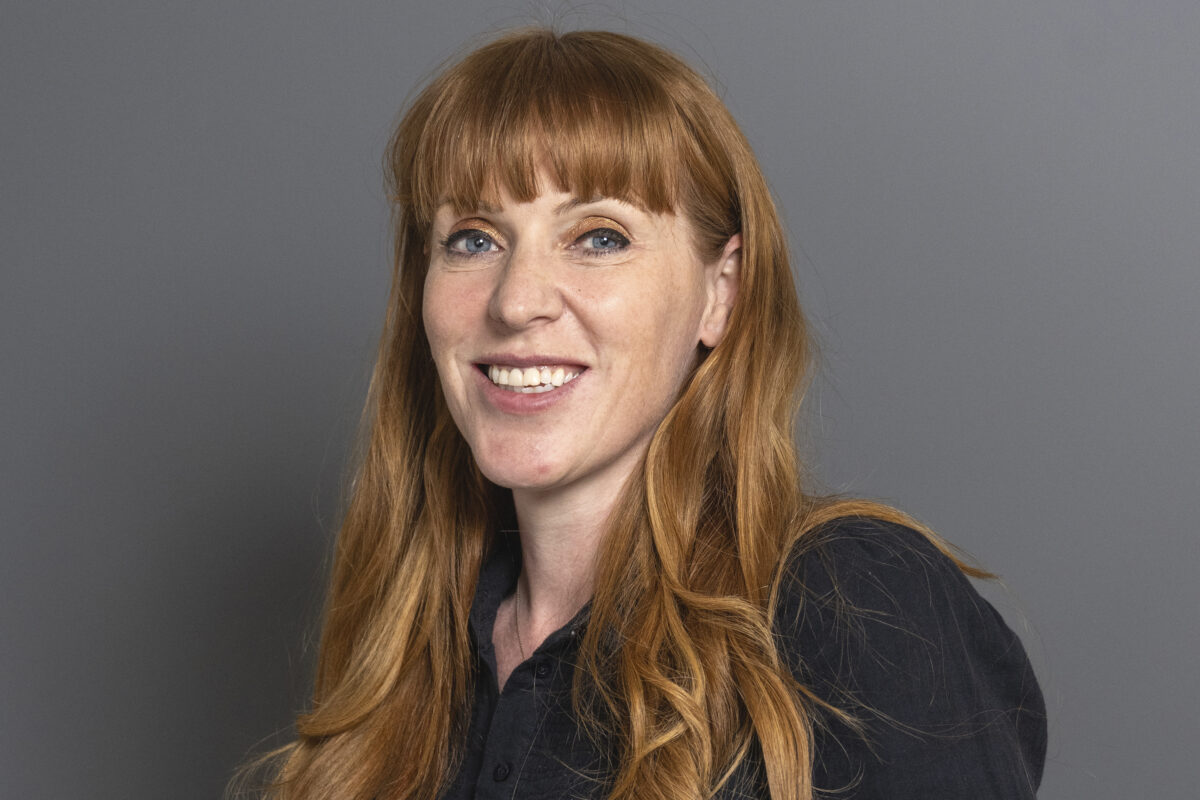
Angela Rayner
Angela Rayner has not declared. She may not need to.
McTague’s piece identifies her as the decisive variable in the contest arithmetic, and nothing since has changed that assessment. She has let it be known she will not stand aside if Streeting launches a leadership bid before Burnham is seated. Her objection is not personal. She believes a Streeting victory would be a continuation of the Labour right’s control of the party, the tendency she holds responsible for the infighting that has produced the current crisis.
Her own position is described, in her own words, as “broad but shallow.” Admired by many MPs, loved by none. Loathed by as many on the right as loved on the left. She knows this. The self-assessment is unusually clear-eyed for a politician contemplating a leadership run, which suggests she is not contemplating it in the ordinary sense. She is calculating something else.
What she offers is harder to define than either Burnham or Streeting, because it is not primarily a policy platform. It is a political personality and a class position. McTague reports that her team has noted how Trump dresses down opponents publicly, and believes the executives of water companies deserve similar treatment. That is not a policy on water. It is a theory of political affect: that what the moment requires is not a programme but a willingness to make enemies visibly and without apology.
Whether that is insight or displacement activity is the right question. There is a version of Rayner’s argument that is serious: that Labour’s problem is not primarily ideological but performative, that voters who have gone to Reform are not mainly responding to policy positions but to the sense that nobody in the existing Labour leadership is genuinely angry on their behalf. On that reading, her class antagonism is not a substitute for policy but its precondition, the thing that makes policy credible rather than managerial.
There is also a version where “broad but shallow” plus high negatives plus no coherent programme equals a candidate who splits the non-Streeting vote and hands him the leadership on MP nominations alone. That is the spoiler scenario, and it is the one Burnham’s supporters are most anxious about.
The timing question runs through all of this. Streeting said today that rushing a contest before Burnham is seated would lack legitimacy. He is right, and he knows it benefits him to say so, because the longer the contest waits the more the arithmetic can shift. If Burnham wins Makerfield, he enters the parliamentary party with momentum, a mandate from a constituency Reform was targeting, and a platform tested against a hostile electorate. That changes the member calculation even if it does not change the MP numbers overnight.
Rayner’s role in that scenario is unresolved. She could endorse Burnham and consolidate the non-Streeting vote. She could stand and split it. She could wait, hold her support in reserve, and see what Makerfield produces before deciding. The piece that would tell you which of these she is actually planning does not yet exist.
What does exist is the structural situation McTague describes: no candidate who clears all four hurdles, NEC, MPs, members, electorate. Burnham comes closest, and the NEC problem has shifted in his favour. But closest is not the same as clear.
Only Losers
The honest summary is that none of them can see off the threat from the right. Not with any certainty. Not on the evidence available.
The electorate gave Labour one shot in 2024, the largest parliamentary majority in a generation built on the smallest vote share ever to produce one, and the party spent two years not knowing what to do with it. The winter fuel cut. The Starmer bunker. The absence of anything that felt like a governing idea rather than a governing posture. Makerfield did not go to Reform because Burnham was unavailable. It went to Reform because the government that Labour members, activists and soft supporters held their breath and voted for turned out to have nothing to say to it.
Burnham is the candidate of the soft left in the way that the label has always obscured more than it reveals. He is a devolutionist, a municipal pragmatist, a man whose political formation is the north-west Labour machine of the 1990s and 2000s. He is not soft left in any ideological sense. He does not come from a tradition of socialist theory or movement politics. He comes from a tradition of getting things done within the existing institutional framework and claiming the credit. That is a real skill. It produced the buses. It is not a politics of transformation, and Makerfield may need transformation rather than competent management delivered from a different postcode.
Streeting is the Labour right, without qualification. The tendency that has run the party since 1994, with one interruption it regards as an embarrassing accident, has just spent two years in government and produced the results visible in every ward in Wigan. The case for more of the same requires an argument that the problem was execution rather than direction. Streeting is making that argument. It is not persuasive to anyone who was watching.
Which leaves Rayner. The anti-politics choice, or what passes for one within a parliamentary party still operating the rules of a system the electorate has already mentally left. Her theory of the moment, that what is needed is not a programme but a personality willing to make enemies loudly and without calculation, is not obviously wrong. Farage is not beating Labour on policy detail. He is beating Labour on affect, on the sense that he is the only person in British politics who appears to be genuinely angry about something on behalf of the people who are angry. Rayner’s instinct is that you fight affect with affect rather than with a better renationalisation timetable.
The problem is that instinct is not a government. Anger is not a budget. And the voters in Makerfield who went to Reform are not a homogeneous bloc waiting to be reclaimed by the right kind of fury. Some of them want the water renationalised. Some of them want net migration at zero. Some of them want both, and do not think these are in tension. A political personality, however combative, has to eventually resolve into policy, and Rayner has not shown that she has done that work.
So: Burnham probably, if Makerfield holds. Not because he has answered the hard questions but because he has answered more of them than the others, and because the proof of concept in Greater Manchester is real even if its limits are real too. Streeting is the continuity candidate in a moment that is demanding discontinuity. Rayner is the gamble that the moment requires a different kind of politician rather than a different kind of policy, and there is something in that argument even if the argument is not yet a platform.
Hope springs eternal. It has to. The alternative is watching Farage win the next election while three Labour candidates argue about who is most authentically working class in a constituency none of them is from
Strikes me you are being a little soft on them all. None of them really tackle the question of wealth inequality in Briatin, the source of much of the failure of infrasctructure. Burnham will be told that taking water etc back into public ownership would cost to much. Does he have an answewr to that? The socialist response would be expropriation, I can’t see Burnham going down that road. One of the defining issues of Streeting as Health secretary is to increase privatisation (and deskilling) in the NHS, a point which brings his politics into sharper focus for many than debates about where he sits on the left-right spectrum. I’m not aware that any of them have spoken out against the cruelty of Mahmood’s stance on migration. Responding to Reform’s narrative on migration requires BOTH policies which address housing, NHS, employment etc AND challenging the racism. Most of the left seems to opt for one or the other rather than both. All 3 are indistinguishable on the Gaza genocide. Rayner, the `left’ candidate said that if need be, Labour should expel thousands for `antisemitism’. When her `best friend’ Long-Bailey was attacked and expelled from the cabinet on spurious claims of antisemitisnm she said nothing. None of them can be trusted
A very interesting article.
I recently saw Clive Lewis MP for Norwich South speak. Clive said that he only became an MP through the temporary changes Ed Miliband made to candidate selections.
Clive said that he has a friend in France who is a member of the French Socialist Party. His friend says that the British Labour Party is in a similar position to the French Socialist Party in 2011.
Both Clive and his friend in France talk about the Pasokification of the French Socialist Party, and now the British Labour Party.
If Andy Burnham loses the Makerfield byelection could the Pasokification of the British Labour Party go into overdrive?
Whilst the trade unions continue to bankroll the Labour Party, Labour will not die but will continue as a rump with 50 to 1oo MPs in the 2029 general elections.
If Andy Burnham loses the byelection then it is highly likely that we will see Nigel Farage in Number Ten in 2029 backed-up by the Conservatives?