


Following on from the review of David Olusuga’s documentary that we posted here exposing Britain’s slave traders it might be worth considering the case for reparations.
Reparations for the slave trade is in the news lately with claims made by several nations, chiefly in Africa and the Caribbean, demanding compensation for the British enslavement and brutal exploitation of over 3 million souls. This has become something of a heated political issue especially for those on the far right.
Sarah Mullally, Archbishop of Canterbury, recently reaffirmed support for the Church of England’s ‘Project Spire’ the £100m slavery reparations fund for ‘healing, repair and justice.’ Predictably this guilt-ridden nostra culpa project released a torrent of apoplectic condemnation from within the church and beyond from politicians, clergy and academics among others.
Right attack reparations
Suella Braverman MP, who recently in a smart career move (cf. Jenrick and others), deserted the Tories’ sinking ship for Reform, attacked ‘virtue signaling’ and the neglect of church buildings and dwindling congregations. Richard Tice, Deputy Leader of Reform, attacked woke ideology and sang the praises of the vast sums of money ‘Britain’ devoted to ending slavery. He neglected to mention the fact that the money was paid to the slave owners for the loss of their ‘property’ to the tune of today’s equivalent of about £25 billion (UK). In another context France forced Haiti to pay reparations as compensation for ending colonial rule. Slaves and their dependents whose forced labour was exploited to extract huge profits received nothing. Reform has threatened to stop issuing visas to countries that seek reparations.
Jacob Rees Mogg, in a pronouncement of superficial stupidity sanitizing British Colonial history, insisted that ex colonies should pay and thank Britain for ending slavery out of Christian charity as did Kemi Badenoch leader of the Tory Party. There were several objections raised against the absence of any mention by Mullally of William Wilberforce the abolitionist who was instrumental in ending slavery. Or so it is believed. However Wilberforce spent years arguing in Parliament for the abolition of slavery with very little success. The slave trade (but not slavery) was eventually abolished in 1833, the same year as his death, but not on humanitarian or compassionate grounds. By then slavery was seen to be inefficient, less productive and expensive compared to the huge and easy profits being made through the mass exploitation of workers in the factory system of the new, burgeoning capitalist economy. This also proved to be the swan song of landed gentry control of Parliament which was passing rapidly into the hands of the new capitalist class. The usual narrow, parochial excuse of looking after one’s own parish loomed large.
Slave traders, not benefactors
Needless to say the causal connections, the ‘why’ of the slave trade and who benefited from it, are never bellowed in public by right-wing commentators. To remedy this deliberate deficiency and obfuscation of history in favour of bourgeois accounts a deeper understanding of the slave trade and its reverberations today needs to be explored and widely publicised.
Prior to more recent claims regarding reparations protesters pulled down the statue of Edward Colston and dumped it into the Bristol harbour. Others stood outside the Museum of the Home to protest against the statue of Sir Robert Geffrye at the height of the Black Lives Matter movement. Both protests symbolically uncovered and opened up debate around the sordid origins of the wealth of these two merchants of misery. Both were slave traders. True to form bourgeois accounts portray them as great benefactors of mankind. Their ruthless business practice of enslavement and share-holding in slave plantations were justified, in their eyes and those of the ruling class, by philanthropic and charitable giving. For example the Museum of the Home was originally alms houses for the poor endowed by Geffrye. Originally called the Geffrye Museum his name was dropped and the museum renamed because of Black Lives Matter protests.
The case for reparations
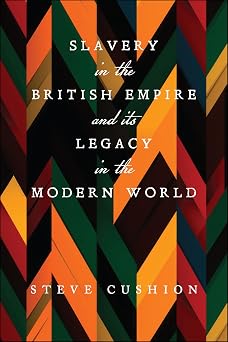
Steve Cushion in his book Slavery in the British Empire and its Legacy in the Modern World,deals specifically with the role of the British Empire in the slave trade and its reverberations into modern times. He states clearly that the purpose of the book ‘…is to situate the past crime of enslavement and the modern day dangers of climate change within the business practices that place profit before people.’
Cushion writes in great detail about the slave trade from its early origins through to the legacy conditions of racism and eco disaster that fuel today’s demands for reparations and the struggle against climate change and punctures the facade of bourgeois sanitisation of the slave trade.
As Cushion points out, apart from statues, monuments and other memorials concealing the exploitative nature of wealth creation, they also confirm the ruling class as the makers of history and secured their powers in the business world and Parliament:
“…the proliferation of statues and other memorials,,,are also part of the ideological construction that extols the great and the good: pub signs, street names, buildings and schools all named after ruling class worthies. The cultural absorption of capitalist memorabilia has become part of a proxy war for control of the dominant narrative of how history is told.”
What Marx said
Marx makes several references to slavery in volume one of Capital. Chapters 26-33 deal with the topic of the primitive accumulation of capital as the main driving force underpinning the industrial revolution and the growth of the capitalist mode of production. In these chapters and others he discusses slavery though in a somewhat scattered and unsystematic way. For the sake of brevity I will look at chapter 31 : The Genesis of the Industrial Capitalist.
He identifies one of the chief moments that characterised ‘the dawn of of the era of capitalist production’ as far back as the 16th and 17th centuries and the exploitation of the indigenous peoples of Latin America as forced labour in the gold and silver mines expropriated by the Spanish colonial powers. But the real impetus that accelerated the shift towards capitalism was the wealth created through the Trans Atlantic trade of African slaves and their exploitation by the plantation owners – ‘the commercial hunting of black skins.’
The big landowners were already in the business of accumulating wealth through forced enclosures and the theft of peasant land and commons including the leveling of towns and villages for the more profitable pursuit of creating pastureland for sheep farming and the production of wool. This and the trade in other goods gave them the capital to pursue more profitable areas of trade. The slave trade enabled the landowners to increase their wealth exponentially – not only through the selling of slaves but also the owners of slave plantations in the Caribbean Islands and the Southern United States made huge profits out of the production of cotton and sugar for export.
From slavery to industrial capitalism
The re-export of manufactured goods to the slave colonies from Britain increased the wealth of the nascent capitalist class. Marx points out that the commercial exploitation of slaves in the New World was the main driver introducing child-slavery and the concealed slavery of wage labour into the factories of Britain. Manchester and surrounding mill towns became the centre of the industrial revolution through the manufacture of cotton goods. The port of Liverpool (and Bristol} ‘grew fat on the basis of the slave trade.’
Marx exposes the horrifying abuses of the indigenous peoples conquered by the colonial powers. Veering away from colonies based on the exploitation of slaves he noted the Christian nature of the colonists. Puritans in New England offered monetary rewards for ‘every Indian scalp and every captured redskin.’ Later the British Parliament ‘proclaimed bloodhounds and scalping as ‘means that God and Nature had given unto its hand.” Returning to a slave-based economy Marx exposed the nature of the Dutch colonial administration in the 17th century as one of ‘treachery, bribery, massacre and meanness’ with ‘man stealers’ trained for the purpose of hunting out slaves. As an example of the theft of human beings, reduced body and soul to chattels, from 1750 to 1811 the enslavement of the indigenous people by the Dutch colonial administration had reduced the population of Banjuwangi, a province in Java, from 80,000 inhabitants to 18,000.
Marx quotes a christian observer W. Howitt: “The barbarities and desperate outrages of the so-called Christian race, throughout every region of the world, and upon every people they have been able to subdue, are not to be paralleled by those of any other race, however fierce, however untaught, and however reckless of mercy and of shame, in any age of the earth.”
The above clearly reinforces the view that Christianity, as an ideological complement to the economic ownership of labour for profits, played a major role in the slave trade and strengthens the present-day call for reparations from Christian institutions (take note Rees Mogg!)
Maroon slave fighters in uprising in Jamaica
Campaign for reparations
To quote Marx: “If money, according to Augier, ‘comes into the world with a congenital blood-stain on one cheek,’ capital comes dripping from head to foot, from every pore, with blood and dirt.”
With Imperialist wars, civil wars, the Eco catastrophe disastrously increasing flooding, heatwaves, droughts, famine, pestilence, mass migration and disease the ‘dripping’ has now progressed into a deluge driven by capitalism’s endless drive for economic growth and profits. Modern forms of slavery still exist and the twin evils of capitalist exploitation and oppression, far from disappearing off the face of the earth, are growing exponentially.
The attack on the fight for reparations is the latest weapon in the far right armoury’s struggle for power. We must oppose this and support to the hilt the demand for reparations but we must also challenge at every instance the bourgeois rewriting of history that denies a voice to the voiceless. Always with the oppressed, never with the oppressor.
Demands of the Reparation movement
It’s worth noting the demands made for reparations and beyond made by the worldwide reparations movement in the concluding section of Cushion’s book. To precis the main points:
- End the racist erasure of black history and the Empire from the curriculum and historical accounts
- An apology isn’t enough. Investment of money and resources is needed to address structural inequalities and racial discrimination that people of African heritage continue to suffer.
- Expose the role of financial institutions and companies in trafficking and enslavement. Demand of these institutions and other corporations compensation for unpaid wages from which they drew huge profits.
- As well as the return of unpaid wages redress should be made for the denial and destruction of the culture of the enslaved and their brutal physical and psychological treatment that continued long after the abolition of slavery.
- Demands for reparations should also include those indigenous people subjected to enslavement, genocide and ethnic cleansing.
- Decolonise the history of slavery and its legacies through memorials, museums, days of remembrance, returning artifacts.
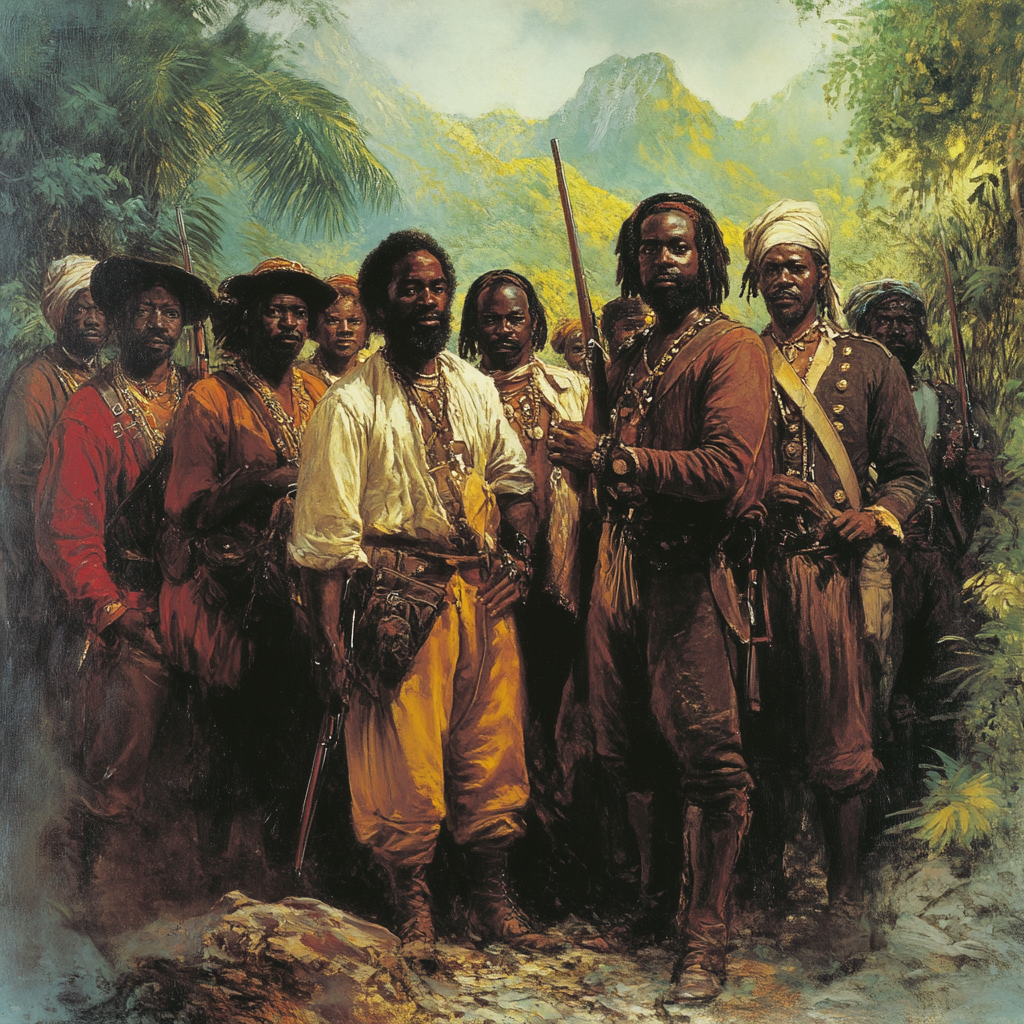
- Highlight the rebellions of the enslaved against supposed passivity and working class support for abolition.
- Expose the huge cost to Africa and the Caribbean nations in terms of underdevelopment, ecological disaster, disease and poverty.
The legacy of racism with its origins in the slave trade –
- institutional racism of the police stop and search of black youth,
- the Windrush scandal,
- hostile environment for immigrants,
- unemployment for young black people
- the petty humiliation of everyday life.
Sources: Marx’s writings on ‘The Primitive Accumulation of Capital’ and other sections in volume one of Capital
‘Slavery in the British Empire and its Legacy in the Modern World’ by Steve Cushion.