

I am sure you have all watched a six-part drama series that makes you ask yourself, after: ‘Why did I waste six hours of my life watching this forgettable slop?’ This drama is the antidote. One of the most original things on TV at the moment, and it deserves the five-star reviews it is getting.
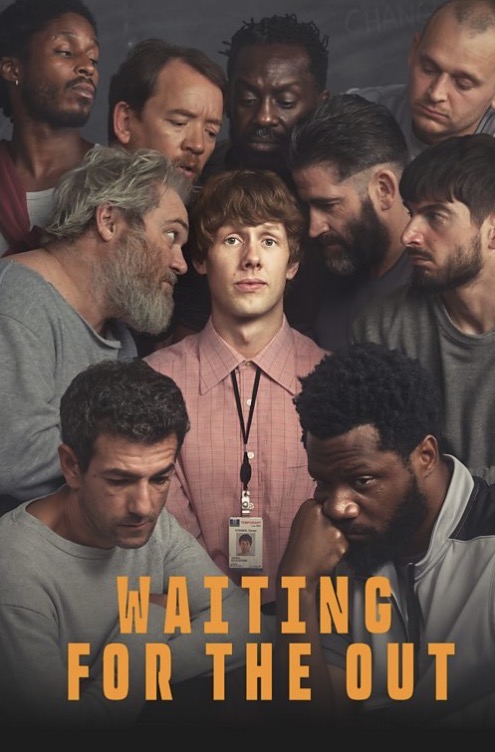
This is a 6-part story about Dan, who teaches a philosophy class to a group of prisoners in a Category B prison. Similar classes are among the few examples of prisons providing rehabilitative support. The lesson scenes are extraordinary, as Dan connects a series of philosophical dilemmas to the lives of prisoners who mostly have minimal schooling and limited or no literacy.
He just has a whiteboard with a few words or sketches. Then he manages to get the men to respond. His ability to distill big philosophical questions into a simple story is brilliant. Dan avoids speaking too much and elicits responses rather than demanding them. Philosophy is not just for the academy; a good teacher can make it accessible to anybody
Why philosophy matters
If anybody wants to teach or improve their teaching, just watch these clips from the programme. It is also an excellent example of how real learning does not require AI or integrated digital learning systems. You cannot copy and paste ‘correct’ answers to the questions discussed in these philosophy classes. Indeed, there is no right answer.
Schools and colleges need to be doing much more of this type of teaching. Spend training money on improving oracy in the classroom. We need students to think, listen, and express themselves. Political democracy depends on citizens being able to do that.
For example, Dan uses the story of the frog and the scorpion crossing the river. The scorpion says I cannot swim, so it would be stupid for me to kill you if you can get me across. The frog agrees, but the scorpion stings him dead anyway, and they both die. This triggers a discussion about trust, choice, and whether criminal activity is part of one’s nature that cannot be changed.
As an ex teacher i would have liked these scenes to be even longer. I liked the way this was developed without illusions; some lessons ended in prisoners violently losing it. A prisoner who is keen to write his life story does not succeed despite Dan’s support.
If it finished there, just with this examination of teaching philosophy in prisons, it would have been a good, interesting drama. But it interweaves all this with Dan’s personal issues and family relationships. We are shown regular flashbacks to Dan’s childhood memories of his father, which are mostly negative.
The father was a criminal who spent a lot of time inside. His brother, Lee, ends up in jail and an addict, but he has turned his life around and now has a new baby son. His mother suffered abuse from his father but finally left and had a better second marriage.
Understanding OCD
Despite saying he does not want to see his father again, he cannot get him out of his mind. A key driver of the narrative is whether this meeting will ever happen. So a second major theme of the show is how prison does not just fail with the prisoners but also can have devastating consequences for their children. Hundreds of thousands of kids today get hardly any support when their parents are in prison.
For Dan, this has also meant he suffers from OCD. Unless you know someone personally with this affliction, it is hard to understand how it operates. Indeed, quite often people make jokes or mock what appears to be absurd behaviour. In this drama, the gas cooker in Dan’s house allows us to grasp his trauma up close.
It almost becomes a character with a role in the story. In each episode, we see Dan compulsively checking whether the gas is on or leaking. Sometimes he can take an hour and a half to leave the house, as he checks, goes out the door, and comes back. He ends up taking photos on his phone every day to convince himself the cooker is not on. If nothing else, this drama helps us understand the condition a little better.
Father and son relationships
As the series unfolds, we understand that Waiting for the Out (i.e., prison release), the drama’s title, does not just refer to prisoners but can also mean people with traumas or conditions they want to be released from. This could mean addiction – like Dan’s brother Lee – or Obsessive Compulsive Disorder (OCD), which is Dan’s problem.
Both these problems are connected to a difficult relationship with their father, who did time. One way to understand the story is to see it as Dan’s search to resolve his traumatic relationship with his dad.
Nearly all the characters in Dan’s family are waiting for a release from something or other. We also see how once prisoners get out, they can sometimes still be imprisoned. Adjusting to time can be very difficult. One ex-con says that after a decade or so inside, he could not get used to the speed of everything. You adjust to a much slower passing of time. Programmes where prisoners can gradually reintegrate into society and receive more comprehensive support would be much better.
Policy on prisons from the political mainstream is all about punishment and supposedly responding to public concern about rising crime. Britain is closer to the high rates of imprisonment in the USA than to the relatively lower rates in Scandinavian countries. What is the key factor in these variations?
The more unequal a society, the more prisoners you have. Politicians are surprised by the epidemic of shoplifting, which shows they have no idea of the depth of the cost-of-living crisis. No surprise either that the most oppressed and exploited of the working class are disproportionately represented. In one episode, the prisoners’ class discusses this.
Prison does not work
Reference is made to the inefficiency and incompetence of the prison service. We saw recently the fiasco of prisoners being released early in error. In one episode, a black prisoner is all set up to be released, sits in the waiting area, but is told the paperwork has been mishandled, so he has to go back in.
Unsurprisingly, he kicks off and is punished again. Politicians complain about the rising numbers and the costs of keeping all these people locked up. However, nothing is done to meet the targets for the maximum time people can be held on remand. The Palestine Action hunger strikers have just highlighted this injustice – at least eight months or even longer already, and it could be a year before a trial. Not only is the prison system unjust, but it just does not work.
Josh Finan as Dan interprets the role brilliantly. He particularly uses the small physical gestures – touching his face – to convey his obsession, his vulnerability. By the end, you are rooting for him; you just want him to reach the Out. Phil Daniels turns in a great cameo as Uncle Frank. Gerard Keans really unsettles you as Dan’s dad.
What stands out too about the writing is a lack of sentimentality or easy stereotyping. Some prisoners are likable, others you would avoid at all costs. Prison officers are shown largely sympathetically – hamstrung by a system that is totally broken. Dan, our lead character, makes bad mistakes. He can be a bit obnoxious and self-obsessed in a way that can hurt others. Most TV dramas are pretty predictable and have lazy characterisation. This is not.
Towards the end, the prison governor says to Dan. ‘You helped these guys to think. Thinking is what makes us human. I want more humans in my prison’. This drama certainly made me think.
Art Book Review Books Capitalism China Climate Emergency Conservative Government Conservative Party COVID-19 EcoSocialism Elections Europe Fascism Film Film Review France Gaza Imperialism Israel Italy Keir Starmer Labour Party Long Read Marxism Marxist Theory Palestine pandemic Protest Russia Solidarity Statement Trade Unionism Ukraine United States of America War
Thank you for this review. I was wondering whether this would be a good series to watch at all. From the trailer I saw on the BBC, it looked promising, but one never really knows until one watches it or till someone recommends it as you have done in your piece. This review clinches my interest in it and I’ll aim to watch the series at some stage when I have time.
I am interested in prison abolition (the institution of prison is vastly a failure) and also have degrees related to philosophy and have taught it at University, so your angle was both stimulating and also heightening regarding the intrigue previously evoked by the trailer (that I’ve seen on the television; I assume it is the same one as appears above).
Your comments on and embedded references to the philosophy of education and pedagogy were also of interest (the allusion to ‘oracy’ – a word of course coined by the Birmingham University academic Andrew Wilkinson in 1965 – was an example of this), so thank you for your review, albeit more on that would have been welcome indeed.
Then the comments on and connection to the issues that the teacher himself has in this series also drew me in and made me wish to definitely watch this at some stage. The representation of disability and mental health issues is something that seems to have been well done in the series, so I’ll look forward to that, too, especially as I have an autism diagnosis with strong features of perfectionism (itself surely a form of OCD when you have it as badly as I have done) and some dyspraxia.
I like thoughtful writing when I see it, so cheers. I hope you will not mind my deploying a nom de plume here.
Solidarity to you.