

The rise of reactionary political currents in the Spanish state is significant for the July 23 general election. This growth in political reaction is a global trend. The immediate factor behind this snap election was the electoral defeat of the progressive bloc in the May 28 regional and local elections, which changed the political situation. Although the results were relatively close between the PP (People’s Party, the mainstream conservatives) and the PSOE (Socialist Workers Party, the traditional social democrats), the electoral arithmetic has generated a major shift. We saw the resounding collapse of Unidas Podemos (groups to the left of the PSOE but in full coalition government with it) and the decline of the PSOE, which led the PP to win many provincial capitals and Autonomous Regions. This changed the political cycle and led Pedro Sánchez to call a general election.
The reactionary turn in the situation has underlying causes. The first and most decisive is to be found at the international level, in a succession of defeats and capitulations of the left that emerged after the 2008 crisis and which have provoked the rise of a new right: from Syriza in Greece to the integration of Podemos into a government with the PSOE, passing through Corbynism or Sanders. The feeling that remains is that the left is not capable of consolidating stable mass projects or putting forward a programme that it can implement. So the crisis within the left is the first cause.
Another underlying reason has to do with fear: war, the geopolitical reordering of capitalism, and the ecological crisis generate a sense of the end of an epoch. Inequality is increasing in the countries of the capitalist centre; whole areas of the world are being thrown into chaos by capitalism; and new powers are disputing hegemony with the old ones. It is clear to the middle classes: law and order must be imposed within each country in order to be in a better position to maintain relative privileges in a world in flames. The working class and the oppressed lack strong political organisations and do not have a strategic perspective to fight capitalism. But the rebellions continue, albeit without clear political direction: France took over from Chile, Chile from the black people in the USA… and so on and so forth.
In Spain, the transformation of Podemos into a more institutionally integrated and less radical force and the defeat of the pro-independence cycle have been the determining factors within the progressive bloc. The emergence of VOX (the voice of hard-right post-fascists) and the rise of the PP are the reverse of this pendulum. The progressive coalition government formed in 2018 was not the beginning of a period of great change. It was rather the end of the hope that 15M had opened up. [15th May is the name given to the Indignados movement, huge street mobilisations, and radicalisation that erupted in 2011 and led to the creation of the radical left Podemos-Tr] The progressive government has tried to promote a policy of modernisation of Spanish capitalism, which we have described as “reformist without reforms” Far from seeking a recomposition of capitalist society on the basis of a certain redistribution of wealth, they have maintained at all costs a policy that preserved corporate profits in a context of “Keynesianism without growth or redistribution”. Related to this policy, which reflects and feeds the current dynamics of capitalism, military spending is brutally increased, the pro-security reinforcement of the state is promoted, the terrain of protest is created, territorial autonomy is defended, and migrants are attacked.
In this sense, despite the big speeches, the progressive government has not fulfilled its promises in terms of legislation on labour reform, pensions, the gag law, housing, etc. It has objectively implemented a reinforcement of the authoritarian drift of the state on migration; it has aligned itself with Western imperialism, where it plays a subordinate role (Sahara, the war in Ukraine, etc.). The government has applied the economic policy of capital: inflation has eaten into wages, and the working class is no stronger socially than when this legislature began. The great historic task of tackling the climate crisis has been postponed and handed over to big business, thus promoting ‘green capitalism’. Even in areas where certain advances have been made, such as feminism and LGBTI rights, these are fragile and threatened, among other things, by the co-option and institutionalisation of social movements.
The rise of the right in the Spanish state is part of this context: insecurity about the future, hegemony of the old middle classes in the political field, reaction against the processes of social mobilisation of recent years. In a distorted way, this right has been moulded by its reaction to the progressive bloc. It feeds off the chronic crisis, the need to preserve order because change can only be imagined to be worse, and the structural weakening of workers’ organisational capacity. The underlying negative process inexorably advances while progressivism suffers and agonises as it “manages the existing situation”.
We do not want a single vote to go to the right. We do not want the Popular Party and VOX to get into government. But, beyond the individual vote of each one, we cannot close our eyes to the left parties’ politics of renunciation, which have already demonstrated in government that they are incapable of fulfilling their promises and of confronting the economic powers in order to defend the interests of the working class. Where they exist, we call on voters to vote for candidates who express a clear position against the reactionary wave but also a rejection of capitulations and alliances with social liberalism and who defend freedom and self-determination. So we call for a vote for the CUP (a Catalan left independence current). This is despite our differences with them regarding their overly complacent policy with the rest of the pro-independence bloc and on more strategic issues. We will also vote and build Adelante Andalucía (Forward Andalucia), which aims to build an ecosocialist and feminist current among Andalusian workers against the regime of 78 (the government that led the compromised and moderate transition from Francoism to Tr). It will highlight the secular oppression suffered by this territory.
On the 23rd of July, we will know what the new political framework is in which we will have to operate. If progressivism resists, the onslaught of the right will not cease, and we have no confidence that the necessary transformation will be undertaken. If the right wing governs, a redoubled offensive against the working class and the rights of women, LGBTI people, migrants, and all the exploited and oppressed is coming. Whatever happens, we will fight together with many more people. But resistance cannot be simply taking to the streets; the travails of progressivism are making it clear to us that we need a left independent of the regime, as loyal to the subordinate classes as the right wing is to the capitalists. This project for Anticapitalists is called ecosocialism, and it will have to be built through social resistance and also by drawing the relevant lessons on the political terrain: neither resigning ourselves to the lesser evil nor letting history continue to be dictated by the same old, same old politics.
Art (63) Book Review (128) Books (114) Capitalism (69) China (83) Climate Emergency (99) Conservative Government (90) Conservative Party (45) COVID-19 (46) EcoSocialism (71) Elections (87) Europe (46) Fascism (75) Film (49) Film Review (69) France (81) Gaza (65) History (45) Imperialism (105) Israel (136) Italy (48) Keir Starmer (59) Labour Party (117) Marxism (50) Marxist Theory (47) Palestine (204) pandemic (78) Protest (158) Russia (355) Solidarity (161) Statement (50) Trade Unionism (148) Ukraine (361) United States of America (143) War (378)
The Anti*Capitalist Resistance Editorial Board may not always agree with all of the content we repost but feel it is important to give left voices a platform and develop a space for comradely debate and disagreement.
Latest Articles
- Holborn and St Pancras: you can’t judge a principle by a by‑election
 Duncan Chapel’ replies to Dave Kellaway about Zack Polanski’s tactics on the Zionism is Racism motion
 - Alan Thornett 1937‑2026 : a working‑class leader who faced the apocalypse
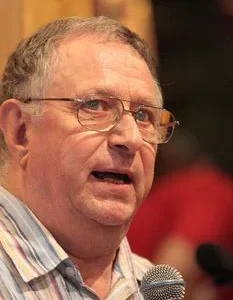 Here we publish an initial tribute to Alan Thornett who died on 9 October from Duncan Chapel, We welcome comments on this and expect further appreciations we will carry over the days ahead.
 - Trade union support for the convoy keeps growing
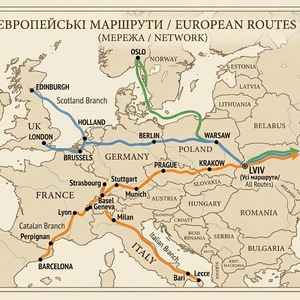 Dick Nichols reports on the growing trade union support for the international solidarity convoy with Ukraine
 - Labour Holds Holborn and St Pancras but Green challenge remains
 Dave Kellaway examines 5 key takeaways from yesterday’s by-election in the London seat of Holborn and St Pancras
 - Surviving a nuclear war?
 Dave Kellaway reviews Sheltered by Kim Gordon-Bates which tells the story of one government bunker once the bomb goes off. We also have an exclusive interview with Kim below.